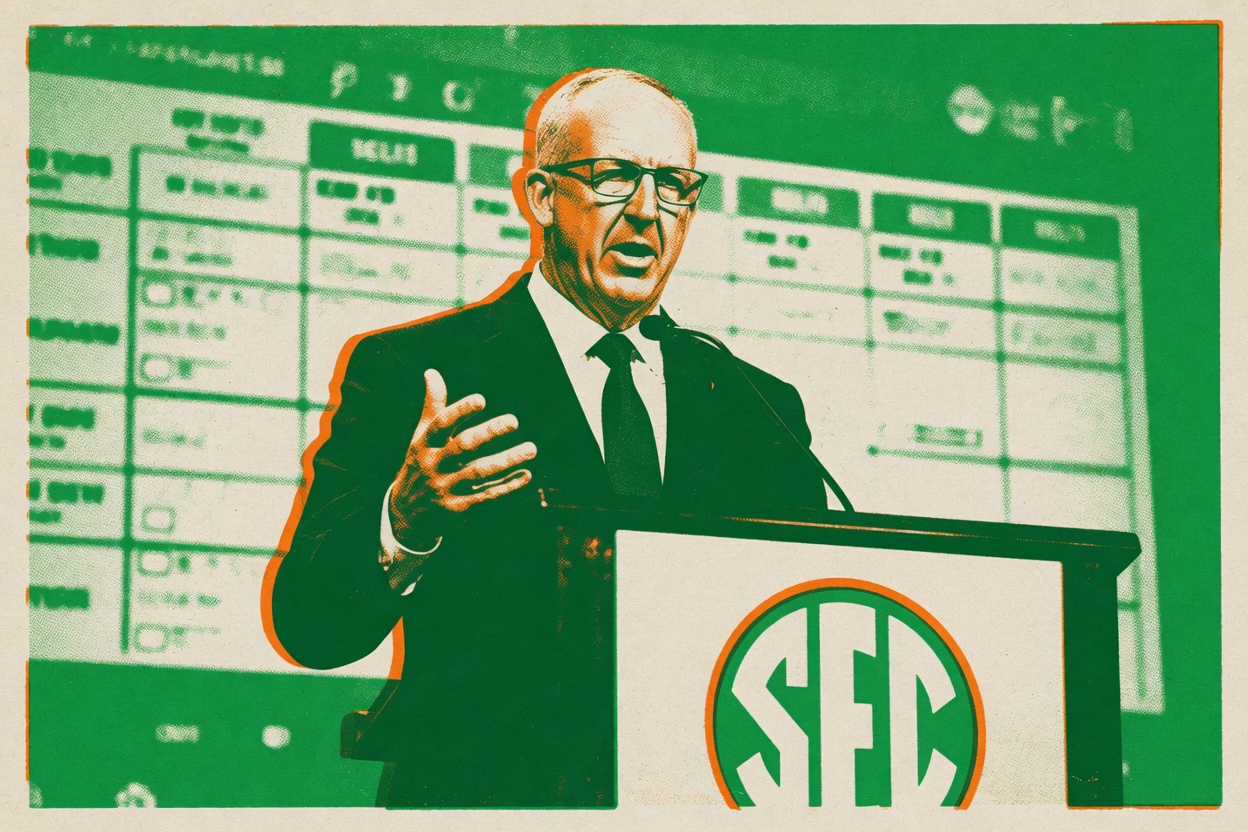
A conference used to be a promise: play these teams, and on the first weekend of December, two of you settle it in a stadium full of people who paid to watch. The 24-team playoff that ESPN and the Big Ten are building deletes the stadium and keeps the spreadsheet.
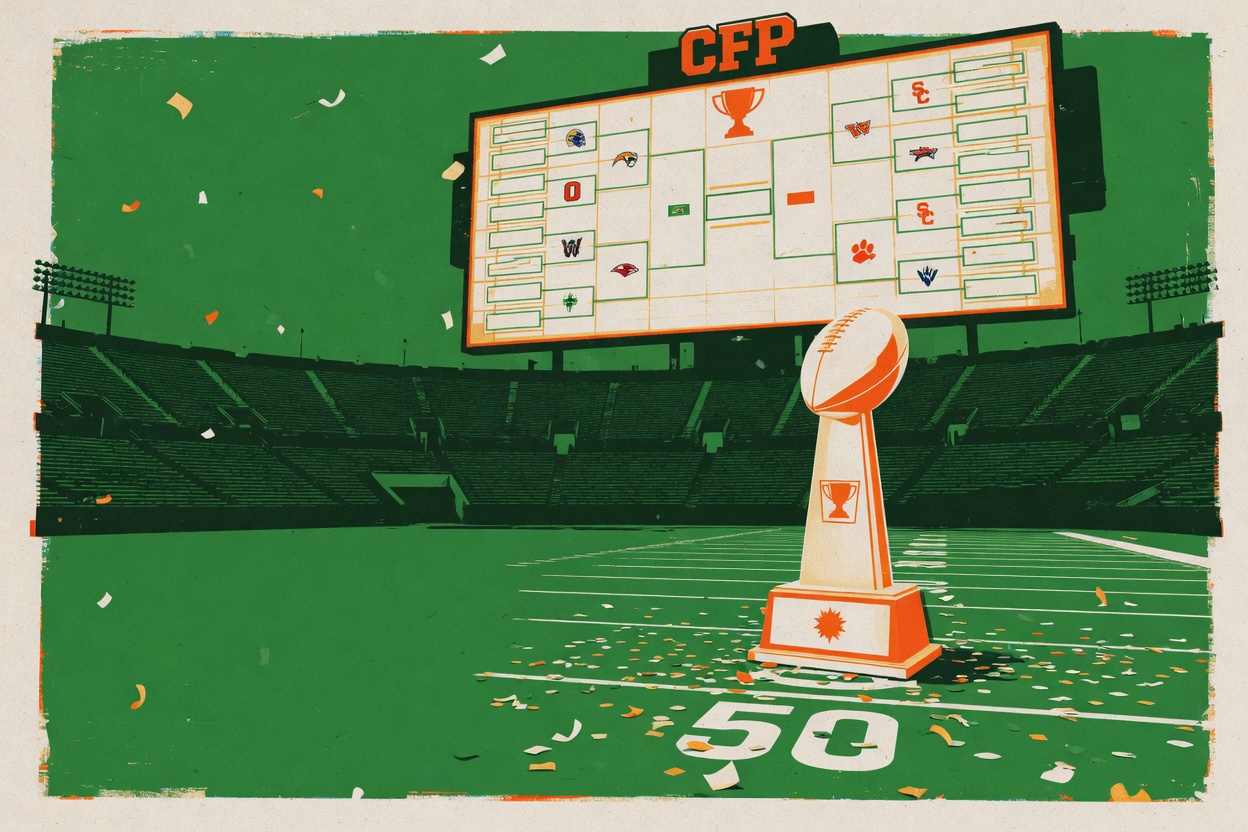
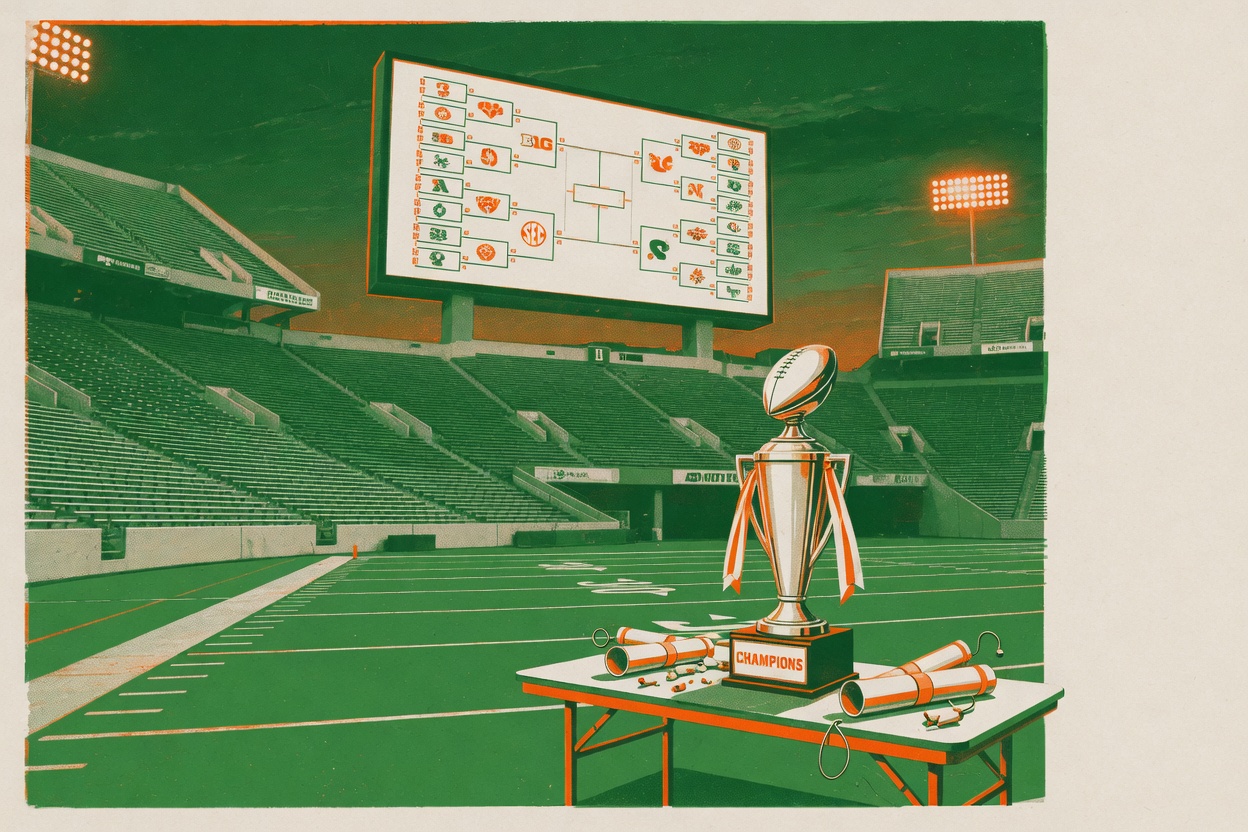
Pete Nakos reported that the pending agreement to grow the College Football Playoff to 24 teams will "likely" eliminate conference championship games. That lands on top of Pete Thamel's reporting that the CFP is nearing a deal to jump from 12 teams to 24 beginning in 2027, with the first two rounds played at the home site of the higher seed. The reported field: 19 at-large bids plus five automatic spots for the four Power Four champions and one Group of Five team.
The Big Ten decided Championship Saturday had to die, in writing. Eight months ago the league circulated an internal document sketching exactly this: 24 teams, no title games, a 23-plus-1 model. The document called the conference title games "artificial" and complained that leagues which play them take on "way more risk" than leagues that don't and still reach the playoff. Read that as a league annoyed it has to keep earning its way through one more game, and deciding the fix is to cancel the game.
The automatic bids still go to conference champions, but the leagues lose the only honest way they ever decided who that champion was. That matters more than the lost tradition. Win the Big Ten, win the SEC, and under this model you still get a seed. You just don't have to beat anybody in front of a camera to claim it. A committee ranking and a tiebreaker formula hand you the crown in a conference room.
The title games already mean less than they used to. The stakes of actually winning the game have been fading for a while now, so the trophy turned into a formality while everybody waited on the bracket. But watch how it's being used: the game got drained of stakes first, and now the drained version is being used as proof it was never worth playing.
What you lose is the one weekend where a league's entire season collapses into a single result. What you get is more December inventory for ESPN, which is finalizing a deal to carry the extra games through 2031. The sport's calendar is being rewritten around a television contract, and the people writing it keep using words like "artificial" for the parts fans actually show up for.
None of this is signed. CFP executive director Rich Clark isn't ready to call it done, there's a December 1 deadline to lock in changes for the 2027-28 season, and if the logistics slip, the bigger bracket waits until 2028 at the earliest. The CFP's only on-record statement says it's gathering information and does not represent a commitment to expand. Believe the hesitation if you want.
The direction is set and the authors aren't hiding. The Big Ten wrote the plan, ESPN is paying for it, and the trophy your team chases for a whole season is about to be awarded by a committee ranking. It's a sport outsourcing its own championships because the broadcast window pays better.