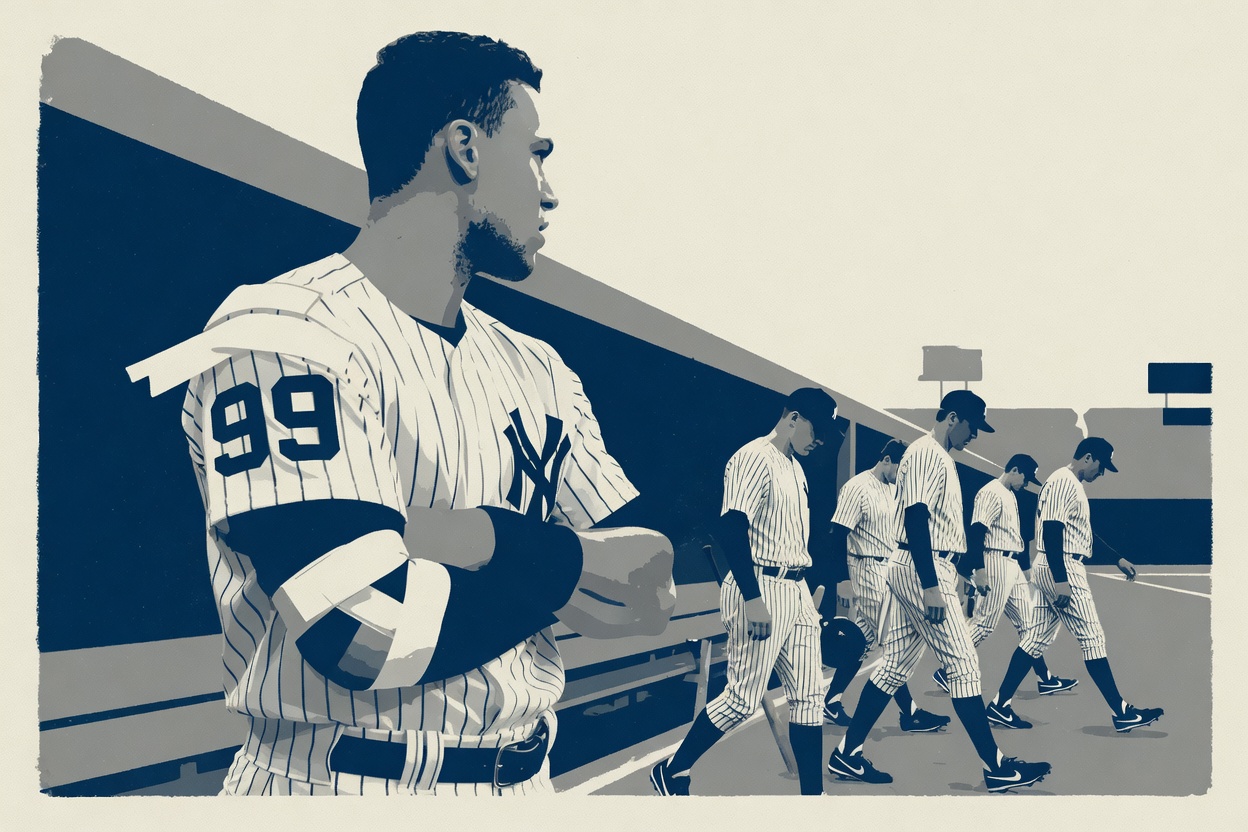
There's a version of this story where you feel bad for the Yankees and leave it there. Their best player, and one of the best hitters alive, took a pitch's worth of bad luck to the rib cage and hasn't been the same since. Aaron Judge last played on May 31. He was placed on the 10-day injured list on June 5 with a stress fracture in his right rib cage, then moved to the 60-day list on July 18. As of early August, he still hadn't been cleared to resume baseball activities, limited to neck and lower-body work, before finally getting cleared for light activity and to begin running in the first week of August. September now looks like the realistic best case, not late August, and Brian Cashman declined to promise a 2026 return at all.
So yes, sympathy is fair. But sympathy isn't analysis, and the analysis here is uncomfortable for a front office that spent the winter congratulating itself. Judge's absence didn't just cost the Yankees a great hitter. It showed that the rest of the lineup had been propped up by him to a degree nobody wanted to admit.
Look at the split. Before the injury, this was a real offense. Judge had 17 home runs and a .908 OPS in 59 games before landing on the IL, and he'd reportedly been playing through the rib problem since late April. When he went down, the Yankees were scoring around 5.17 runs a game. Since then they've been stuck in the mid-3s, a drop of more than 20 percent. Using a June 1 cutoff, they ranked in the bottom five in the majors in runs per game, batting average, on-base percentage and OPS. Mike Petriello's stat is the one that should keep somebody up at night: the Yankees ranked last in baseball in batting average with runners in scoring position, and last with the bases empty. They couldn't hit whether or not the moment mattered.
Now the reasonable objection. This wasn't instant. In the first couple of weeks without Judge, the Yankees actually scored more, not less. Neil Paine noted in mid-June that they'd gone 8-4 early on and were putting up runs at a higher clip than they had with Judge, crediting a deep supporting cast. That early stretch is exactly the point. A lineup can survive one absence for a while. It can't survive the compounding kind. Judge went down, then Cody Bellinger and Giancarlo Stanton got hurt too, and the illusion of depth evaporated. What's left is a group that hits when the sun's out and disappears the moment it's asked to carry a game.
What's kept the Yankees breathing is the pitching, which has been the strength of this roster all year. That's a real credit to how the staff was built. It's also the tell. When your season plan is "score just enough and let the arms hold," you've admitted the offense was never as sturdy as the payroll suggested. Right now, roughly 115 games in, the Yankees are hovering around .500 without Judge while the wild-card and division races stay live, and the pitching is the only reason they're still in the conversation.
My take: Judge coming back in September helps, and it might be enough to sneak into October. Cashman himself conceded Judge won't be at 100 percent when he returns, saying they'll get him back for the most meaningful games. But a diminished Judge dropped into a lineup that can't hit with the bases empty is a patch, not a fix. The flaw was baked in before he ever got hurt. One man leaving shouldn't turn a contender into a bottom-five offense. That it did is the roster's problem, and no single return date erases it.