Everyone dunking on Achraf Hakimi for "misremembering" his PSG timeline has the facts exactly backwards. He's right, and the mockery is what doesn't hold up.
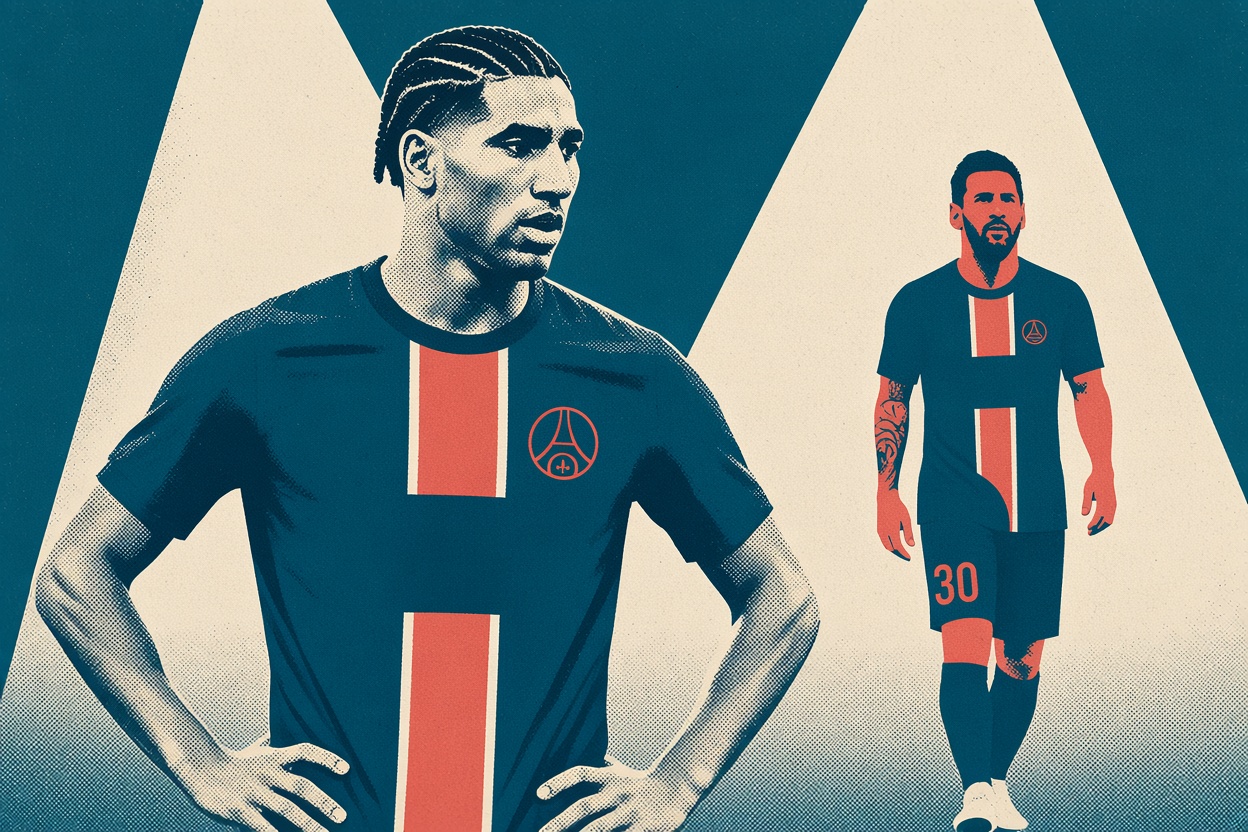
His comments from the podcast The Bridge, recorded back in April 2026, are circulating again after a Portuguese paper revisited them. The line that annoyed people: "When I signed, I didn't know Messi was coming. I knew I was joining a team with Neymar and Mbappé, but once Messi arrived, the project changed. The style of play became different. Because he was there, I could no longer attack; I had to stay back. I felt like a 'small player.'" The obvious objection: Hakimi had barely unpacked his bags, so who is he to complain about a project being disrupted?
That objection is lazy with a calendar. Hakimi's move to PSG closed on 6 July 2021. Messi's free transfer from Barcelona was completed on 10 August 2021, about five weeks later. Hakimi never pretended there was no gap. His whole point is that when he agreed to sign, he thought he was joining Neymar and Mbappé, and nobody told him a fourth generational forward was about to walk in. He's right about that, too: Messi's exit from Barcelona was a last-minute scramble driven by the club's finances, not something anyone was planning around in June 2021. You can't sign up for a project and then get blindsided by it a month later and take the blame for complaining.
The surprise is real. So is the complaint about the football, and it's the best-documented part of this whole story. PSG's front three not defending was a running joke across opposing dressing rooms. Reims captain Yunis Abdelhamid said it plainly: "the front three [Messi, Mbappe, Neymar] don't defend. We knew on our side that if we passed this first line, they no longer participate in the collective defensive effort." L'Equipe's own match report on a Champions League draw was just as blunt: "Defensively, Messi wasn't involved at all." Even PSG's own Vitinha has admitted it looking back, calling the trio players who were never "the most hardworking" without the ball. When three attackers don't press, somebody downhill has to cover, and that somebody is the attacking full-back. Hakimi arrived from Inter as the main outlet of his side. At PSG he got turned into a plumber. That's arithmetic.
Hakimi was never attacking Messi. He went out of his way to defend Messi's decisions on the ball: "When I make the call and Leo does not give it, it is because he has seen that there is another player to whom he can pass. This is not a problem." He's describing a system.
The people who built that system are the only ones who deserve the heat. PSG's leadership at the time assembled a front line of marketing-department dreams and never built a midfield or a defensive frame that could carry it. Marco Verratti's seasons kept getting shredded by injuries. The structure behind the stars was an afterthought. We've watched this movie before: Real Madrid won their ninth European Cup in May 2002 with Figo and Zidane, then kept buying, Ronaldo, Beckham, Owen, and the trophies dried up for years. Stars stacked on stars, no machine underneath. PSG ran the remake.
PSG's best football, by results, came once the galáctico experiment was over and Luis Enrique rebuilt around pressing and structure, winning a second straight European title on 30 May 2026. The club got good when it stopped collecting famous names. A 22-year-old new signing told you that in real time, and you laughed at him for not knowing the dates. He knew them better than you did.