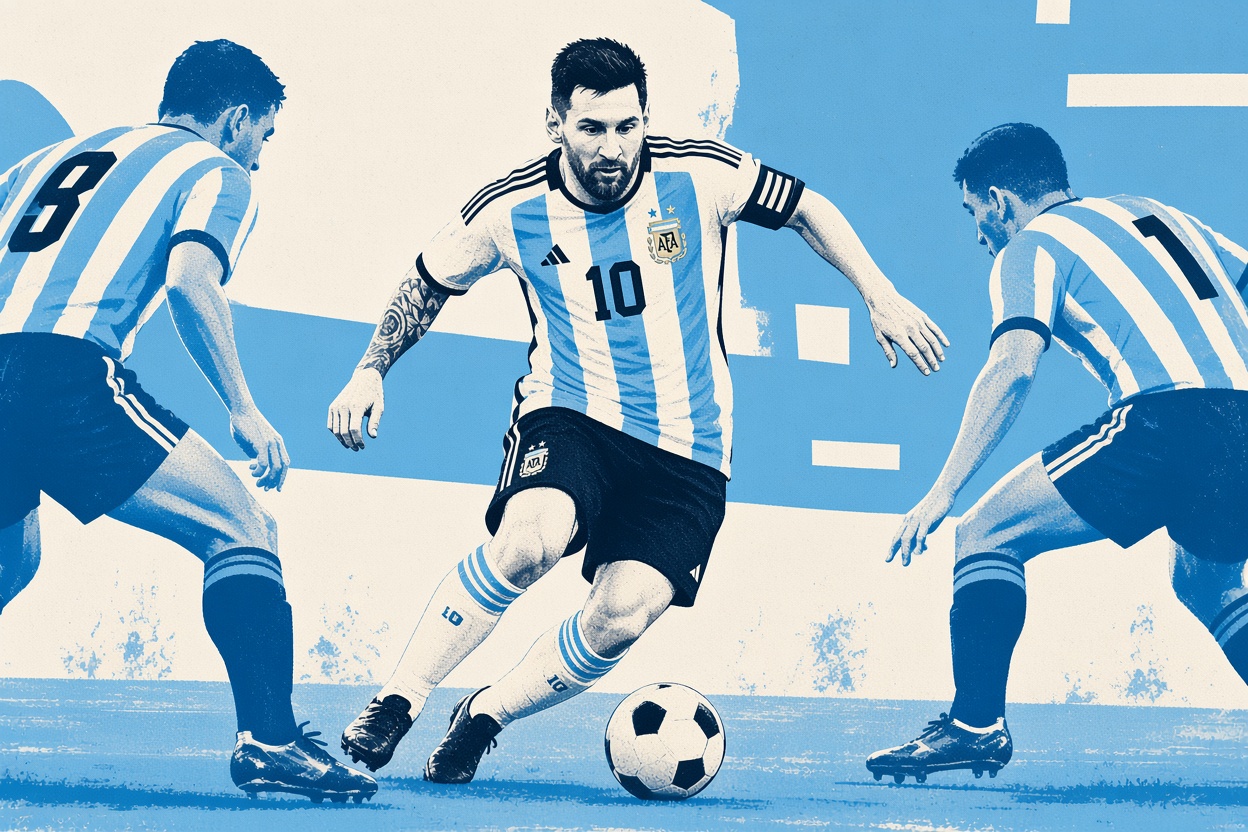
The question making the rounds again, after the edits and the slow-motion reels came back for the hundredth time, is whether anyone in football history has close control to match Messi's. The answer is no, and that includes Maradona, George Best, Johan Cruyff, Garrincha and Ronaldinho. On this one specific thing, the argument isn't close, and pretending it is does nobody any favours.
The trick is not letting the debate get swapped out. "Close control" and "greatest dribbler ever" are two different fights, and people keep fighting the second one while claiming to fight the first. Greatest dribbler drags in flair and trickery, the moment that got you out of your seat. Close control is narrower and colder: can you keep the ball a few inches from your foot at full speed, with defenders diving in, and never lose it? That skill has an owner. Among the people who study this for a living, the verdict runs one way, and it runs toward Messi almost without dissent. One analysis calls him the greatest close-control dribbler the game has ever seen. Another says flatly that his control is unmatched and it's nearly impossible to knock him off the ball.
Maradona is the name thrown back the fastest, and it's the wrong one for this particular test. Maradona was chaos made useful, a wrecking ball of improvisation who escaped trouble by inventing something new every time. Brilliant, terrifying to play against, but the ball was never quietly attached to him the way it's attached to Messi. It got wrestled into submission. Messi's just comes along for the walk. That difference decides the argument, which is why people who separate the two skills keep landing on the same man.
The counter-argument worth taking seriously is about the eras Best and Cruyff played in. Best, in particular, played on conditions that would horrify a modern winger: boggy, uneven pitches, heavy leather boots, and balls that soaked up rain and got heavier as a match wore on. Both he and Cruyff also played in an era when defenders could tackle you from behind and walk away unbooked. All of that is real and documented. The tackle from behind wasn't a red-card offence until 1998, years after Cruyff had retired and long after Best's peak, which means both men spent entire careers being allowed to be kicked in ways that would empty a bench today. If you want to argue they never got a fair stage to show this skill, go ahead. You'd be right.
But "never got the chance" is a different sentence from "would have matched it," and the internet keeps treating them as the same sentence. Harsher conditions make the comparison between eras unfair. They don't retroactively hand anyone Messi's control. You can grant Best every disadvantage and it still doesn't produce footage of Best doing what Messi does in a space the size of a doormat. The era argument should stop people sneering at the old greats, but it isn't evidence any of them had tighter control.
There's a reason this keeps resurfacing now. Messi closed the international chapter of his career this autumn, and he closed it on a loss, beaten by Spain in the World Cup final in extra time, Ferran Torres settling it. Then in September came the Michelob Ultra ad he shared, the bar-receipt bit ending on the line "GOAT debate — settled." The campaign puts those words in his mouth. The broader GOAT question is messy and always will be, because it's about trophies and that final is still fresh. The close-control question is the clean one. It's the one his own clips keep answering before anyone can type a reply.
Messi is the reason this argument never ends. The footage never stops being unprecedented, and no amount of era-adjusting conjures a rival who kept the ball glued to him in traffic the way he has for twenty years. Anyone insisting otherwise is answering a different question than the one they were asked.