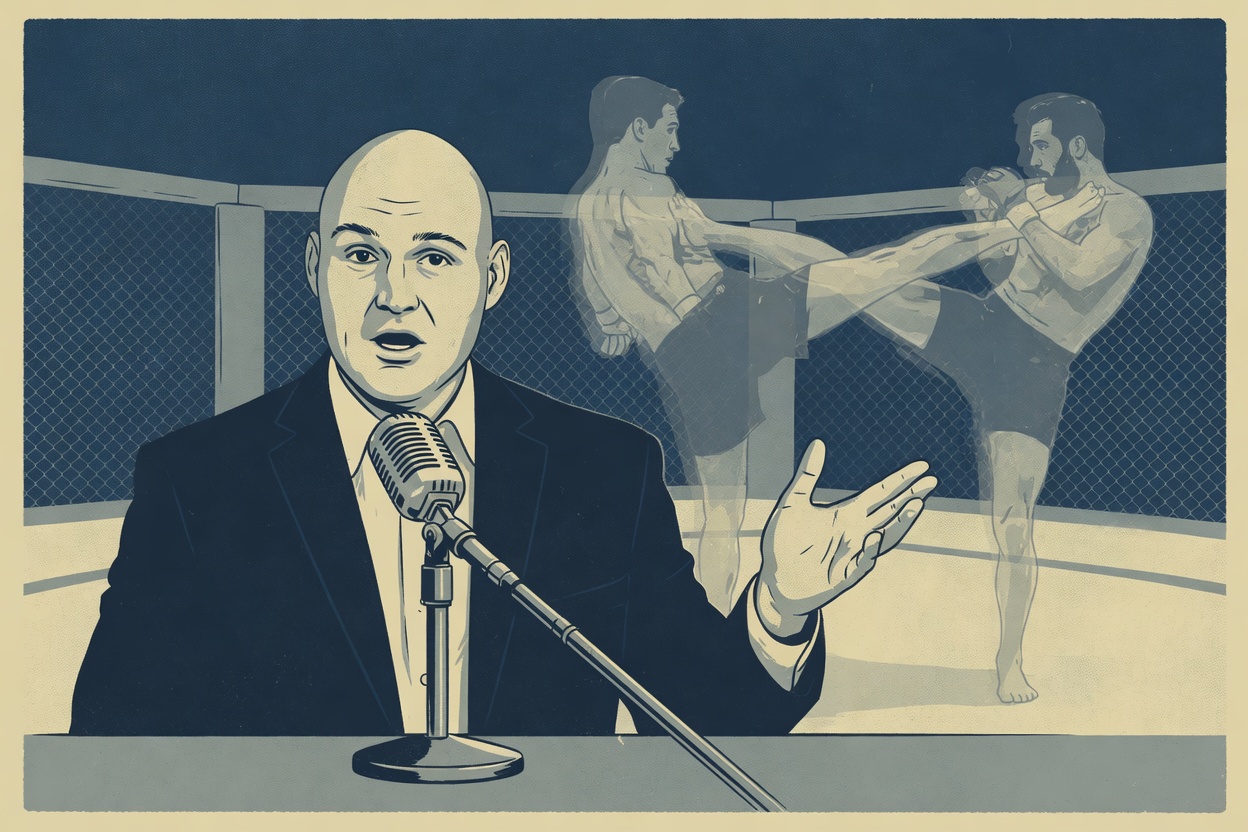
Andy Foster, who runs the California State Athletic Commission, wants the oblique kick gone. He raised it after UFC 331, and his case is simple enough: fighters have a short window, the knee is fragile, and one bad stomp can follow a person for the rest of their life. "Somebody could have a lifelong injury from this," he said. "It's not worth it."
Okay. Now walk me through why the eye poke that just emptied the UFC heavyweight title is still perfectly legal.
Tom Aspinall vacated the belt amid ongoing eye trouble, after an eye poke in his bout with Ciryl Gane was ruled a no contest and he went under the knife more than once. That's a documented, title-killing injury caused by a problem the sport has shrugged at for decades. Nobody is drafting emergency language to fix the gloves or punish the pokes. But the push to outlaw a leg kick arrives inside a week, built on vibes and a highlight reel.
Foster's reasoning wobbles right there. If the standard is "this technique can cause a sudden, career-altering injury within a fighter's short career," that standard eats head kicks, knees to a grounded head where legal, the slow accumulation of brain damage no commission has a clean answer for, and the eye poke that keeps erasing contenders. Pick the oblique kick out of that lineup and what you're left with is an aesthetic argument. Veteran referee Marc Goddard has basically said as much: the objection here is about how the kick looks.
The evidence underneath the panic is thin, too. The case everyone points to is Ian Garry's kick that hurt Shavkat Rakhmonov's knee, a moment Garry has been happy to take credit for. Except Rakhmonov himself has said the kick didn't cause his career-altering injury, and that he shouldn't have fought in the state he was in. When the poster child for your ban turns around and tells you the kick wasn't what broke him, all you've got is one ugly clip and a feeling.
The real cases do exist. Khalil Rountree ended a fight against Modestas Bukauskas with an oblique kick, and Bukauskas said it broke his leg and cost him roughly a year. That's nasty, and the knee is exactly the joint you can't armor up. The danger is real, and the technique can maim.
But "it can maim" is true of nearly everything that happens in a cage, which is the entire point of the exercise. The question is whether you ban this one specific strike, the one Jon Jones built a legend on, while leaving alone the strikes and the officiating failures that do more damage more often. Michael Bisping called that line of thinking stupid, and on the inconsistency he's right. You can't preach the sanctity of a fighter's short window one minute and keep certifying a sport where refs routinely fail to penalize the pokes that end title reigns the next.
Consider who's making the case, too. This is the same commission, and the same director, that signed off on Power Slap, a product whose entire appeal is people getting concussed on command. Forgive me if "we must protect the athletes" lands a little soft coming from that office.
Ban the oblique kick if you want. It's ugly, and plenty of fans won't miss it. Just stop selling a cosmetic fix as a fighter-safety crusade while the injury that actually vacated a championship sits untouched on the books.