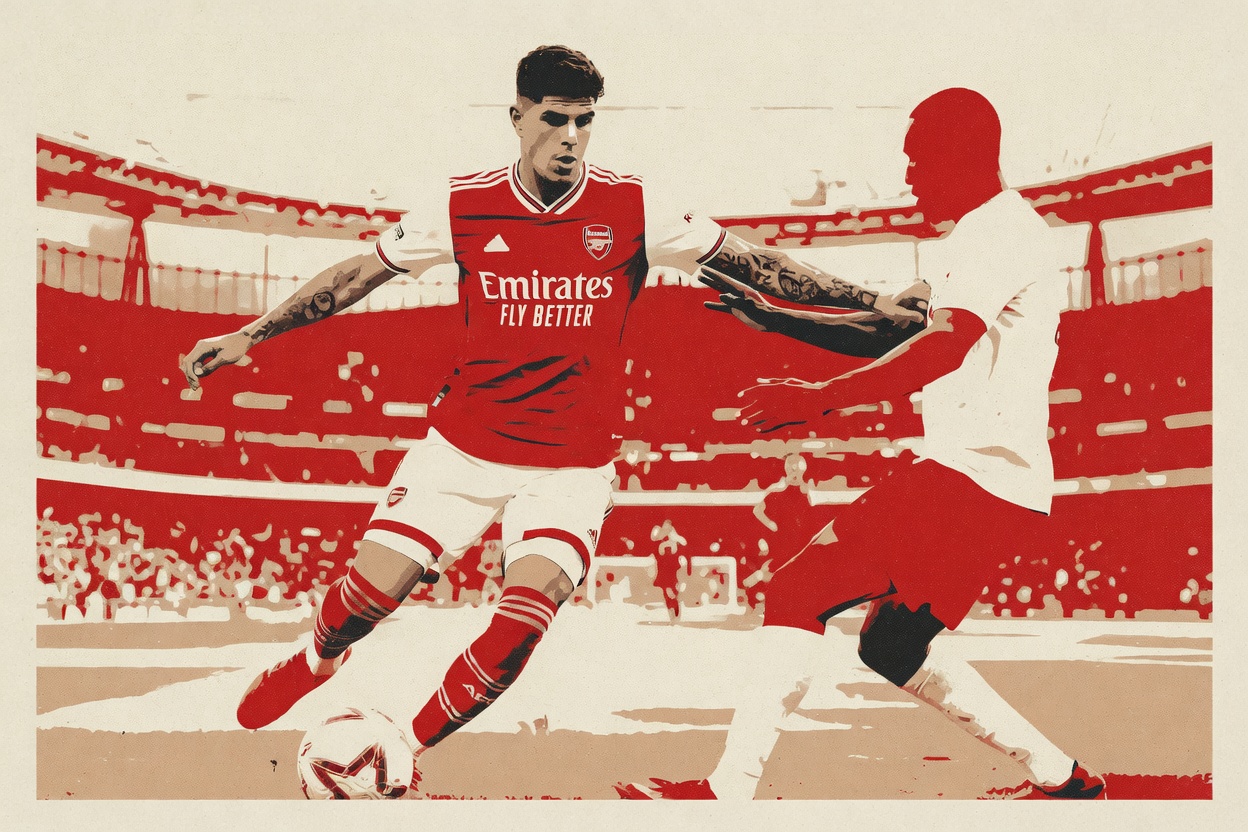
Good squad-building doesn't look like a deadline-week panic buy at inflated money. Arsenal have converted Piero Hincapié's loan into a permanent deal worth around £34.5m plus add-ons, tying him to a five-year contract until 2031.
The smart part is the order of operations, not the fee.
Rewind to late August 2025. Arsenal had already poured more than £250m into seven players and couldn't afford another direct transfer. Leverkusen weren't keen to sell at all, and their opening position was to demand Hincapié's release clause, said to be £52m. Arsenal said no to that number from the start and pushed for a loan instead. So they got a season-long loan with an option, not an obligation, to buy.
That structure is the whole point. Arsenal didn't lock themselves into a full-price commitment for a player they hadn't seen inside their own system. They set up a year-long trial: if Hincapié flopped, they could walk away; if he delivered, they'd trigger the clause. That's the kind of flexibility most clubs would love and few actually negotiate.
He delivered.
Over the loan, Hincapié made 39 appearances in all competitions during the season Arsenal finally ended a 22-year wait for the league title. He started 20 league games for a defense that conceded 27 goals, the fewest in the division. He's a natural centre-back who spent big chunks of the campaign covering at left-back, and he won the job in a genuine competition with Riccardo Calafiori, one that also pushed Myles Lewis-Skelly into midfield. He picked up Arsenal's Player of the Month award in February and again in April. Mikel Arteta trusted him enough to start him in the Champions League final.
Arsenal lost that final to PSG on penalties after Kai Havertz's early goal was cancelled out by an Ousmane Dembélé penalty, and the match went to extra time. It wasn't a season without pain in Europe. But even in the biggest game, Hincapié was one of the eleven Arteta wanted on the pitch. When you're deciding whether to spend £34.5m, that's the evidence you want, and Arsenal had a full season of it.
Compare that to the alternative. The summer market is where clubs pay a premium for hope: you watch a highlight reel, talk to agents, commit tens of millions, and hope the player adapts to a new league and a new manager. Arsenal skipped the hoping part. They ran the experiment first, at a lower cost, and paid full price only once they had the answer.
There's a nice financial wrinkle too. The permanent fee of £34.5m sits below the release-clause figure that was floating around when this all started, though the loan-plus-option structure and currency differences make a clean comparison messy, so I'd hold off on declaring an outright bargain. Leverkusen kept a 10% sell-on clause, standard for this kind of arrangement, which means they still have a stake in his future value. Fair enough. Both sides got something.
There's also the pedigree behind all of this. Hincapié made 166 appearances for Leverkusen and was part of Xabi Alonso's unbeaten domestic double in 2023-24. He was never an unknown quantity. Arsenal simply chose to test a proven player in their own environment before signing off for good.
The deal was set to formally go through on July 1, timed to register in the new financial year, and it was Arsenal's first bit of business of the summer. The 2026-27 season is only just underway as of this writing, so I won't pretend to know exactly how his defending holds up over a title defence. But the process that produced this signing is the kind of thing you'd want every club you support to copy.
Arsenal didn't gamble on a stranger. They bought a player they'd already seen do the job. That's not luck. That's a plan.