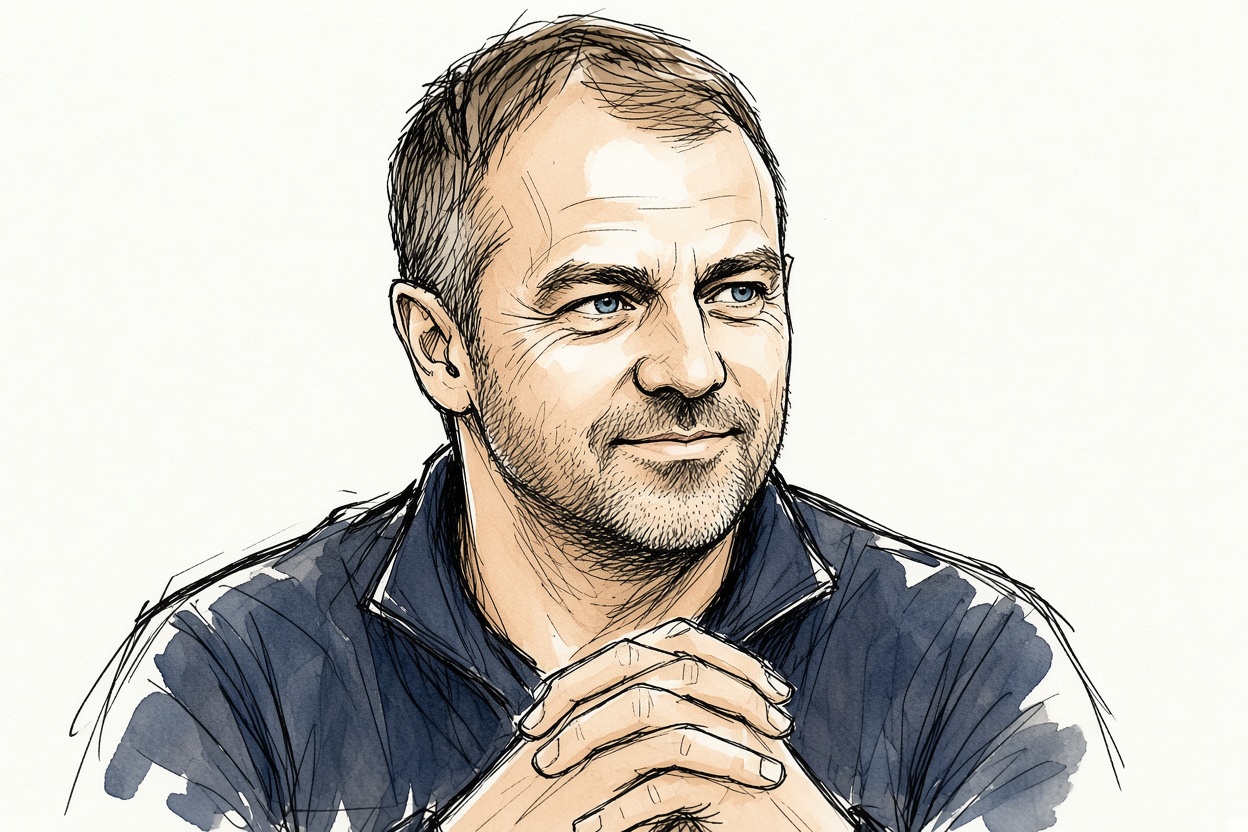
Stop trying to cram Rodri, Pedri and Frenkie de Jong into one midfield. Start Rodri and Pedri, make De Jong the rotation man, and give the third midfield spot to Fermín López. Hansi Flick already has the answer, and he's too busy smiling to say it.
That smile came after Sunday's 3-2 comeback over Villarreal, when someone in the press room asked what happens if all three play together. For a coach sitting top of La Liga this week, with the most argued-about midfield in the country, that's a dodge, and a cheap one.
He already told you the plan
Barça made Spain captain Rodri the coup of the summer and built a double pivot around him and Pedri. Flick said it out loud at Rodri's debut: "Rodri is one of the best, and we'll see what he and Pedri can do together. I'm eager to see them play together at Barca."
Good. That pairing is the right one. Two players who want the ball and time on it, who can run a game from deep. The trio talk only exists because of one ugly stretch in late October: a 4-2 defeat to PSG in Paris, then a 1-2 home loss to Real Madrid on October 25. Panic invents formations.
The week Flick lost the thread
Look at what Flick actually did. Rodri had played 172 of Barça's first 180 Champions League minutes, and Flick started him on the bench in Paris, citing workload: Rodri had played the previous three matches, the Clásico was five days away, and he'd been managing minor muscular fatigue. Rodri came on at the hour mark. Barça lost 4-2 anyway.
Then, after the Clásico, Rodri played the full 90 in a 6-1 rout of Alavés. Former Atlético Madrid player Suárez put it plainly: "I don't understand why Rodri plays the full 90 minutes against Alavés, while he doesn't feature as much against Paris Saint-Germain..."
He's right. Protecting your best midfielder from PSG and handing him every minute against Alavés is backwards. That one's on Flick.
On November 3, against Aston Villa, Rodri hurt his right hamstring and came off at half-time. He hasn't played since.
Three is a crowd
Rodri and Pedri want the ball at their feet. De Jong is the carrier, the one who drives through a press. Put all three in a 4-3-3 and you've got three midfielders asking for the ball in front of the opposition and nobody arriving behind it. That looks great against Alavés and gets found out by anyone who can sit deep and break.
The pitch for the trio, which Barça fan media has been pushing lately, says to save it for the biggest games. That's backwards too. The biggest games are where you need someone getting into the box, and Barça have one. Fermín is having the most productive season of his career for goal contributions, and he scored the 2-2 equaliser against Villarreal, finishing a counter that Raphinha and Pedri launched and Lamine Yamal set up. Play the trio and that midfielder sits.
De Jong's value is that he goes anywhere
The obvious reply is injuries. Rodri's target return is December 2 against Atlético Madrid, with no official date confirmed. Pau Cubarsí was out on Sunday too, so Flick started Marc Bernal as the pivot and put De Jong at centre-back next to Gerard Martín. If the three are rarely fit together, the argument might seem pointless. But Atlético is exactly the kind of game the trio crowd wants it for, and if Rodri is back, Flick has to pick a midfield for it either way.
Sunday showed why that pick matters. De Jong was soft on Villarreal's second goal, and Pedri still called him "extraordinary." A player who can cover centre-back one week and midfield the next is the most useful piece in Flick's squad. Rotate him in for Rodri or Pedri, plug whatever hole the injury list opens. Bolt him into a fixed midfield three and you waste the thing that makes him valuable.
Barça got their controller. Flick announced the pairing himself. Now his first-choice plan is in the treatment room and he's answering the obvious question with a grin. Rodri and Pedri, Fermín ahead of them, De Jong wherever the fire is. If Flick can't say that out loud before Atlético, he's ducking the one decision he's paid to make.