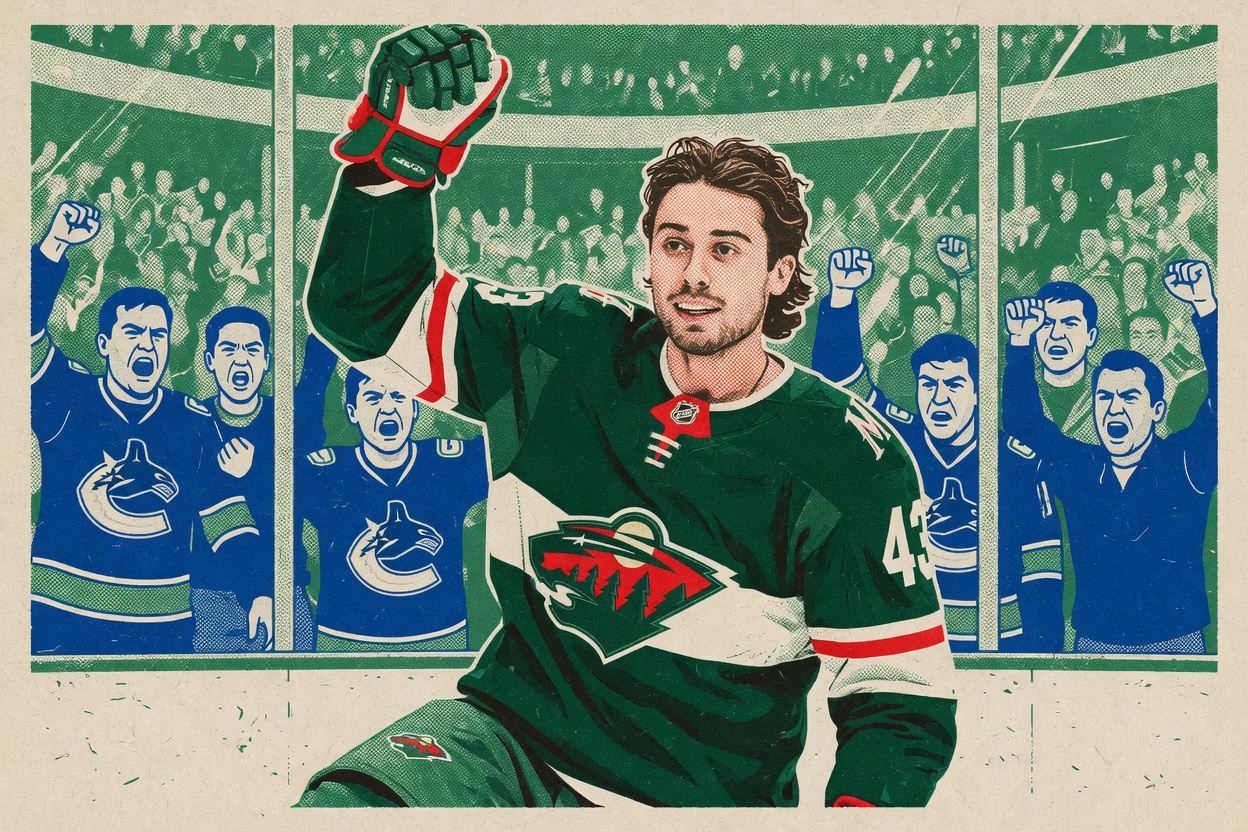
Barry Melrose died Wednesday at 70, his wife Cindy confirmed to ESPN, and the tributes that followed all reached for the same details before they got anywhere near the hockey: the mullet, the goatee, the slicked-back hair, suits loud enough to be heard from the cheap seats. That's the point of the man, not a knock against him. Before Melrose ever told you what happened on the ice, you already knew who was talking.
Here's my take, and I'll own it as opinion rather than dress it up as reporting: his death marks something the sport is quietly losing. Hockey broadcasting used to run on personalities you'd recognize with the sound off. Increasingly it runs on informed, interchangeable analysts and coverage sanded smooth. Melrose was the opposite of smooth, and American hockey fans loved him for it.
The fact that explains him best isn't sentimental at all. Melrose joined ESPN in 1996 and stayed nearly three decades, and for much of that stretch ESPN barely had NHL rights. He didn't grow into a giant because the network was pumping hockey into living rooms every night. He grew into one despite the sport being close to invisible there, showing up on "SportsCenter" during the playoffs and turning up at the Stanley Cup Final when there wasn't much else. For the casual American fan who caught maybe one game a year, if that, Melrose was hockey on television. One face carried the visibility of an entire league.
That's a hard thing to pull off, and a harder thing to replace. When ESPN got NHL rights back in 2021, Melrose took a smaller role because the network suddenly had a full roster of hockey people. More coverage, more polish. That's exactly the trade the sport keeps making without quite noticing: it gains volume and loses the singular characters who made people care in the first place. You can staff a studio with ten sharp analysts and still not manufacture one guy people tune in to see.
His cousin Wendel Clark, the Maple Leafs great from the same tiny corner of Saskatchewan, put his finger on where the appeal came from. "He brought the casualness, he wore the fancy suits with the mullet and the great hockey language describing the game," Clark told NHL.com. Casualness. That's the word. Melrose talked about hockey the way a guy from Kelvington who'd actually played it and coached it would talk about it, not the way a media-trained panelist reads a prepared segment.
He had the résumé to back the bravado, too. He played in the WHA with the Cincinnati Stingers starting in 1976, the last of it alongside a young Mark Messier, then moved to the NHL with Winnipeg in 1979 and later suited up for Toronto and Detroit before closing out his playing days after the 1985-86 season. He coached the Medicine Hat Tigers to a Memorial Cup in 1987 and the Adirondack Red Wings to a Calder Cup in 1992. Then the Kings hired him, and in 1993 he took a team led by Wayne Gretzky all the way to the Stanley Cup Final before losing to Montreal in five. His later return to the bench, a short run with Tampa Bay after leaving ESPN in 2008, ended after 16 games. He'd lived every version of the game before he ever explained it on air, and it showed.
The tributes this week keep circling back to the same thing. Gary Bettman talked about "the flowing locks of his distinctive mullet" and "the flared lapels of his trademark long suit coats." Steve Levy, his longtime broadcast partner, called him "the unquestioned face/voice of hockey in the United States" for more than 30 years. Vegas center Jack Eichel, reacting to the news, put it plainly: "You think about the hair. You think about the personality. You think about the wild suit jackets and everything that he meant in the game." Nobody's eulogizing his shot chart breakdowns. They're eulogizing a personality, the thing he actually sold, and the thing the sport got.
Melrose had disclosed his Parkinson's diagnosis when he stepped away in 2023, and he'd been dealing with it for three years. No cause of death has been announced. What's not in doubt is that his departure, and now his death, leaves a specific kind of hole. There's been talk of a personality void heading into this season, and neither ESPN nor the NHL has confirmed any formal tribute plans yet.
So take this as a eulogy with a warning attached. The sport should mourn the man. It should also notice what he represented and ask whether the machine that replaced him can ever produce another one. When Gretzky called him "our conductor" back in 2023, he was describing a role, not just a friend. Hockey on American TV had a conductor. Right now it has an orchestra, well-drilled and slightly faceless, and no one standing where Melrose stood.