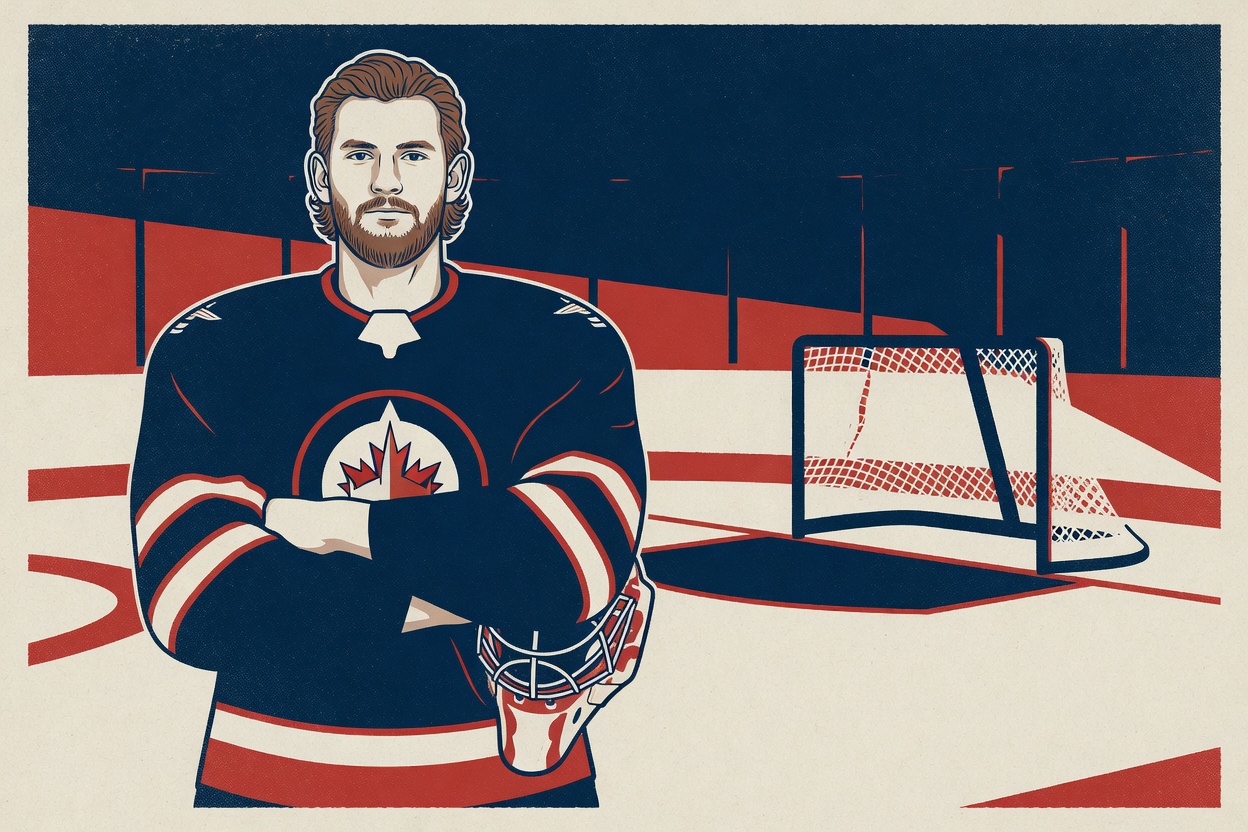
There's a version of the Bowen Byram story where Kyle Davidson looks like the smartest man in the room. There's another where this contract turns into something opposing fans chant about for the better part of a decade. Right now, both versions are equally live.
The deal itself is straightforward enough. On June 23, 2026, the Blackhawks acquired Byram and forward Jordan Greenway from Buffalo, sending back defenseman Louis Crevier plus the No. 4 and No. 45 picks in the 2026 draft. Buffalo used the fourth pick on defenseman Daxon Rudolph days later at the draft. Then on July 1, the first day he was eligible to sign with his new team, Chicago handed Byram a six-year, $75 million extension worth $12.5 million a year, running from 2027-28 through 2032-33.
The boldness is right there in the timeline. Byram will play next season, 2026-27, under his existing, far cheaper deal at a $6.25 million cap hit. The real money doesn't kick in until after that. So Chicago committed franchise-level term and dollars to a defenseman it had never once watched wear its sweater in a real game. The trial run comes after the marriage certificate.
The case for genius
Start with the résumé, because it's genuinely good. Byram was the fourth overall pick in 2019, won a Stanley Cup with Colorado in 2022, and just posted a career year in Buffalo: a career-high 42 points, including 11 goals, last season.
For a team that's been stuck in a rebuild and hasn't sniffed the playoffs, this is the kind of move you eventually have to make. BlackhawkUp framed it as part of the plan to build around Connor Bedard and the young pieces meant to drag the franchise back toward relevance. You can't rebuild forever. At some point you buy, and you buy a top-pair defenseman in his mid-twenties who can move the puck and quarterback a power play. Davidson didn't blink about the price, noting they were "capitalizing on a young player that was available that just doesn't come available very often in the league."
The case for overcommitment
Now the part that should make Chicago nervous. Byram has never been the unquestioned number one defenseman on a good team. In Colorado he sat behind Cale Makar and alongside a deep group that eventually made him expendable. In Buffalo he thrived, but he thrived next to Rasmus Dahlin, the superstar he was stuck behind on the top pairing. Buffalo won the Atlantic Division title and made the franchise's first playoff appearance since the 2010-11 season that year.
The honest question is how much of Byram's ceiling is Byram, and how much is the company he's kept. He's carved out big minutes and big numbers while someone else carried the heaviest defensive load. Chicago is paying him as if the answer is entirely Byram. Nobody actually knows yet. That's the bet.
The analytics crowd isn't buying it. The Chicago Sun-Times reported that the extension was "considered a heavy overpay by analytics models." By the Sun-Times' account, Davidson set the models aside and took a swing on a hunch.
About that "highest-paid defenseman" line, which you'll see everywhere: treat it as a paper title, not a lasting one. Byram is set to top the position when the extension kicks in for 2027-28, but with players like Cale Makar and Quinn Hughes eligible for extensions that could reset the market, he may not hold that crown by the time the money actually arrives. It's a headline with an expiration date.
The verdict
Here's where I land. I don't hate the aggression. A rebuilding team with Bedard as its centerpiece needs to start acquiring real players, and Byram fits the mold of a two-way defenseman who moves the puck and helps the power play. That fits. The worry isn't the ambition, it's the shape of the commitment: full term, top-of-market money, and no proof yet that his game holds up when he's the guy rather than the very good complementary piece next to the guy.
Davidson knows exactly what he signed up for. "We're going to provide the opportunity to become one of the top defensemen around the league and we feel 100% wholeheartedly that he can be that guy and he will be that guy," he said. That's the whole thing in one sentence. This contract is a bet on player development and internal projection over public data. If Byram takes the leap and becomes a genuine number one in Chicago, this looks smart and cheap by 2030 standards. If he plateaus as the same excellent second option he's been, the Blackhawks are stuck paying top-of-market rates for a complementary piece, in a rebuild that can't afford dead money.
My call: this is a coin flip that Chicago has tilted slightly in its own favor by getting a full season to watch Byram before the real money hits, which at least gives them information they didn't have when they signed him. Bold, defensible, and genuinely risky. Ask me again in a year, once he's actually played a game in the jersey they already put $75 million behind.