A death threat landed in Haeley Snell's Instagram messages this week. The people most responsible for the climate that produced it aren't hiding behind some private account. They're selling you the logo on your broadcast.
Here's what she got, posted to her own story: "It's simple: tell that son of a b— to back off before October 20th. Otherwise, I'll cut off your fingers, one by one. I don't care about spending 40k to track you down, you b—. He has until October 20th. Consider yourself warned." Her reply, reposting it, was simple: "Tell me you lost a sports bet without telling me you lost a sports bet."
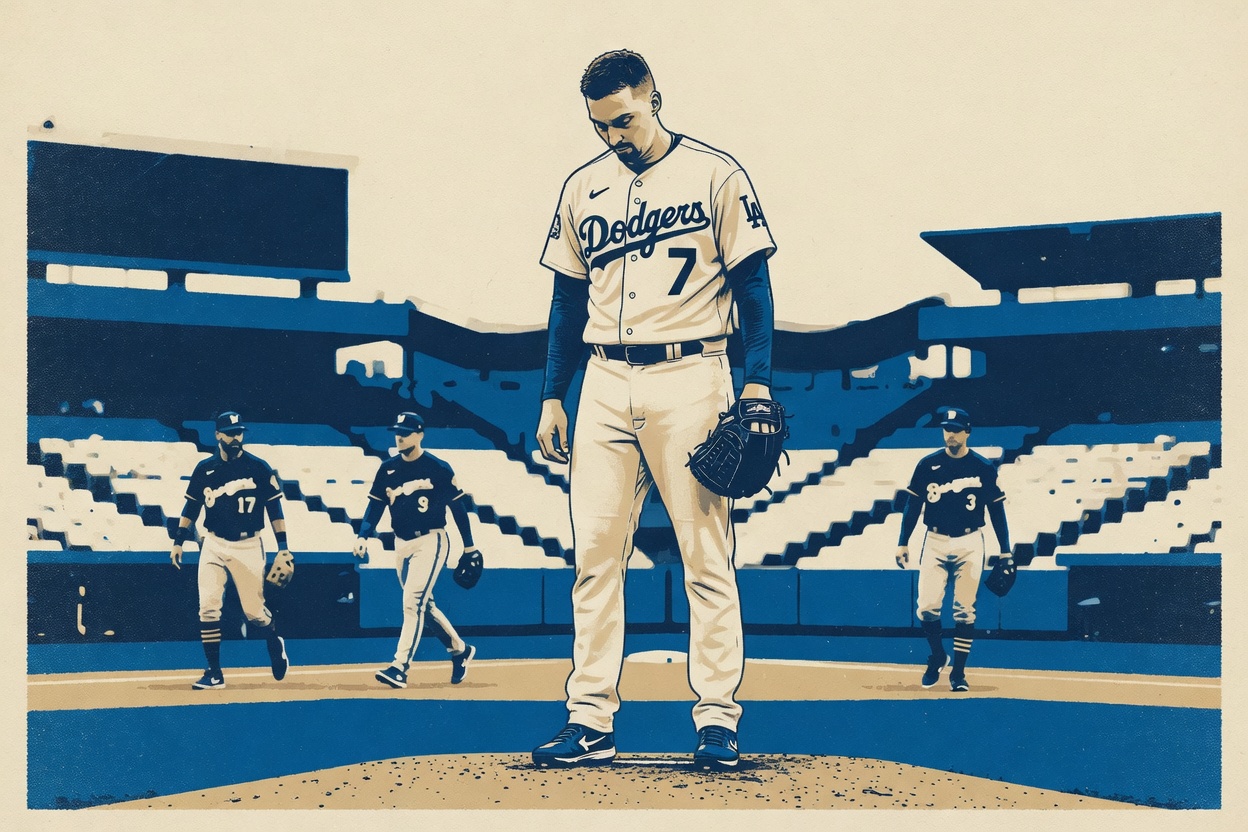
She's right. This is what a lost bet looks like now. Blake Snell started Game 3 of the NLCS on Wednesday, his strong start came apart in the seventh, Milwaukee won 6-2, and somewhere, in the wake of that outcome, someone decided the right response was to describe mutilating a pitcher's wife. As of Thursday, the Dodgers trail the series 3-0 with a potential elimination Game 4 scheduled at Dodger Stadium. The baseball barely matters here. The threat is the story, and so is who created the conditions for it.
The leagues' financial ties to gambling companies are directly responsible for this. You can't spend years turning the in-game outcomes of your sport into a betting product, running the odds widget, slapping bet-now graphics on your own telecast, bolting a sportsbook's branding onto the World Series itself, and then stand at a podium looking stunned when the customers you cultivated start treating players' families as collection agents.
The receipts are public. MLB held an equity stake in DraftKings before selling it in 2019. It then made DraftKings, FanDuel and MGM official partners. FanDuel's deal hands it the league's marks, logos and official data to splash across its sportsbook. DraftKings' expanded agreement named it an official betting partner across the entire postseason, with on-site branding during the sport's biggest events, the World Series included. A betting company's name is built into the exact October games where Haeley Snell's phone lit up.
Most people with a gambling problem would never type a sentence about cutting off fingers. This is one person, a criminal who should be identified and prosecuted. But look at how often this happens and the "one deranged individual" explanation falls apart. Ryne Stanek said it plainly: "I get death threats all the time, every day. It's not anything that every baseball player doesn't deal with all the time. Like, 'You cost me my parlay, I hope your family dies.'" A bettor known as Parlay Patz was charged by the DOJ for sending violent threats to athletes and their family members, including the wife of pitcher Liam Hendriks. In 2025, The Athletic surveyed 133 players and 78 percent said betting had changed how fans treated them or their teammates. A separate 2026 survey found 81 of 100 players had faced confrontations over betting losses. That's a pipeline.
The leagues themselves admitted as much last month, when several of them put out a joint statement conceding that "too often, individuals who lose sports bets direct threatening and harassing messages toward players, coaches, and their families," and that doing so "crosses a bright ethical and criminal line." Fine words. They'd carry more weight from an industry that wasn't collecting sponsorship money from the exact companies that profit off those losing bets.
You don't get to build the casino inside the ballpark, hand the whales a reason to care about every seventh-inning collapse, and then throw up your hands when a whale sends a woman a message about her husband's fingers. Prosecute the man who typed it. And bill the league for the room he was standing in.