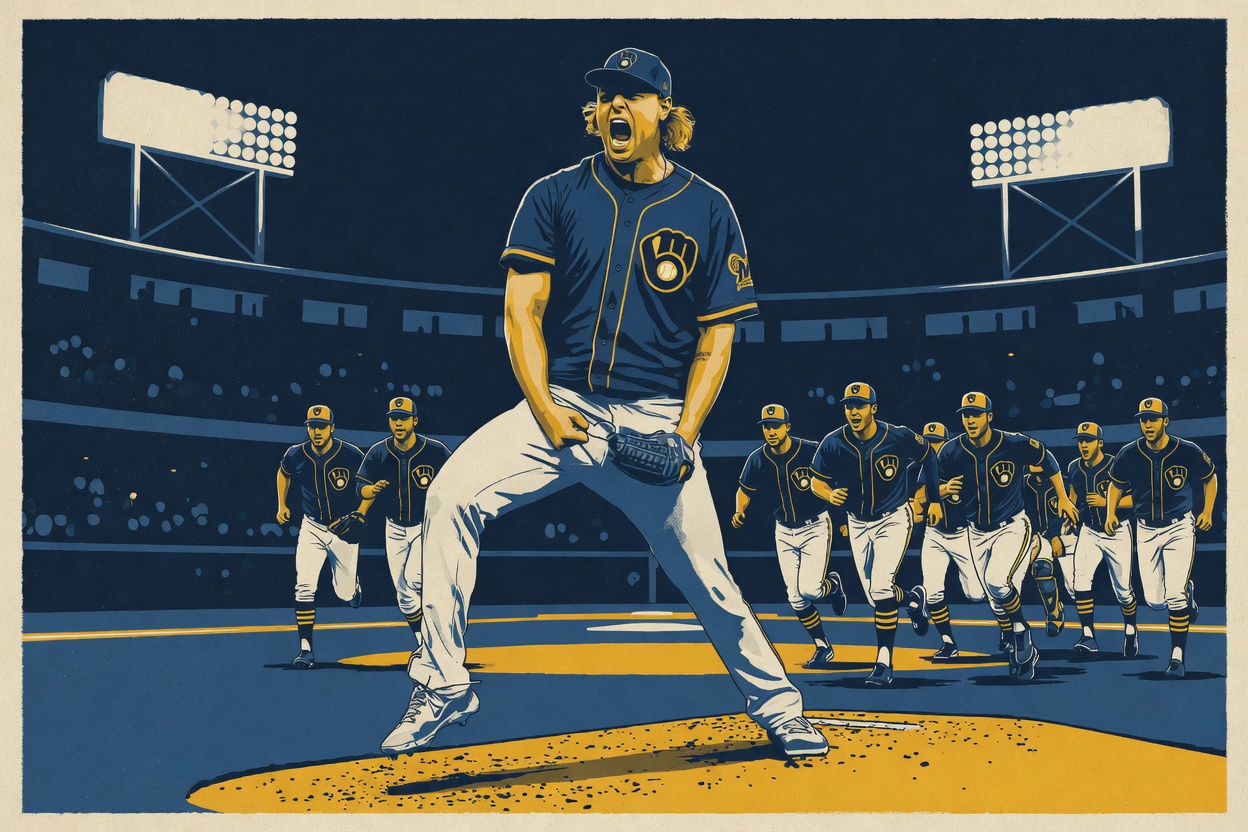
Both fan bases spent the top of the ninth gasping, celebrating, panicking, then celebrating again. Trevor Megill caused all of it.
The Brewers were up 3-1. They had the first-pitch jolt of Jacob Misiorowski's start behind them, a two-run first on Christian Yelich's triple and William Contreras's single, Jackson Chourio's two-out insurance knock in the seventh, and a bullpen that had been close to untouchable all month. This was supposed to be the easy part. Instead Megill came out, gave up one-out singles to Jonathan Aranda and Chandler Simpson, watched the Rays pull off a double steal with Jorge Mateo running, and then walked Junior Caminero to load the bases. That's a closer handing a team its whole identity back.
The Rays' identity, all postseason, has been running. They came into Game 1 a perfect 11-for-11 on steals this October. Contreras had already thrown out two of them earlier in the game. Then Megill let them do the one thing they do best, in the one inning where it could cost Milwaukee everything.
 TB97-63

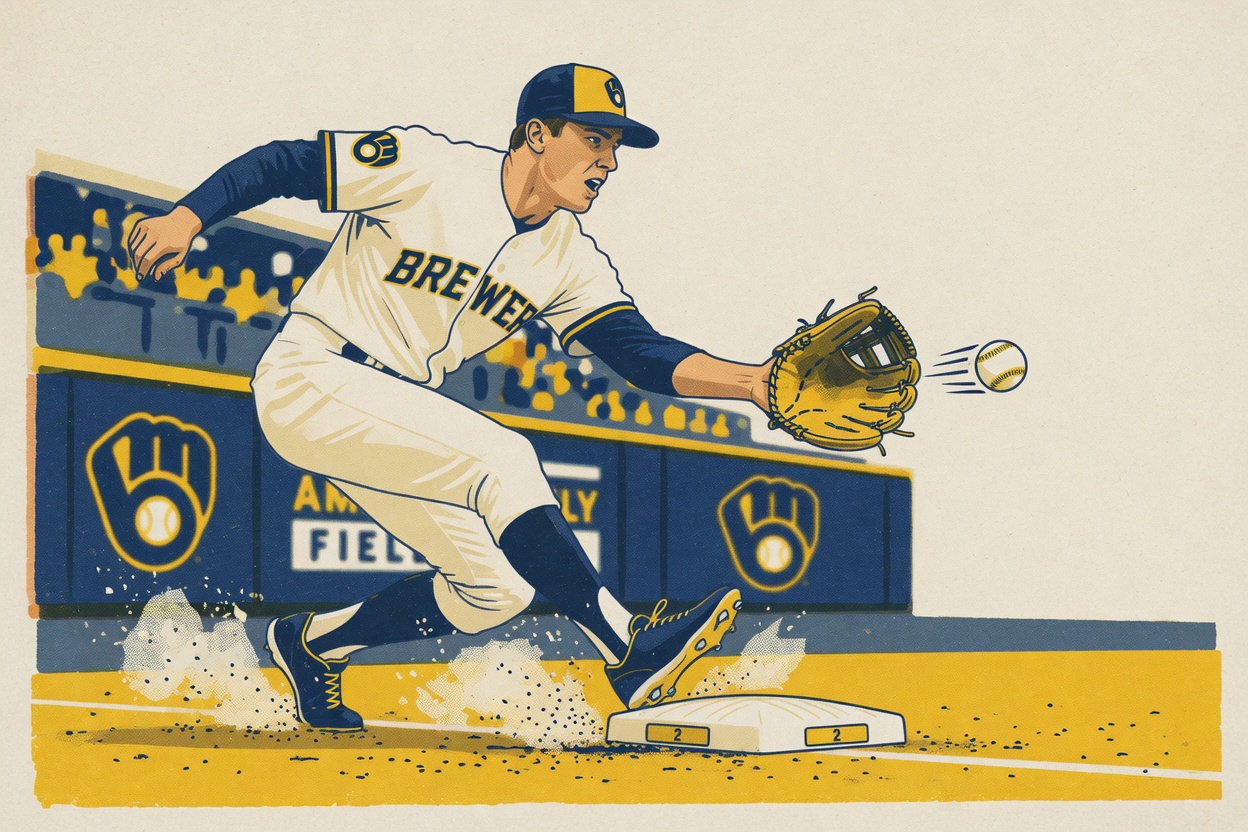
The part everyone will replay for years is the Liam Hicks grounder. Brice Turang ranged left, flipped to Cooper Pratt, the umpire rang up a game-ending double play, the fireworks went off, the dugout emptied, and Milwaukee started its party. Then the crowd went quiet, the board showed Pratt's right foot drifting off the bag an instant too soon, and the Rays had runners at second and third with the tying run ninety feet away.
Don't be mad at that part. The booth got it right. Pratt's foot left early, the camera caught it, and the rule did exactly what it exists to do. Yelling at replay for being accurate is a waste of a perfectly good grudge. The call was tight, and it was correct. Kevin Cash saw the same thing you did and said he figured it would be overturned the moment he watched it.
Credit Megill for not coming apart after the party got un-thrown. Pat Murphy has drilled it into them: when the challenge flag is up, don't walk off the mound. Megill stayed, dropped a curveball at the bottom of the zone, doubled up on it, and Jonny DeLuca waved through strike three in the dirt. Second round of fireworks, this time for real. Misiorowski summed up the night as well as anyone: "I thought Coop had him, and obviously I was wrong." Megill himself admitted he was thinking worst-case scenario the whole time.
That poise wins titles. It doesn't change the fact that he should never have needed it. This is a reliever who'd been part of a unit sitting on a 1.33 ERA across more than forty postseason innings. He had three runs and a rested, red-hot team behind him. He turned it into a letter from the cardiologist.
It's one game. Milwaukee leads the best-of-seven 1-0, and a franchise that hadn't won a World Series game in forty-four years will happily take an ugly one. Through Game 1 the Brewers have won six straight in October and sit 8-1 this postseason, but none of that predicts what happens Saturday. Reading a sixty-second anxiety attack as the shape of the whole series is a mistake. Game 2 resets everything.
What's worth watching going forward is the closer. Two first-time-champion hopefuls meeting for the first time since 1980 deserve drama, not another ninth inning like this one. Megill needs to pitch like the guy who posted that ERA all month. He nearly coughed up Game 1 with the easiest hand in baseball to play.