The Brewers just won the first World Series in franchise history, and within forty-eight hours half the sport decided it had witnessed a revolution: small ball, contact, scrappy base-running, the little guys slaying the payroll giants. That story is wrong, and the people selling it are looking at the regular season while ignoring the part where Milwaukee actually won the trophy.
The number that blows up that story: in the 2026 postseason, the Brewers led every team in baseball with 13 home runs. They also topped the playoffs in hits and RBIs. They out-slugged October. They beat the Rays in five games, closing it out 4-1 on October 28.
The summer version of this team was strange, and it was good. Milwaukee scored 832 runs while hitting only 154 homers, led the majors in batting average and on-base percentage, and became the first club since the 1960 White Sox to finish among the top three in runs and the bottom three in home runs. That's a real identity, built on discipline and putting the ball in play, and it carried a 103-59 record into October. Credit it. Just don't confuse it with how the title was won.
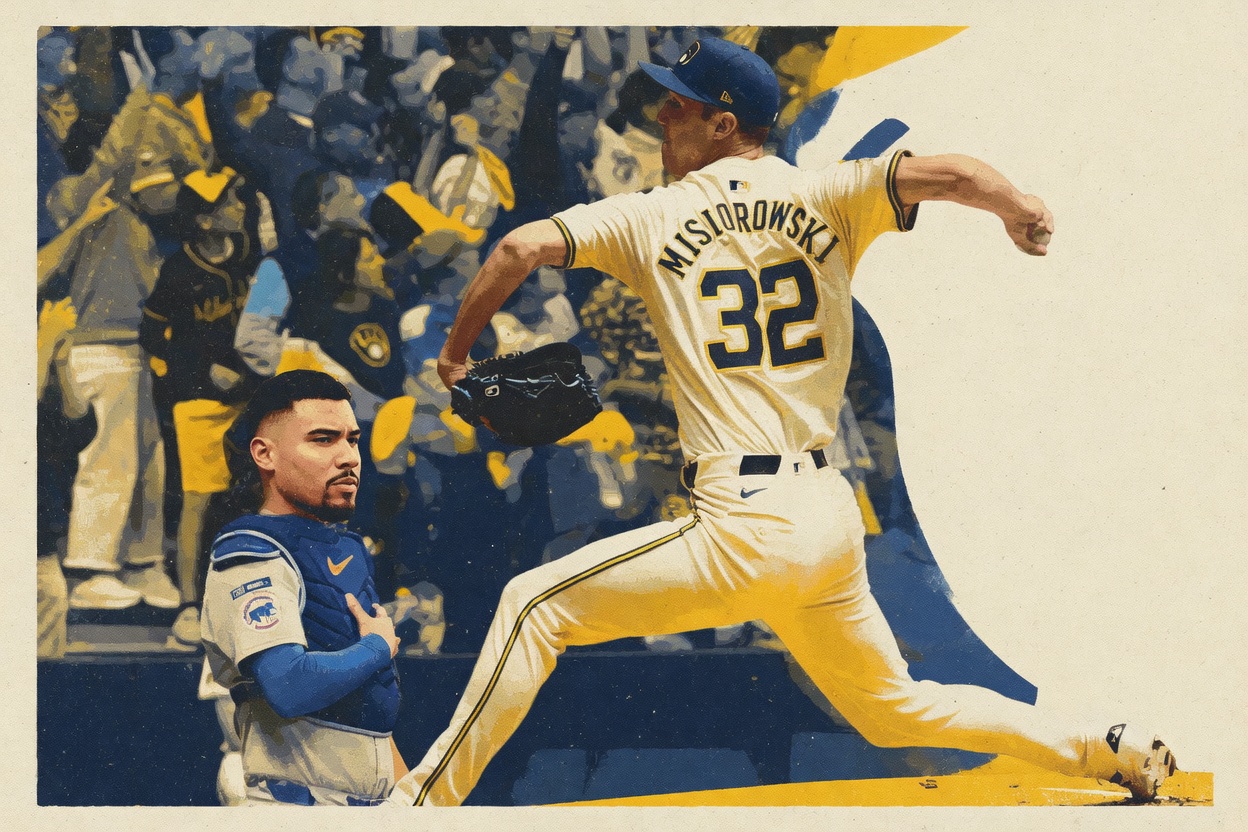
The moment the playoffs started, the supposed slap-hitters turned into the most dangerous power lineup in the field. Rookie shortstop Cooper Pratt had four hits in Game 4, including a go-ahead home run in the 12th inning, the first extra-innings World Series homer ever hit by a rookie. William Contreras, an offense-first catcher Milwaukee stole in a December 2022 trade that cost them essentially one fringe outfielder, hit .381 across the series and walked off with MVP honors. Then there's Jacob Misiorowski, a homegrown arm who threw a 103.5 mph fastball on the first pitch of the Series and worked 5 2/3 scoreless innings in the clincher before a calf cramp handed the ball to Trevor Megill. That's a deep, athletic roster and a historically fast arm, both peaking at once.
The reproducible part is the front office. This is where Matt Arnold, and David Stearns before he left for the Mets, deserve every bit of praise coming their way. They built a champion on a payroll lower than more than half the league. Of the 26-man World Series roster, 14 came in via trade, eight were drafted, four signed. They flipped Josh Hader a year early back in 2022 and are only now cashing the full return. They developed a 103-mph starter instead of trying to buy one. That discipline, scouting, and development over free-agent splurging is a smart way to run a baseball team, and other clubs should steal it shamelessly.
What they shouldn't do is attach a championship guarantee to it. The strongest case for the blueprint crowd is the 2015 Royals, who played exactly this contact-and-defense style and won it all, and came within one swing of winning the year before that. But the Royals are famous precisely because they were an exception. The history of this sport keeps showing that power and spending win far more often than they lose, and one great Milwaukee October doesn't flip that. A great team getting its best players hot at the same time is a streak.
The World Series itself proves how thin the margin was. Both teams combined for just four home runs across the five games, the fewest in a World Series since 1985. If one of those balls stays in the park, if Misiorowski's calf goes in the fourth instead of the sixth, we're writing a different column about a different champion, and nobody's calling anything a blueprint.
Milwaukee earned this with brains in the front office and brilliance on the field. But the thing that supposedly made them special, the refusal to rely on the home run, is the exact thing they abandoned the moment it counted. Copy the scouting. Skip the mythology.