Back in May, the story wrote itself. Carlos Correa tore the peroneus brevis tendon in his left ankle taking practice swings in the batting cage before a game against the Dodgers, went under the knife six days later, and the coverage settled on a tidy conclusion: see you next spring. A torn tendon, a repair on May 11, a six-to-eight-month rehab window. That math doesn't leave room for a return this year. Everyone agreed. Everyone moved on.
Correa, apparently, did not get the memo.
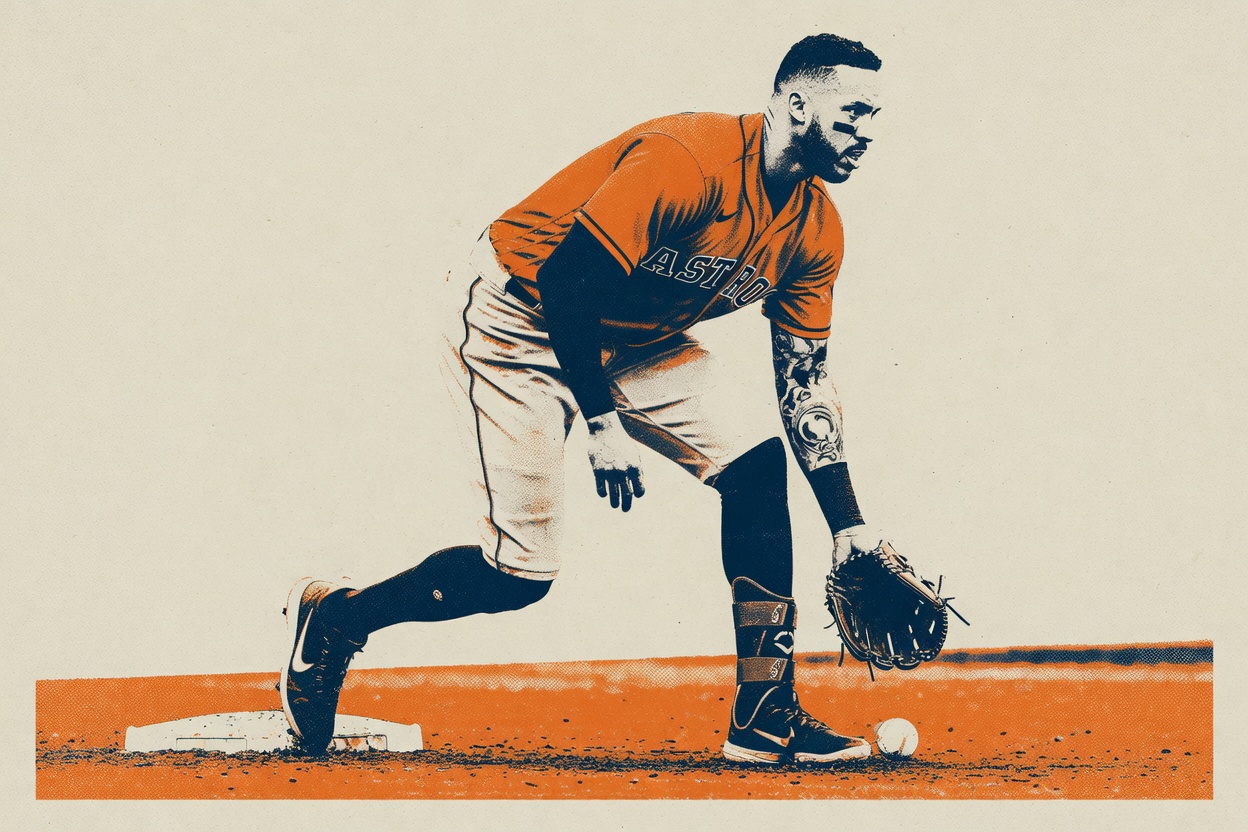
On Tuesday, September 1, he cleared his four-month checkup and got the green light to escalate his baseball activities. The plan, as of this writing, is for him to report to the Astros' facility in West Palm Beach this weekend and see whether the ankle holds up under real reps. He's already sprinting at what he described as 95 percent intensity, taking full swings, fielding grounders, and hitting off a pitching machine. He was cleared to swing about a month ago. None of this is a return yet: he hasn't been activated, hasn't started a rehab assignment, hasn't been put on the roster. But it's a lot more than you'd expect from a guy who was supposed to be done for the year.
So which is it? A win for modern sports medicine, a body rebuilt and returned ahead of schedule? Or a quiet indictment of how quickly teams and doctors reach for the phrase "season-ending" in the first place?
Probably both, and the truth is less dramatic than either version wants it to be. The six-to-eight-month range everyone quoted in May wasn't wrong. It was a range. Correa is simply tracking toward the fast end of it, and the fast end of an eight-month window, when your surgery lands in early May, happens to bump right up against late-season baseball. Nobody misdiagnosed anything. His medical team didn't botch a call. The recovery has outpaced the assumption, not the science.
But the episode still exposes something about how injuries get framed. "Season-ending" is a convenient label. It closes a chapter, and it lets a front office plan and fans grieve and move on. What it usually means, though, is "the middle of the projected timeline lands after the last game." It's a forecast dressed up as a verdict. Correa himself seems to have understood that better than the people writing his obituary. "From the moment I had the surgery, my plan has always been to try to get back and play this year," he said Tuesday. "So now that we're going to ramp up for real and see how the foot's going to respond, this will be a real test for us to see if we can come back and play."
That last phrase matters. He's calling it a test, not a coronation. Correa isn't spiking the football, and neither is his manager. Joe Espada called the Florida trip "a step closer for him to getting back" but stayed measured: "We've still got to make sure that we check all the boxes ... But this is really encouraging." Even the people closest to it are treating this as a hypothesis being tested, not a miracle being announced. That's what normal medicine looks like when it's working, just at the optimistic edge of the timeline.
It also helps that this is Correa we're talking about. The Astros made him the No. 1 overall pick in 2012, and his career has been shadowed by lower-leg issues before, enough that they complicated his free-agent negotiations with the Giants and Mets a few winters ago. Those were different injuries to a different leg, so I won't pretend this is history repeating. But a body that's been prodded and questioned this much has also, more than once, beaten the doubters early. If anyone was going to treat a season-ending diagnosis as a starting gun instead of a finish line, it fits that it's him.
Houston may not have an obvious place to put him, though. Correa has worked defensively only at third base during this rehab, not shortstop, where Jeremy Peña is entrenched this season. And third belongs to Isaac Paredes now, who by OPS-plus has been one of the club's most productive bats. Before the injury, across the 32 games he played, Correa was slashing .279/.369/.418 with three home runs. Useful, not irreplaceable, and the lineup has functioned without him. So even at full health, Correa is a luxury for a first-place team that already solved his absence months ago, not the missing piece.
Why push, then? Because the calendar and the standings make it tempting. The Astros entered that Tuesday with 24 games left and a two-game lead in the AL West over the Rangers, holding the tiebreaker, with Seattle lurking. That race has moved day to day, and it's the kind of margin where a proven October bat, even off the bench, is worth the effort of finding out.
This isn't a triumph over medicine, and it isn't a failure of it either. "Season-ending" is an estimate, and estimates have edges. Correa found the good one. Whether the ankle survives West Palm Beach is a separate question, and nobody, including Correa, is answering it yet.