Alex Oxlade-Chamberlain's suspension says less about him than about how little Celtic knew about their own signing before it came back to bite them.
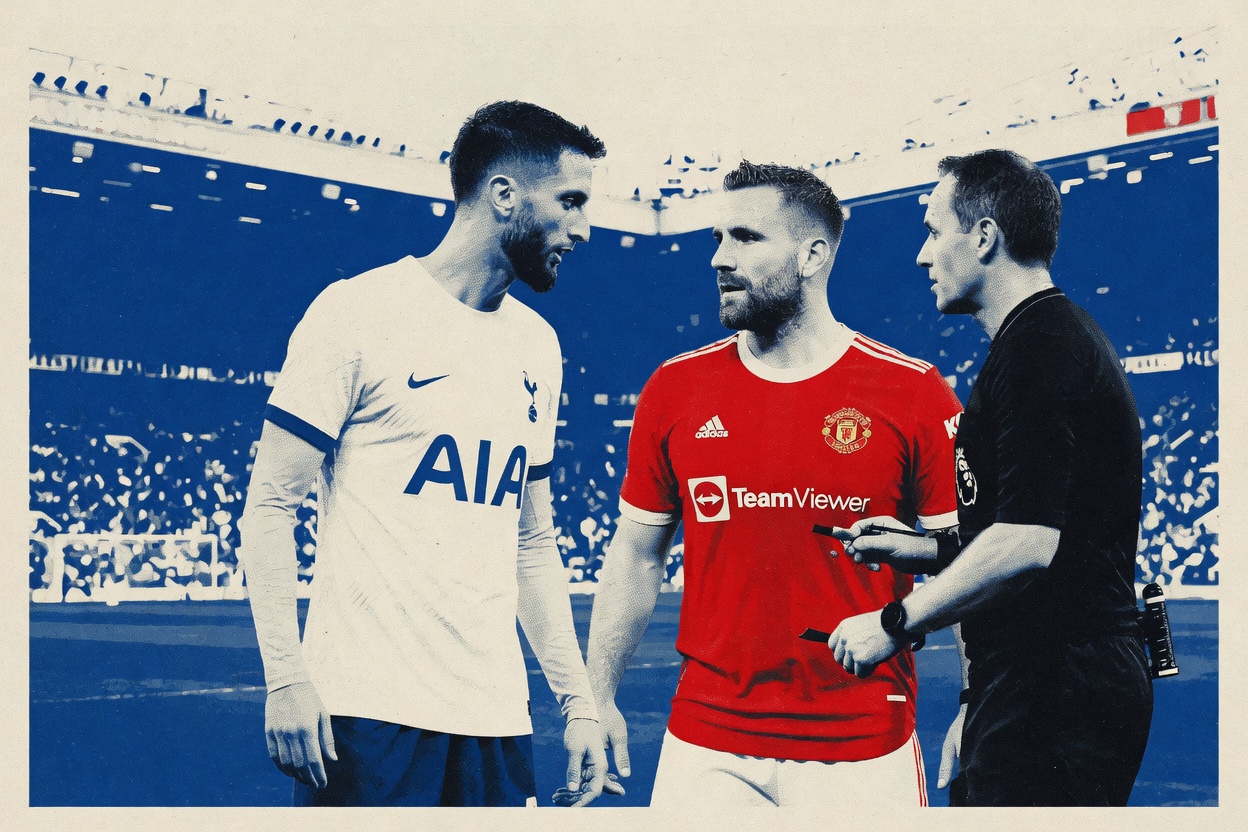
Oxlade-Chamberlain was shown a straight red card while playing for Besiktas against Lugano in the Europa Conference League in December 2023, dismissed in the 90th minute after an altercation with Lugano winger Renato Steffen, who also walked. That earned a three-match UEFA suspension. Under UEFA's rules a change of club doesn't wipe an outstanding sanction, and bans of between three and six matches carry a five-year enforcement window. So the punishment traveled with him, quietly, waiting for the next time he was registered to play in Europe.
That moment is now. The ban rules Oxlade-Chamberlain out of both legs of Celtic's Champions League play-off against LASK and their opening league-phase fixture as well, regardless of which competition they end up in. Celtic won the first leg 3-0 at Celtic Park on August 19, with Benjamin Nygren opening the scoring and Camilo Duran adding a double. The second leg is being played in Linz, so the qualification question is still open. But the suspension is settled fact, and so is the timeline of how Celtic discovered it.
That's the real scandal. Manager Martin O'Neill has openly admitted the club had no idea. "We weren't aware of that at the time," he said. "Alex certainly didn't make us aware of it, but he wouldn't have known in fairness. I think he thought because there was a couple of games after that for his club team... but he didn't get into the squad, therefore that doesn't count." He's not spinning. He's confirming that a sanction sitting on UEFA's own records went unnoticed by the people whose job is to know these things, from the day Oxlade-Chamberlain arrived until the day it bit them.
This isn't an obscure loophole. UEFA disciplinary records are checkable. A player's outstanding suspensions are exactly the kind of thing a competent football operations department confirms before it signs someone, and long before it builds a European squad list around him. Former Aberdeen chief executive Keith Wyness put it plainly, calling it "simple due diligence 101 that should have been done" and warning that "certainly somebody's in a lot of trouble about this." Wyness went further, suggesting chief executive Michael Nicholson could lose his job over it and that "heads will roll" if the error costs Celtic the LASK tie. One caveat: Wyness is a paid pundit offering a prediction, not a club insider describing an actual process, and there's no evidence of any formal action against Nicholson over this. But you don't need his prediction to see the shape of the failure.
The detail that turns embarrassment into farce is that Celtic still registered Oxlade-Chamberlain in their squad for the LASK tie. That doesn't let him serve the ban. Under UEFA's rules a match only counts toward fulfilling a suspension if the player was fully eligible to have played in it, so listing him achieves nothing except confirming, on paper, that the club knowingly named a suspended player. It just proves the operation wasn't tracking its own compliance.
There's a fair counter-argument here, worth engaging honestly. One Celtic writer has asked what would actually have changed if someone had caught the ban weeks earlier. Would the club have rushed through a transfer? Probably not. The midfield was already thin after Arne Engels' £22million move to West Ham, and knowing about the suspension sooner wouldn't have conjured a replacement out of nothing. It's a reasonable point about consequences.
But it misses the deeper issue. Even if the practical fix would have been identical, the diagnostic failure stands on its own. A department that doesn't know its own new signing is carrying a live European ban isn't doing the basic homework. You don't get to wave that away just because this particular gap happened to have a manageable outcome. Next time the missed detail might not be so forgiving.
That's why this stings more than the fixture math suggests. Celtic went out at this stage last season, beaten on penalties by Kairat Almaty, and the whole point of a strong first leg against LASK was to bury that memory. Instead the qualification story has been muddied by an unforced error that had nothing to do with the football. The players did their job at Celtic Park. The building around them didn't.
Whatever happens in Linz, don't file this under bad luck. A suspension doesn't hide for three years. Someone simply didn't look. For a club that treats European qualification as the line between a good season and a lost one, that's exactly the kind of miss they're supposed to be built to catch.