
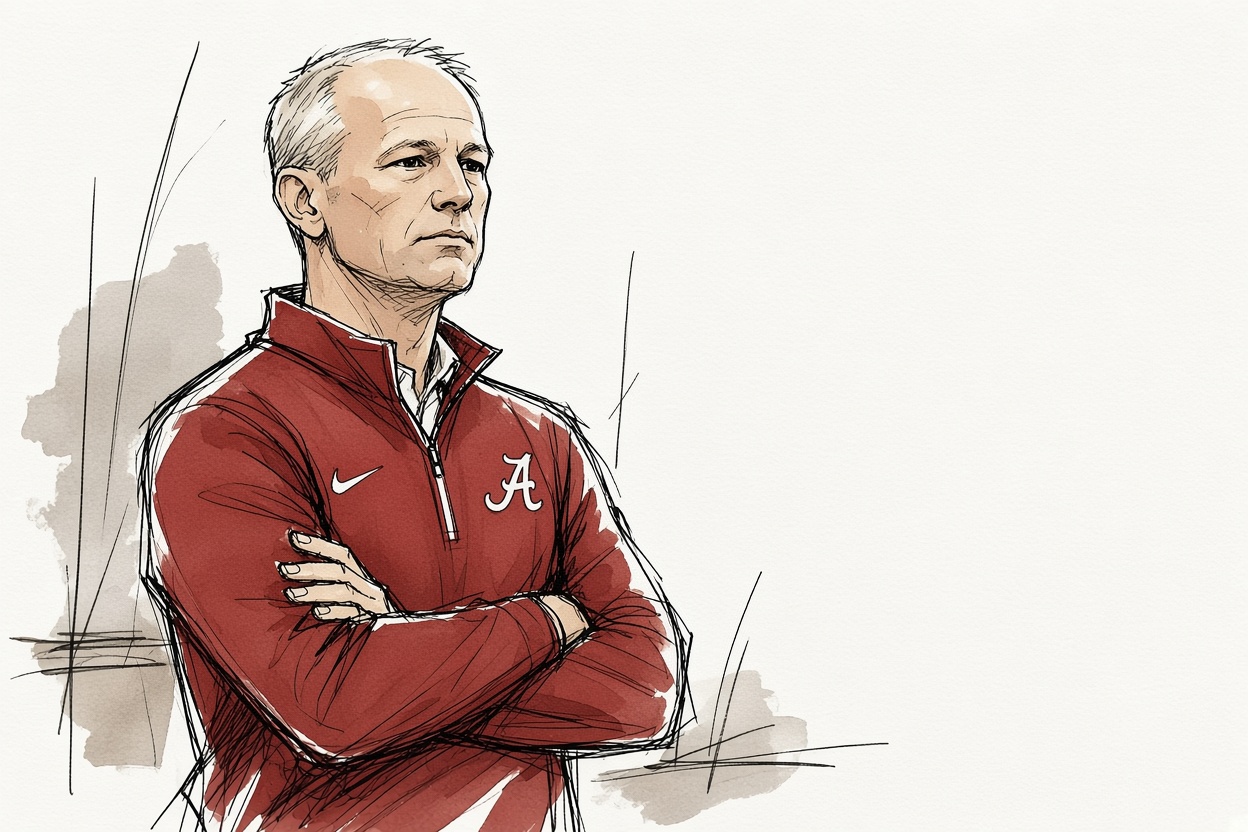
The College Football Playoff committee says Alabama owns one of the best resumes in the country. It won't let you check how it got there. Every week, chair Hunter Yurachek steps up to the ESPN set, cites a stat called "record strength," and uses it to wave off anyone who looks at a two-loss team and squints. There's one small issue: nobody outside that room can see the formula.
Here's the pitch, in Yurachek's own words from the reveal show: "They're No. 1 in record strength, No. 1 in schedule strength. They have four what we call quality wins because we continue to call that win against Mississippi State earlier in the year when they had Kamario Taylor on their team, they were 4-0." He said Alabama "deserves to be the No. 3 team." In the second rankings reveal on Nov. 10, there they were at No. 3, the highest-ranked two-loss team in the country, sitting above unbeaten UCLA at No. 4 and above No. 8 Tennessee, a team with the same record that beat the Tide head-to-head.
The committee's own protocol lists head-to-head results second among the principles it applies when teams look comparable. Yurachek reached past that for a number he introduced this season and has never published. "Record strength" is new for this cycle, added to reward teams for beating high-quality opponents while shrinking the penalty for losing to them. Convenient stat. Nobody gets to audit it.
Now look at the number you can actually check. ESPN's Strength of Record, built on the FPI that CFP protocols bar the committee from even considering, had Alabama around fifth, and a day before the latest reveal it had slid to sixth. Same team, same week, two numbers pointing in opposite directions. One of them you can test against every result on the schedule. The other lives in a locked room and comes out only when the committee needs to end an argument.
It's almost funny, until you think about it: the metric Alabama is riding now is roughly the thing Kalen DeBoer went looking for after the Tide missed the 2024 playoff at 9-3. Schedule strength got reweighted and record strength got invented, both arriving the same offseason DeBoer made his complaint. Then it put a two-loss Alabama team ahead of an undefeated one and called it math.
If you want the long memory, go back to 2023, when an undefeated ACC champion Florida State got left out of the four-team field and Alabama was one of the teams that got in. Nobody's accusing Alabama of cheating. The pattern is that when the committee has to pick between what the games say and what a blue blood's resume should be, it keeps finding a reason, and lately the reason is a stat it won't show its work on.
There's a real defense of the committee: computer rankings like FPI have real flaws and can be gamed, reducing a messy sport to one output nobody should fully trust. Handing the whole thing to a single formula would be its own mistake. But that same logic supports more transparency, period. If human judgment is better than a flawed algorithm, then show the judgment. Publish the inputs. Let people see why the Mississippi State win still counts as quality. The strongest case for a committee of humans is transparency, and this committee has decided transparency is optional.
Tonight's reveal, the third of the season, could move Alabama again, and the resume case has been getting weaker by the week. Yurachek keeps answering legitimate questions by pointing at a number only he can see. Until the CFP opens that box and prints the formula, "No. 1 in record strength" is just a guess with better branding.