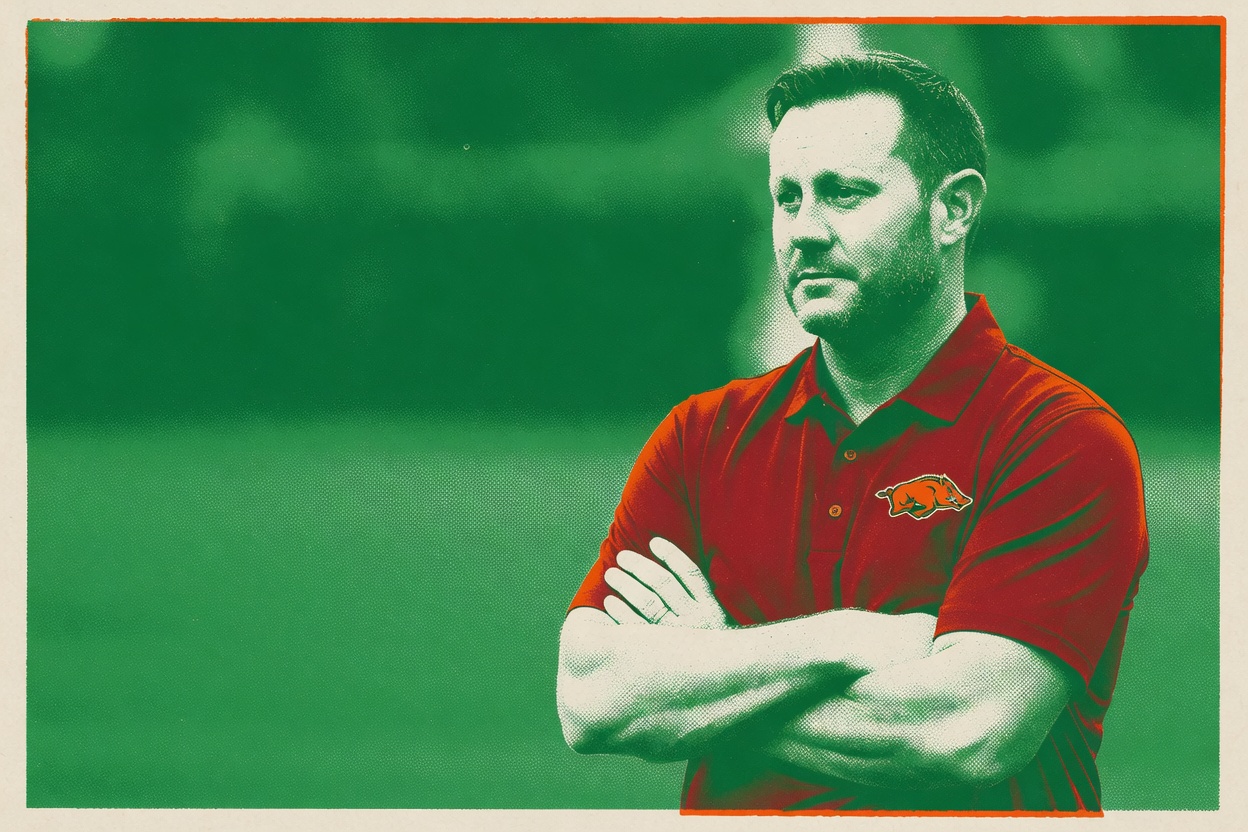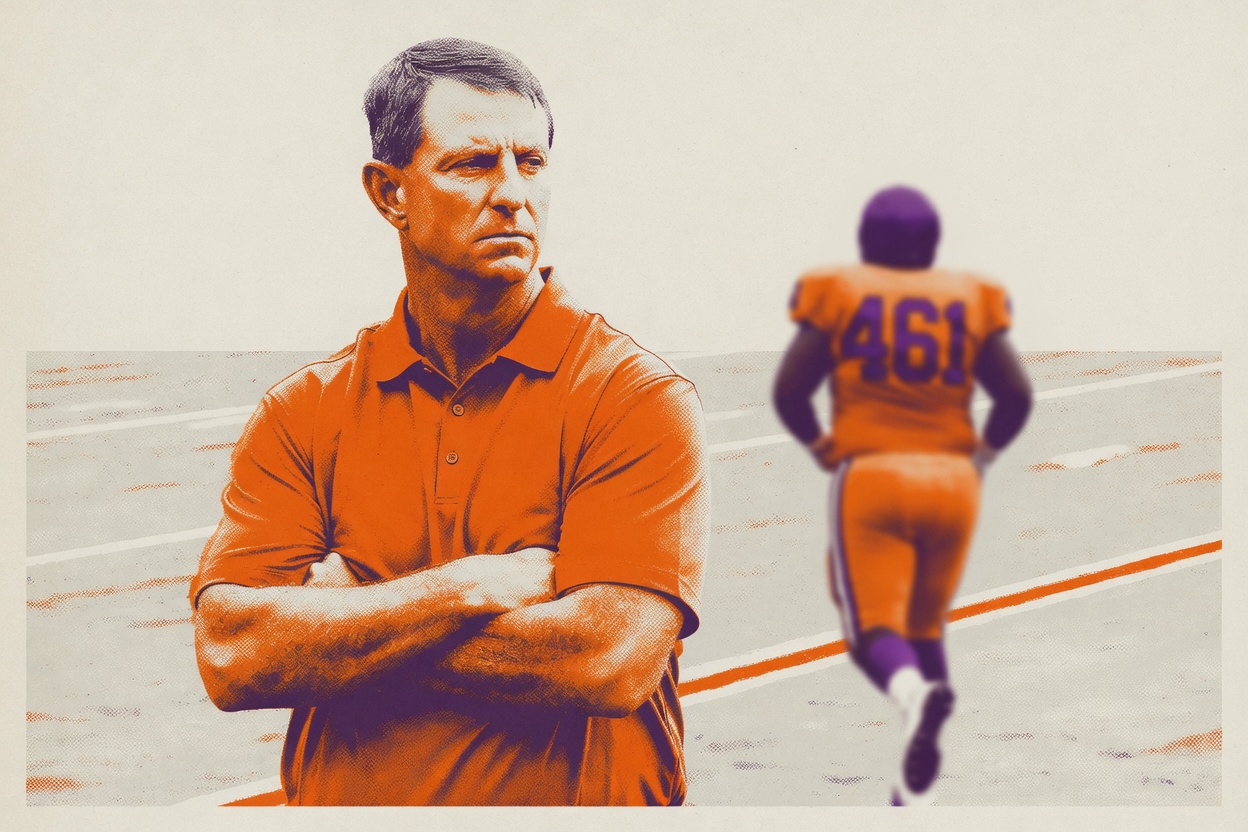
Two days before the news broke, Dabo Swinney was talking up Vic Burley. Clemson's coach said he'd noticed his defensive tackle at least three times in Thursday's scrimmage, back on the field after an injury, and told reporters, "It was good seeing him out there." Then came the Saturday morning arrest, and within about 48 hours the praise turned into a statement that reads like a door closing: "I have made the decision to suspend Vic from our football team indefinitely. We are extremely disappointed by his actions and decisions."
That turnaround is worth sitting with, mostly for how fast it happened rather than for what actually occurred. Swinney said he was "made aware of defensive tackle Vic Burley's arrest by the Clemson University Police Department for disorderly conduct early Saturday morning." The charge is pending. Nobody outside the process knows what happened, and it would be wrong to treat an arrest as a verdict. But Swinney didn't wait for a courtroom to weigh in before drawing a line inside his building.
This is more than a routine suspension, because of what Clemson's rules actually require. Disorderly conduct isn't one of the offenses that forces a coach's hand under Clemson's student-athlete handbook. Last year, when tight end Ian Schieffelin was arrested on a DUI charge before Clemson's opener against LSU, Swinney was leaning on a written policy that mandates withholding players charged with DUI from a minimum of 10% of competitions. That suspension was, at least in part, the rulebook operating on its own. A separate 2025 case involving defensive end Caden Story showed the flip side: a misdemeanor-level arrest that didn't automatically trigger a suspension because it wasn't a felony, a weapons charge, a gambling offense, or criminal sexual conduct.
Burley's case sits in that second category. The indefinite suspension isn't Swinney following orders, it's Swinney choosing the harder path when the paperwork gave him room to do less. If you've watched him long enough, that tracks. This is the same coach who once suspended four players, including two starters, for a season opener over a team-rules violation, framing it around "teaching accountability, responsibility and that there are consequences for your actions." The Burley response fits the pattern rather than breaking from it.
So far, so admirable, but here's the part that should make honest people a little uncomfortable.
The timing is brutal. Clemson opens the 2026 season on the road at No. 11 LSU on Sept. 5, and the Tigers begin the year unranked in the AP Top 25 for the first time since 2011. This is a proving-ground game for a team that has to re-earn respect it used to take for granted. And Clemson can least afford to lose bodies at Burley's position. He's a 6-foot-4, 315-pound senior who arrived in 2023 as the highest-ranked member of his recruiting class after earning five-star status, before knee injuries derailed his early years and forced a redshirt. His career line is modest: 24 tackles and a pass breakup across 21 games and 267 defensive snaps, with his first career start coming in January's 22-10 bowl loss to Penn State. But he was expected to be a bigger contributor this fall, and the suspension lands on a defensive tackle room already considered one of the least experienced spots on the roster.
Which raises the real question here: should a coach ever let the size of the game soften an off-field call? Nobody at Clemson has publicly suggested Swinney weigh Burley's discipline against the LSU trip. This is my argument, not theirs. My honest answer is that the moment you let the size of the opponent set the size of the punishment, the standard stops being a standard. It becomes a sliding scale: generous in September against ranked teams, strict in November against nobody. Players notice that math instantly. So do recruits.
The cleaner position, and the one Swinney appears to have taken, is that the calendar doesn't get a vote. If the response would be an indefinite suspension in a bye week, it's an indefinite suspension the week before LSU too. That consistency costs Clemson something real against a good LSU line, and it probably makes an already uphill opener steeper. But a rule that bends when it's expensive was never a rule to begin with.
There's still plenty unresolved. "Indefinitely" carries no defined end date, and Clemson hasn't laid out reinstatement criteria or a timeline as of this writing. The legal case has no disposition yet, and Schieffelin's DUI a year ago was eventually dismissed and reduced, a reminder that arrests and outcomes aren't the same thing. Burley deserves that process. What he doesn't get, at least not right now, is the field. Swinney made that choice with LSU circled on the schedule and a handbook that would have let him look the other way. Agree with the harshness or not, that's the version of program discipline you can actually defend.