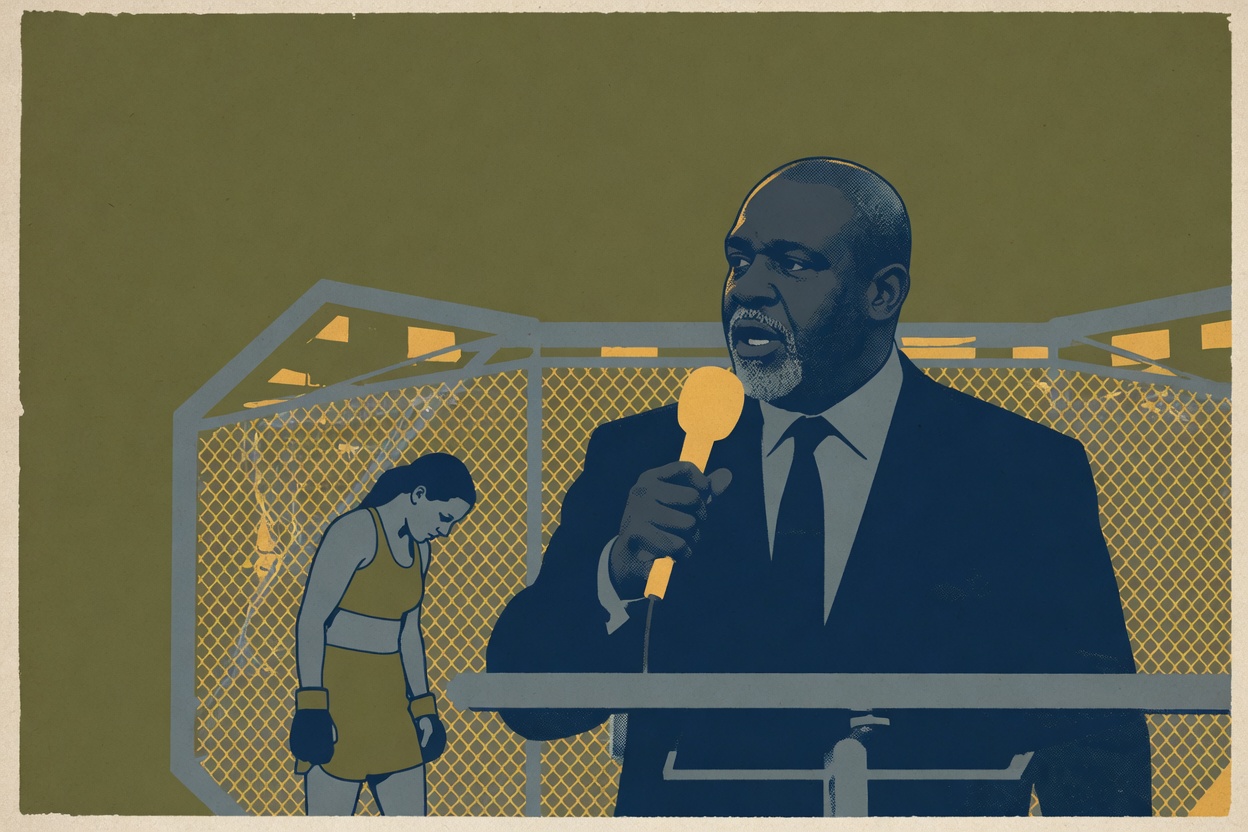
Two men said goodbye at UFC 330 in Philadelphia on August 15, and the sport only knew how to grieve one of them.
Edson Barboza got the send-off. He lost his fourth straight fight, finished by Esteban Ribovics with strikes at 1:32 of the second round after a stumble late in the first, and then he did the thing that ends careers with dignity: he took off his gloves and set them down in the center of the cage. "I just want to say thank you. I did my best in every single fight; I promise," he said through tears. "I'm so thankful. I hope you all enjoyed it." Dana White called him "an absolute savage." That's a clean exit after roughly a decade and a half in the UFC. Everybody understood it.
Then Din Thomas got up in the co-main aftermath, watched his fighter Gillian Robertson drop a decision to strawweight champion Mackenzie Dern, and announced on the broadcast that he was retiring from cornering fighters. The reaction was confusion, then a pile-on.
The room didn't have a slot for it
Start with White, because his reaction tells you most of the story. "That's weird. He didn't say anything to me," White said afterward. "I didn't know about that. I've never heard about retiring from cornering. That might be a first." This is a man who has heard every version of goodbye there is. Fighters retire in the cage. They retire on Twitter, and sometimes they retire and un-retire in the same year. White has a filing cabinet for all of it. He had no drawer for a coach saying he was done working the corner.
That blank stare is the point. We treat fighter retirements as sacred because we've built an entire emotional grammar around them. Nobody built one for the people in the background. So when one of them says he's out, it doesn't register as a career decision. It registers as "weird."
What Thomas actually said
The viral clip buried the important part. Thomas didn't say he was quitting the sport. He said he was quitting the corner. "I'll still work with guys; it's just a matter of going down that road with cornering," he clarified. His reasoning was about the load: being away for the entire fight week, not being the one who cuts weight with his athletes, and no longer feeling he could give the job what it demands. "It's a lot of work. It's a lot of stress. You gotta be there all week," he said. "And it's not fair to them. They need somebody who's gonna really put that type of work in with them."
Read one way, that sounds like a man quitting on his fighter. Read another way, it's a man stepping aside because he can't give her everything the role requires anymore and thinks she deserves someone with more left in the tank.
And consider who's saying it. Thomas has been coaching for close to three decades, a long stretch at American Top Team where he worked with champions including Amanda Nunes and Tyron Woodley. In recent years he added broadcast work as a UFC analyst and host of the promotion's YouTube show. That's fight weeks stacked on production days stacked on more fight weeks, for years. When White groped for an explanation, even he landed on it: "Maybe he's just tired of the grind. You know, he's worked with so many fighters over the years. Maybe he's just burnt out."
White said the quiet part without meaning to, and everyone kept booing anyway.
The Anik critique is fair, and it's also a trap
Jon Anik, the promotion's play-by-play voice, took issue with the timing, framing it as making Robertson's worst night about himself. I won't pretend that's baseless. There's a real argument that you don't announce your own exit in the seconds after your athlete loses a title fight. The optics were rough. Fans ran with it, and a clip of the speech went viral for all the wrong reasons.
But the timing objection is doing a lot of work to avoid the actual content. Yes, the moment was clumsy. That doesn't make the message a PR stunt. Thomas tied his decision directly to Robertson: that he'd promised himself he'd corner her until he took her as far as she could go, and that he thought that point had arrived. It was awkward. Calling it self-serving is a stretch. A coach saying "I've given what I have, and it's not enough anymore" is not the villain of the night.
The retirement we should have talked about
Barboza's retirement was the one that felt like an ending, and it was earned. Thomas's is the one that should nag at you, because it exposes something the sport never budgets for. Fighters get medical suspensions, walkout songs, and a microphone. The people who tape their hands, sleep in hotel corridors all week, and carry the emotional weight of a loss they can't fight their way out of get nothing but the next fight week.
Burnout among fighters is a story we know how to tell. Burnout among the corner, the cutmen, the coaches, the analysts working double duty, that's the story nobody has a template for. White literally said he'd never heard of it, and that's not because it doesn't exist, it's because nobody's been listening for it.
The backlash may harden or soften as this keeps rippling through the week. But strip away the timing and you're left with a nearly-30-year veteran of the grind saying, on the biggest stage available to him, that the job broke him down. You can groan at how he said it, but don't ignore what he said. Two men walked away in Philadelphia. Give the second one the same benefit of the doubt you gave the first.