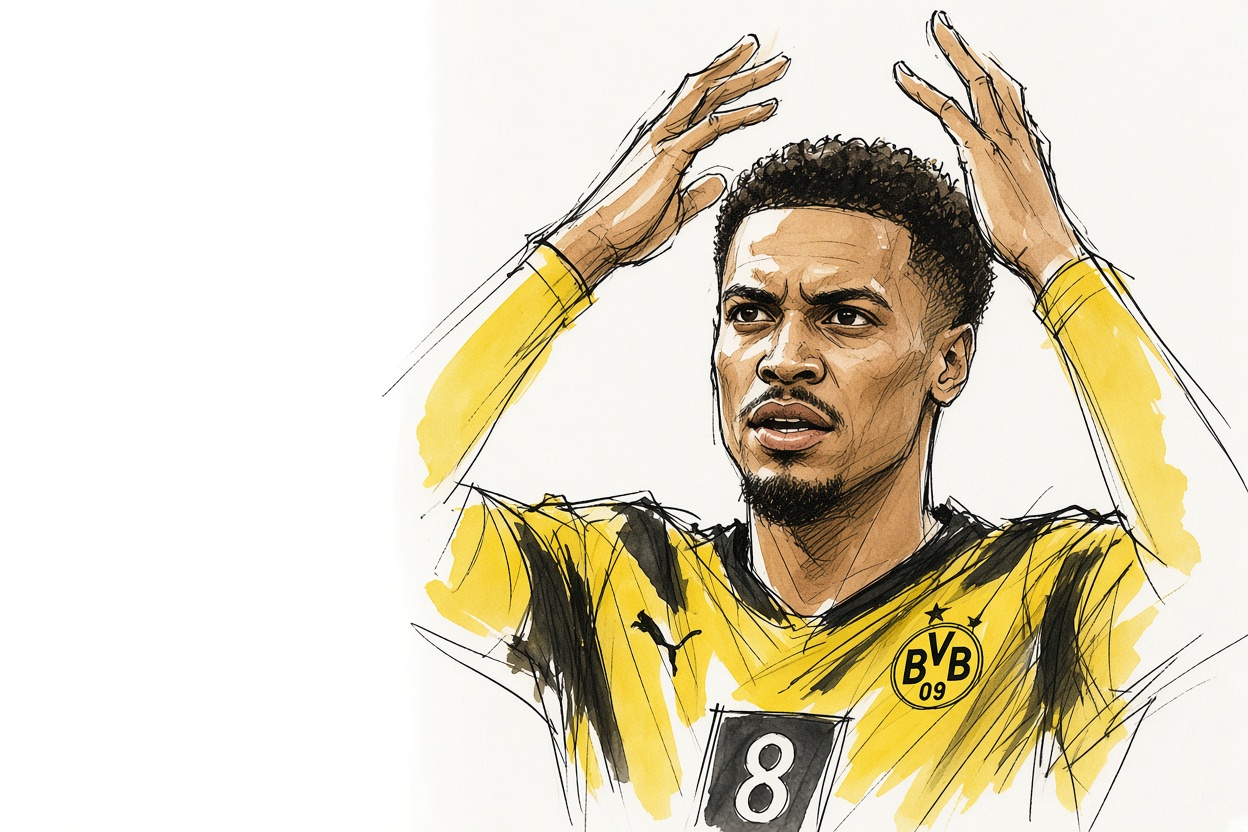
Felix Nmecha wrote a long Instagram statement about his goal celebration and managed to avoid saying the only thing that mattered. He denied promoting intolerance, preached love and respect for everyone, and pointed to Jesus, closing on John 3:16. What he wouldn't do, in a text clearly weighed word by word, was name Ballers in God or "The King's Return" and say the stuff tied to them is wrong.
He never names it. Nobody with a functioning memory is objecting to a footballer being a Christian. The objection is specific: German broadcasters, ARD's Monitor and Sportschau among them, have documented that the wider religious environment around the Ballers in God network carries anti-LGBTQ+ positions, treats homosexuality as sin, and describes abortion as "Satan's plan." Those are the charges. Nmecha answered a different, easier question instead: whether he personally harbors hate in his heart. Of course he says no. That denial is unfalsifiable and costs him nothing.
It's an old move. Answer a documented accusation about an organisation by affirming your own personal kindness, and never mention the organisation itself. His statement insisted the celebration "is not intended to promote myself or any organisation." Fine. Then name the organisation whose platform you're accused of fronting, and say its positions on gay people and abortion are indefensible. He didn't. A 26-year-old who can turn around a scripture-quoting, media-trained statement within a couple of days knows exactly which sentence he chose not to write.
There's a real risk here of punishing a man for kneeling to pray, for crowning an invisible king in public. He prayed on the pitch with Curaçao's players in Houston after Germany beat them at the World Cup, and that's just a man practicing his faith. If this were only about faith, the critics would be the ones in the wrong. It isn't only about faith, though. Nmecha's own statement rebuts a charge of intolerance he wouldn't bother rebutting if the charge were imaginary.
He isn't the only one dodging. Borussia Dortmund publicly vouched for Nmecha's beliefs when they signed him from Wolfsburg in 2023, with the club's leadership stating he "does not hold any transphobic or homophobic beliefs," after a transfer that angered supporters over old posts regarded as homophobic and transphobic. Three years on, the club has quietly pulled photos of Nmecha using Ballers in God symbolism from its own social channels, is reportedly weighing legal action against the group for using him as an ambassador in a BVB shirt, and president Hans-Joachim Watzke has said the club will ask him to stop the crown celebration. Nobody at Dortmund has stood up and reconciled the 2023 character reference with the 2026 scrubbing. This is a club trying to make a headache disappear.
Jürgen Klopp, now Germany's head coach and off to a shaky start, met Nmecha at the camp in Herzogenaurach before the Serbia and Netherlands games. Reports describe a pact: Klopp and Rudi Völler will back him publicly, provided he convinces them privately that he doesn't stand for "misguided values." Völler said on a podcast that they "must not make too much of it." A coach who badly needs his in-form midfielder available has every incentive to be convinced. That's a private deal built to keep him on the field.
This is sincere faith, and that's the problem. A devout young man is lending his face and his goals to a network whose documented views on gay people and abortion he has never once said are wrong. Ballers in God, founded by former Crystal Palace and Tottenham midfielder John Bostock and followed by names like Marc Guehi and Bukayo Saka, doesn't need Nmecha to be a villain. All it needs is exactly what he did this week: affirm his own goodness, loudly, and leave the group's platform unmentioned.
Until Felix Nmecha says the quiet part, that Ballers in God's positions on LGBTQ+ people and abortion are wrong, his explanation isn't finished. An unfinished explanation is worth a great deal to an organisation that thrives on exactly that.