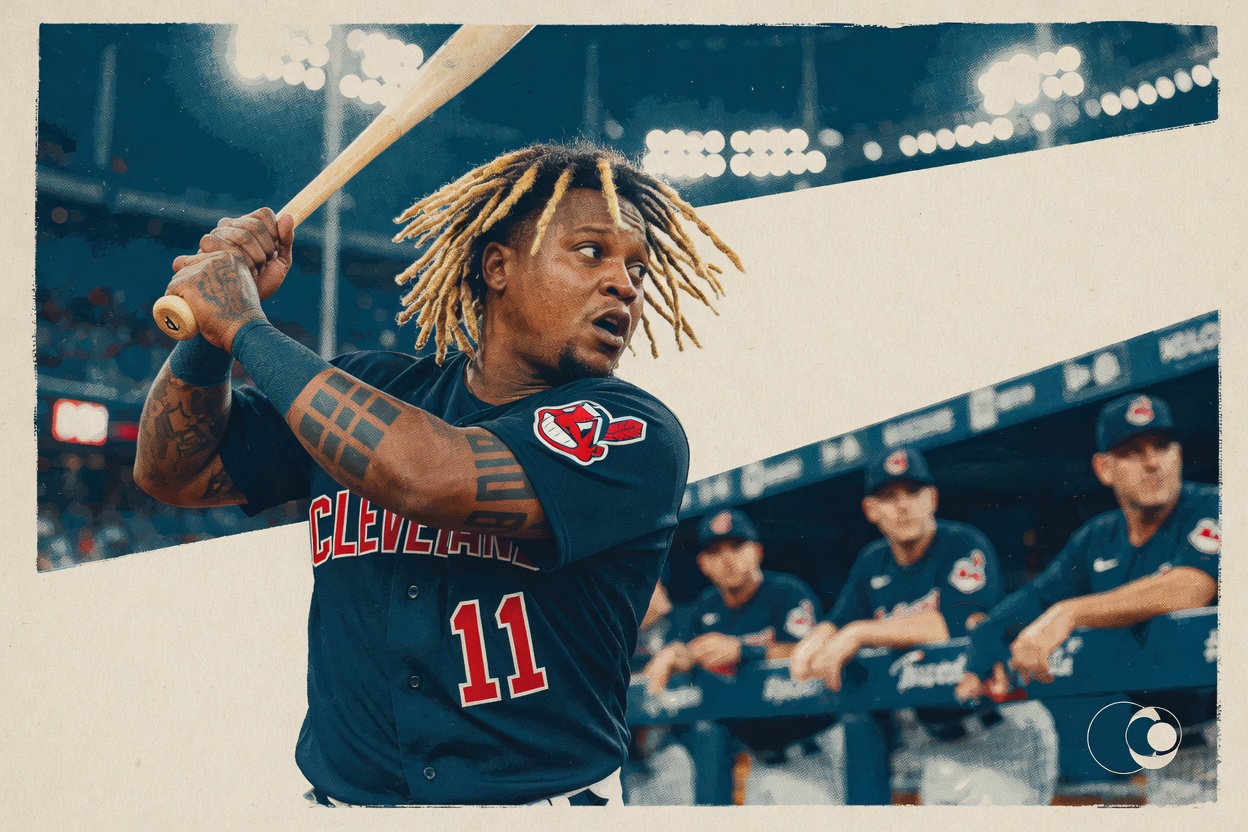
Cleveland's season ended in six games against Tampa Bay. This roster was built to lose exactly this kind of series, and it nearly didn't anyway.
Start with the facts nobody disputes. The Guardians went into the winter coming off an AL Central title and did almost nothing about it. By multiple independent accounts, they entered 2026 with one of the lowest payrolls in baseball in more than a decade, having signed a handful of free agents for a total that wouldn't cover a single average reliever on the open market. Rhys Hoskins was the one notable addition to the lineup. The bullpen got a couple of depth arms. That's the offseason.
And it wasn't an accident. Chris Antonetti, Cleveland's president of baseball operations, said the quiet part out loud before the season even started: the front office wanted to give playing time to the young core and didn't want to block those opportunities with free-agent or trade additions. It was a stated organizational choice to field a cheaper team on purpose and call it player development. Even the one real financial move of the winter, restructuring José Ramírez's contract, ended up subtracting from the 2026 payroll rather than freeing up room to add. Cleveland had the money. It chose not to spend it.
That roster, stocked with rookies carrying real everyday roles, beat Tampa Bay in Game 1, took the series to six games, and got a genuinely high level of hitting from its superstar the entire way before it finally gave out. This team was underfunded and still nearly reached the World Series on talent and nerve alone.
The argument that this group was never a real contender doesn't survive contact with what actually happened on the field. A team that wasn't good enough doesn't take the pennant winner to six games with a lineup this inexperienced. The idea that they'd have been swept by Milwaukee is just a guess, and it conveniently lets everyone off the hook who deserves to be on it.
José Ramírez carried a miserable regular season into October and then hit like the player Cleveland has needed for a decade, all series long. The series ended in Tampa Bay because a team with one proven middle-of-the-order bat and a stack of first- and second-year regulars had no second punch to throw when the Rays made their adjustments. It's a front office decision: homegrown talent was cheap enough to lean on entirely, and expensive reinforcement was a luxury they could live without.
Cleveland's title drought, dating back to the Truman administration, is going to get wheeled out again as an abstraction, a bit of civic trivia. But it's the direct result of an ownership group and a front office that keep fielding good-enough teams instead of complete ones, year after year, and then collect the moral victory when good-enough comes up just short. It happened again here, with a team that pushed the AL's best right to the brink before finally falling in six games.
The kids didn't fail. The people who refused to spend around them did.