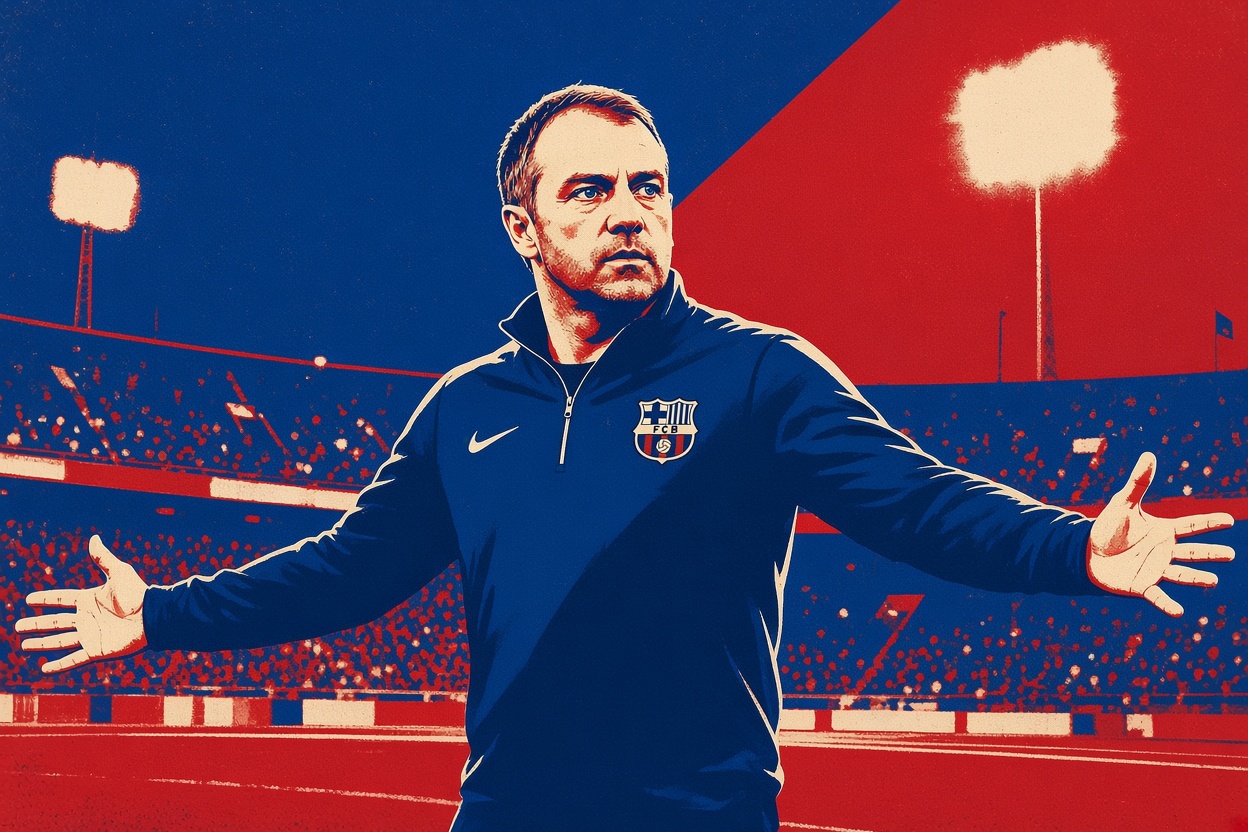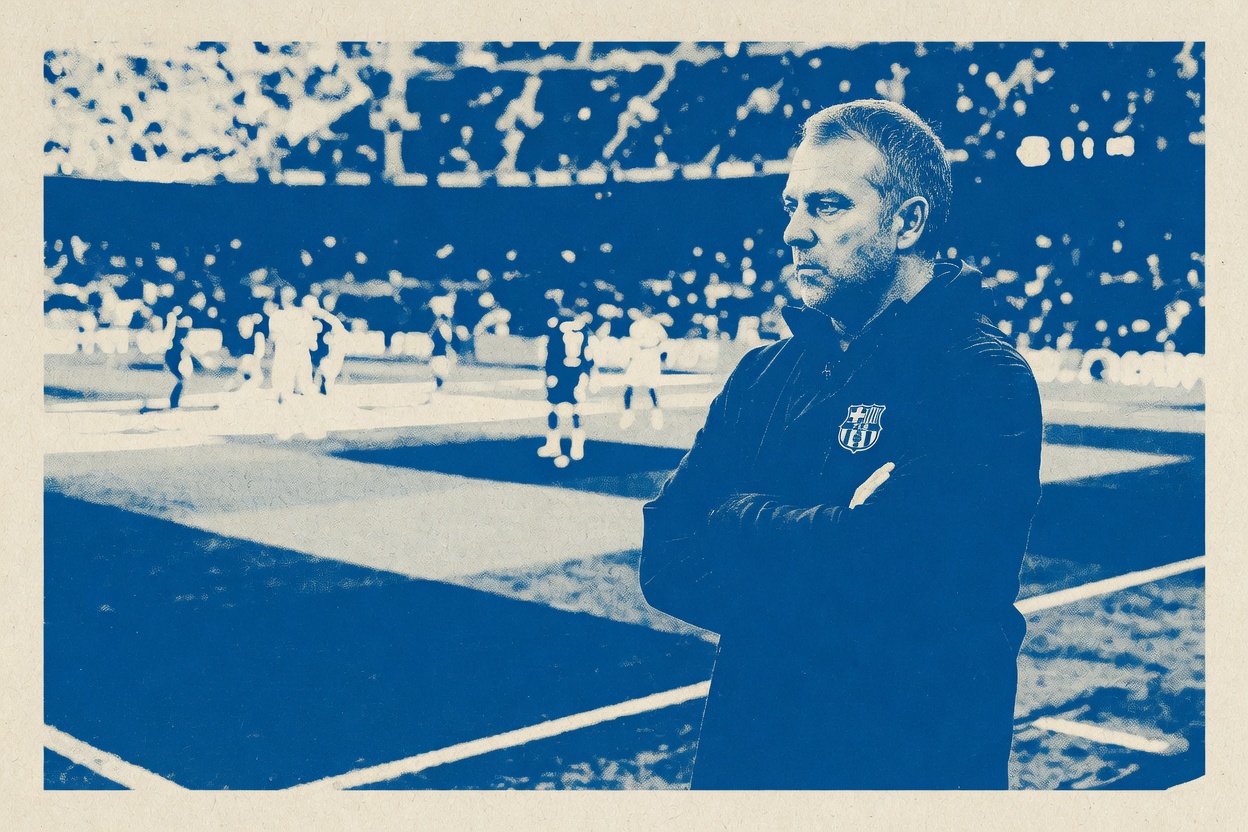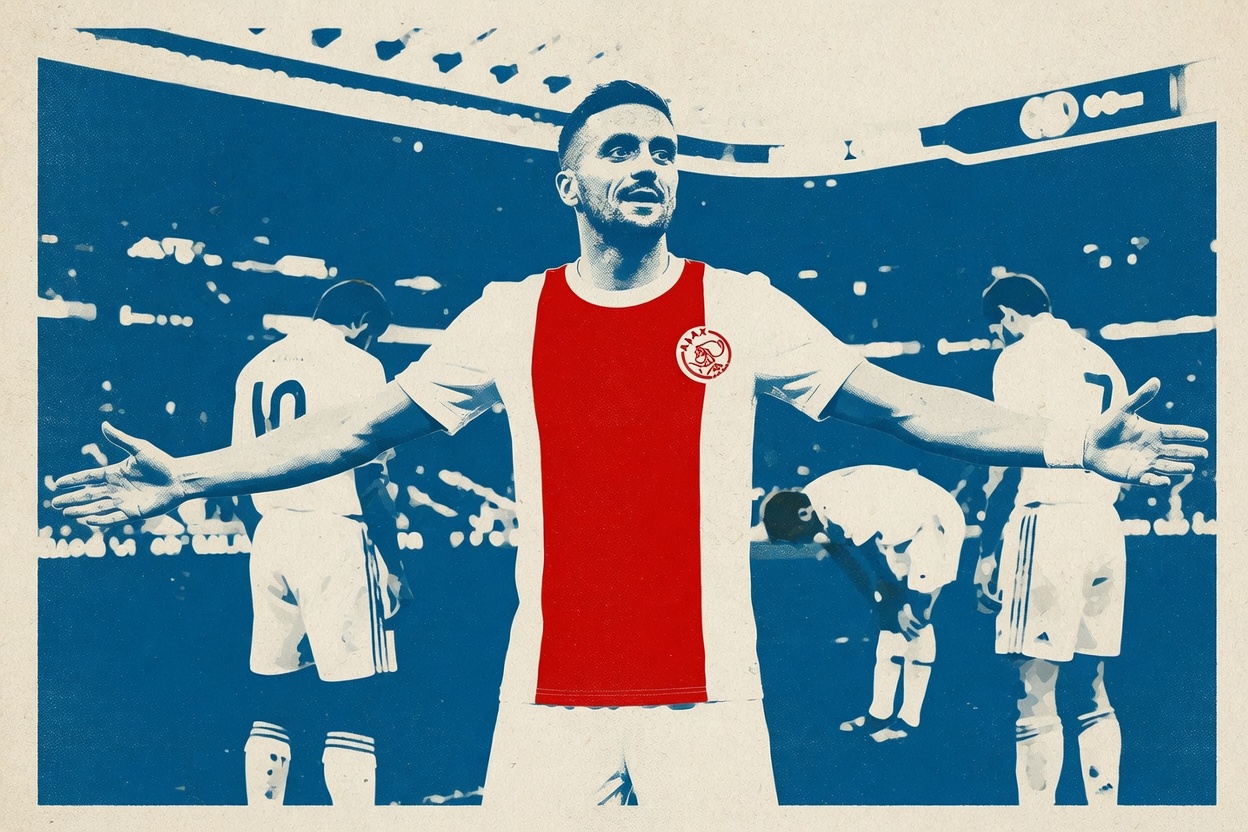
You've seen the image by now. Kingsley Coman's goal has held, Bayern are 1-0 up on Paris Saint-Germain deep into added time, Mbappé and prime Neymar are still out there hunting an equaliser, and Hansi Flick's high line is holding its nerve. The caption, more or less: see, the high line works, stop panicking. It's the laziest kind of argument, a screenshot doing the job a sentence won't.
Look at what that photo actually shows. Bayern won that final 1-0, Coman scoring just before the hour and the lead surviving to the final whistle in the sixth added minute. It was a tight win over a PSG attack that kept missing its chances. And it was held up by a back line that no longer exists: David Alaba, a flying prime Alphonso Davies, Jérôme Boateng until he limped off early for Niklas Süle, with Manuel Neuer sweeping behind all of it. That's the specific cast that made the high line bulletproof for ninety-six minutes on one August night. Point to it as evidence for Barça in 2026 and you're comparing two entirely different squads while pretending the gap isn't there.
The question everyone's shouting about is whether Flick drops the line after losing to PSG and Real Madrid in the same week, or trusts the system and goes and buys defenders who can run it. Flick's refusal to ever bend the high line is the real issue here.
This system has earned its stripes. Flick's continental record is absurd, he's unbeaten in finals as a coach, and his Bayern side became the first to lift the Champions League with a perfect record in the competition. That's too strong a résumé to tear up after two bad games. The 11-game winning run Barça were on before PSG ended it says the blueprint still bites.
But look at how the big nights keep going. On October 20, PSG won 4-2 and snapped that streak, Lucas Hernández heading home from a corner, Vitinha and Fabián Ruiz adding to it after Lamine Yamal's brilliant solo effort. Five days later José Mourinho's Real Madrid took El Clásico 2-1 at Camp Nou, Mbappé scoring twice, Raphinha pulling one back from a Pedri corner. It was Real Madrid's first away win over Barça since October 2023. Two of the best transition attacks on earth, back to back, and the plan was identical for both.
Flick's defence is that the personnel is gutted: Kounde, Eric Garcia, Xavi Espart and Christensen all sidelined, a 19-year-old in Pau Cubarsí carrying the back line. The injuries are real. The problem is the conclusion he draws from them, which is to change nothing and wait for bodies to heal. That's a passive bet that the squad fixes itself, aimed at a weakness opposing scouts have had two full seasons to study. He heard the exact same criticism after the 4-1 at Sevilla last autumn, when a former player called the tactics suicidal, and he didn't flinch then either.
Nobody's asking Flick to become a parker of buses. They're asking him to flex the line for one night, against one elite opponent, instead of running the same high press whoever's standing across from him. A manager who can only play one way, whatever the opponent, is just predictable. He needs to coach the game in front of him. Until he does, these losses are his.