Start with what can't be argued away: in July 2025, Justice Maria Carroccia acquitted Michael McLeod, Alex Formenton, Dillon Dube, Carter Hart and Cal Foote of all charges tied to a 2018 incident in a London, Ontario hotel room. The Crown didn't appeal. This isn't an attempt to relitigate that verdict. The criminal question is closed, and it should be.
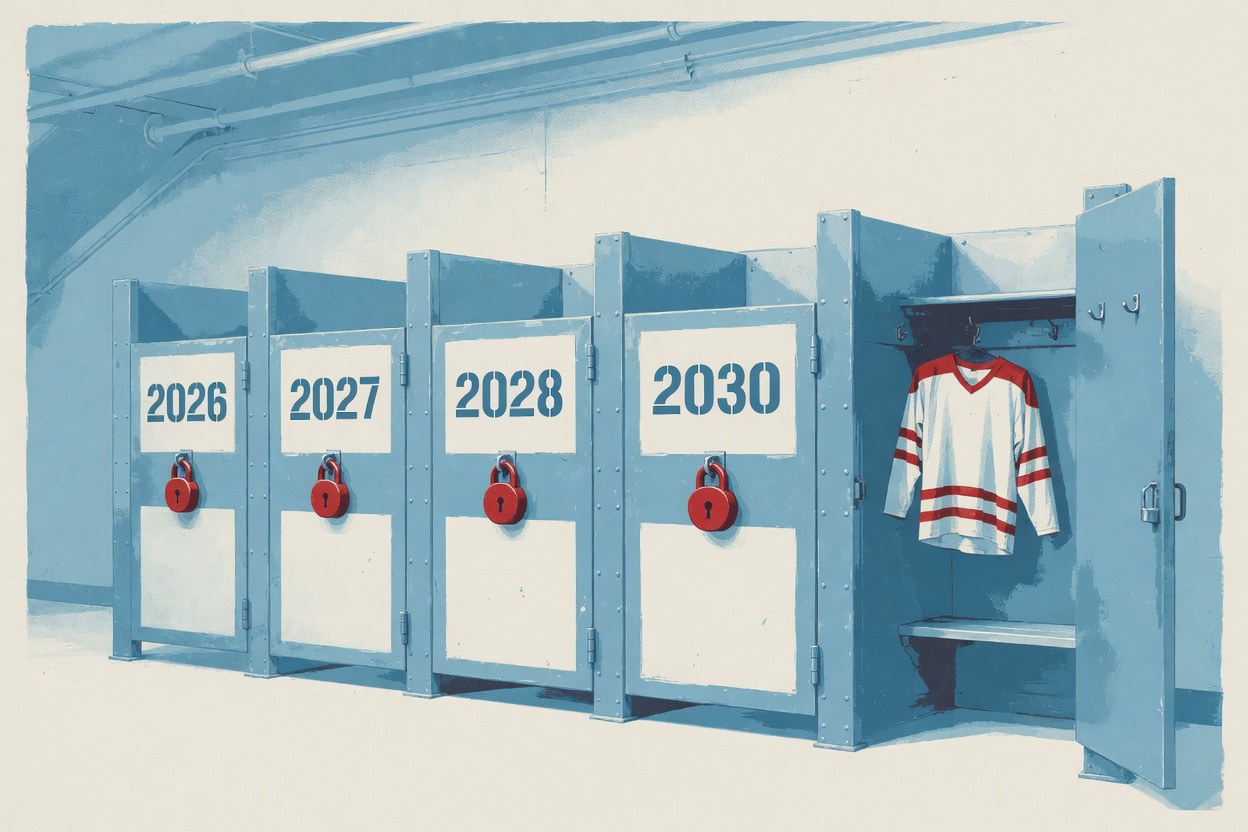
But the criminal courts were never the only body weighing what happened. On Wednesday, an independent Hockey Canada appeal board made up of three former judges confirmed that all five players breached the organization's code of conduct. Hockey Canada accepted the recommended sanctions. Formenton was reinstated immediately. Foote is suspended until Nov. 10, 2026. Hart until Nov. 10, 2027. Dube until Nov. 10, 2028. McLeod until Nov. 10, 2030.
Now line that up against what the NHL did.
After the acquittals, the league declared the five ineligible while it reviewed the ruling, on top of an investigation it had already been running since 2022, and called the events "deeply troubling and unacceptable." The NHLPA fired back that keeping the players out violated the collective bargaining agreement. What followed wasn't an adjudicated ruling with a reasoned decision and an appeal process. It was a settlement: the NHL and the union agreed the players would be suspended until Dec. 1, free to sign with teams as early as Oct. 15, with the players giving up their right to appeal. The league called it discipline, noting the players "expressed regret and remorse" while insisting their conduct "requires formal league-imposed discipline."
Run the math and the NHL's sanction comes out to roughly four months, most of it swallowed by an offseason. Hockey Canada's bans run to 2026, 2027, 2028 and 2030.
That's a huge gap between two verdicts on the same conduct. One body treated this as a matter it wanted resolved and off its desk. The other treated it as something requiring years of separation, calibrated player by player, from anything the sport's national governing body touches: coaching, volunteering, the chance to wear the maple leaf at the world championships, the Olympics or the Spengler Cup.
That's an uncomfortable comparison for the NHL. A governing body operating entirely outside the criminal justice system, working from its own code of conduct rather than the beyond-a-reasonable-doubt standard that produced the acquittals, looked at this conduct and decided four of these men should be kept out for years. TSN has reported, citing a person familiar with the matter, that the investigation weighed material that never made it into the criminal trial; Hockey Canada hasn't confirmed that. Either way, when a body free to set its own bar takes this seriously, a four-month negotiated timeout starts looking less like discipline and more like a problem the NHL wanted off its schedule.
The practical result is already visible. Hart signed with Vegas and was back in the NHL by early December 2025. Dube signed a one-year deal with St. Louis on July 1. Both are cleared to play professionally right now, even as Hockey Canada says neither is fit to represent the country until 2027 and 2028, respectively. McLeod, carrying the longest ban, to 2030, has been playing for Omsk Avangard in the KHL. Foote, whose Hockey Canada suspension is the shortest and lifts this November, spent last season in the AHL and had a contract with Sweden's Farjestad BK rescinded after the club faced criticism for the signing. Formenton, the only player fully cleared Wednesday, has been playing in Switzerland.
A fair caution before anyone calls Hockey Canada the honest broker here: it isn't transparent either. The organization gave no reasons for why the bans differ, spokesman Jeremy Knight said it won't release the panel's report, and it hasn't explained why Formenton alone was reinstated. Why McLeod's ban runs to 2030 and Hart's only to 2027 is, at this point, guesswork. That opacity is a real complaint. A ruling this consequential should come with its reasoning attached.
But the missing rationale cuts against the NHL harder than it does against Hockey Canada. At least the appeal board produced a decision, individualized and adjudicated, that four current or would-be pros breached a code of conduct and earned years out. The NHL produced a negotiated exit with a return date and a waiver of appeal rights. One of those looks like a body reckoning with what its own investigation found. The other looks like a league that wanted the story to end.
My take: the NHL got the length wrong, and Wednesday's ruling makes that plain by contrast. You can accept the acquittal in full, as you should, and still ask why the league that spent years investigating this settled for months while the sport's governing body is still counting the years to 2030. Those two answers can't both be right about how serious this was.