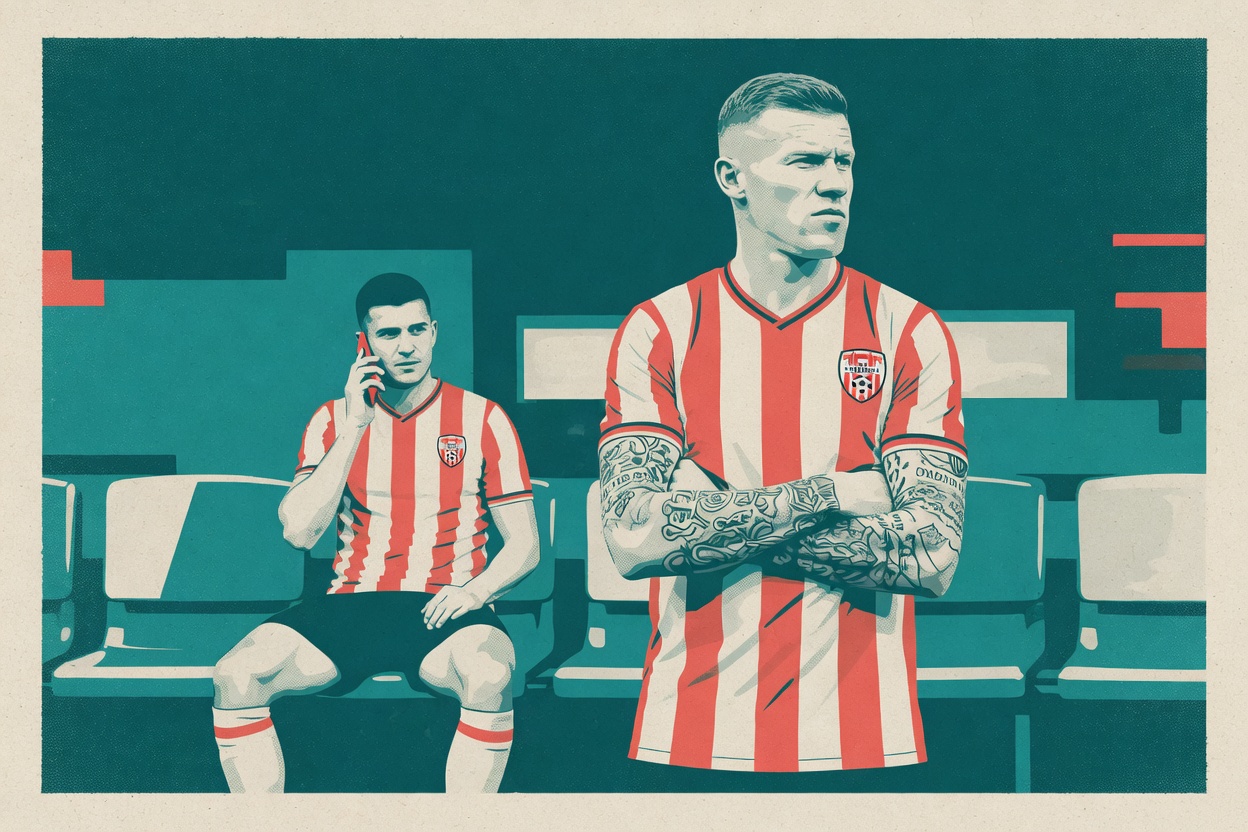
James McClean has spent a decade being the player fans love to hate, and he's earned most of it, from the anthem stunts and jersey provocations to the clubs he's left on bad terms. Most of that you can shrug off as McClean being McClean. This is different. Telling young men therapy is weakness, and using his own brother as the example, is worse than any of it.
This is what he told Paul Kimmage, published Sunday. McClean described hearing his younger brother and Derry team-mate, Patrick McClean, on a call to a club psychologist, "having a lovely chat," and added: "a lot of the players speak to him and for me that's just weak. As a man, I see that as weakness." He said he would "see it as a weakness that I'd have to speak to someone about my feelings; my emotions."
Notice who he's talking about. He was describing his own brother, who'd just taken a healthy, ordinary step: a professional footballer talking through his head with someone qualified to help. He called it weak, in public, in a newspaper interview he agreed to give.
That's what separates this from the usual McClean controversy. His jersey rows hurt only his own reputation. This one reaches straight into the audience most at risk from the message: young men who already suspect asking for help will cost them their standing, watching a captain they grew up admiring confirm the fear. McClean is an influential figure, and he knows it. That's why his words carry more weight than a stranger's opinion in a pub.
The people who actually do this work have been clear-eyed about it. Men's Action Network, a Derry charity with more than 30 years of challenging precisely this stigma, has offered to meet him rather than scream at him. Its chairperson, Michael Lynch, put it plainly: "Men asking for support is not a sign of weakness. In fact, asking for support is the strongest thing you will ever do." Lynch even allowed that McClean is entitled to his views. That's more grace than the comments deserve.
His own club didn't wait around. Hours before an FAI Cup semi-final, Derry City noted the comments and stated flatly that "these views do not reflect our core values or beliefs," and has accepted MAN's invitation to meet. A club can't let its captain's loudest message to the town's young men go unanswered.
Some of the volume here is because it's McClean, and because he's worn out everyone's patience. But strip the reputation away and the words are still wrong, still dangerous coming from him specifically. The mistake is treating this as another chapter in a tired act. It's the one time his provocation could actually cost someone something.