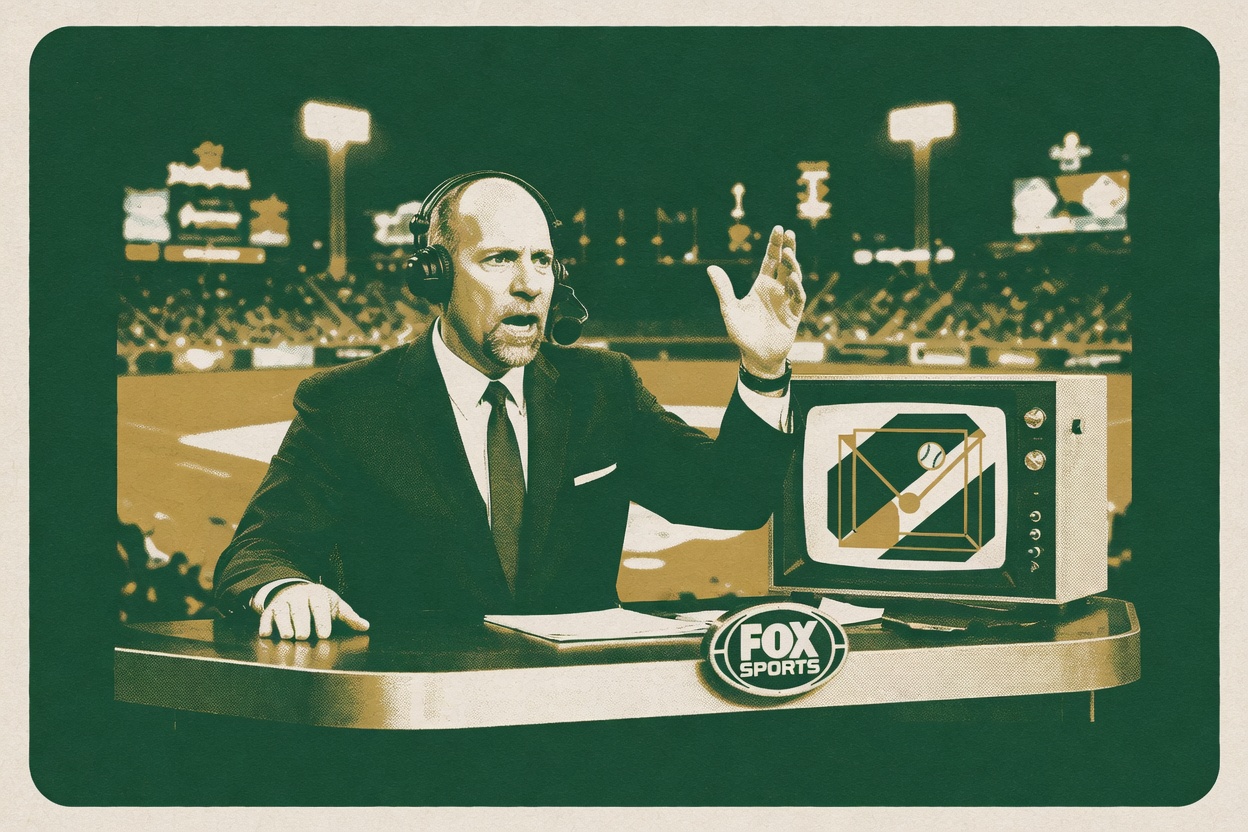
John Smoltz probably isn't rooting against the Brewers. He's just wrong, and this week he said so loudly, on the biggest stage the sport has.
In the bottom of the third of Game 3, with Milwaukee up 2-0 Monday night in St. Petersburg, William Contreras challenged a ball-strike call and won it instantly. Replay showed the pitch had missed by three inches, nowhere close to borderline. Smoltz's reaction on the Fox broadcast: "There's just no need for it right here. I know he's really good at it. They're up 2-0." Joe Davis pushed back, asking what difference it makes if Contreras is that sure. Smoltz doubled down: "Yeah, but even if he's that sure. You're up 2-0. And there's no stress."
The logic falls apart as soon as you poke it. A successful challenge costs a team nothing. You win it, you keep it. There was no stash of challenges Contreras was burning, no leverage he was wasting. He was right, the call got fixed, and Milwaukee kept the challenge for later anyway. What exactly was the "stress" calculus supposed to protect? Smoltz was leaning on an old pitcher's code: don't show up the umpire when you're already winning. That instinct doesn't apply to a tool built to get the call right.
 MIL101-59

The idea that a 2-0 game in the World Series is "low stress" aged about as well as milk in a dugout. That same night the Brewers turned a 2-0 lead into a laugher, scoring eight runs with two outs in a single inning on their way to a 10-1 win that put them up 3-0 in the series. A 2-0 lead in October can evaporate in an inning. Every pitch is worth fighting for, which is exactly why Contreras fought for that one.
Contreras finished Game 3 a perfect 4-for-4 on ball-strike challenges. On the season he led all MLB catchers with 185 challenges and led the league in successful ones with 105. He's the most accurate, highest-volume challenger at his position in the sport, and he was getting lectured about it by a man staring at the same monitor that proved him right.
Smoltz's instinct to hoard challenges for high-leverage spots isn't unreasonable in theory. But challenges aren't scarce, and they're not expensive. The rule returns the challenge when you're right, and Contreras is right more than anyone. Once you know that, the "save it" logic has nothing left holding it up.
This is part of a pattern this October. In Game 1, Smoltz mixed up Milwaukee closer Trevor Megill with Mets pitcher Tylor Megill on air. That's a simple flub, a different kind of mistake, but stacked next to the Contreras take it builds the same picture: a Hall of Fame arm who, at least this postseason, keeps landing a half-step behind the game he's being paid to explain.
Smoltz likes the ABS challenge system and hopes the sport never goes to full automation. The Game 3 comment was Smoltz going with his gut, ignoring the math that was already sitting right in front of him.
The network can keep running him out there for World Series Game 4, with Milwaukee one win from a title. That's their call. But Smoltz earned the heat this week, and no amount of Cy Young hardware changes that. When the best catcher in baseball at a thing does that thing perfectly and your reaction is that he shouldn't have, the problem is in the booth.