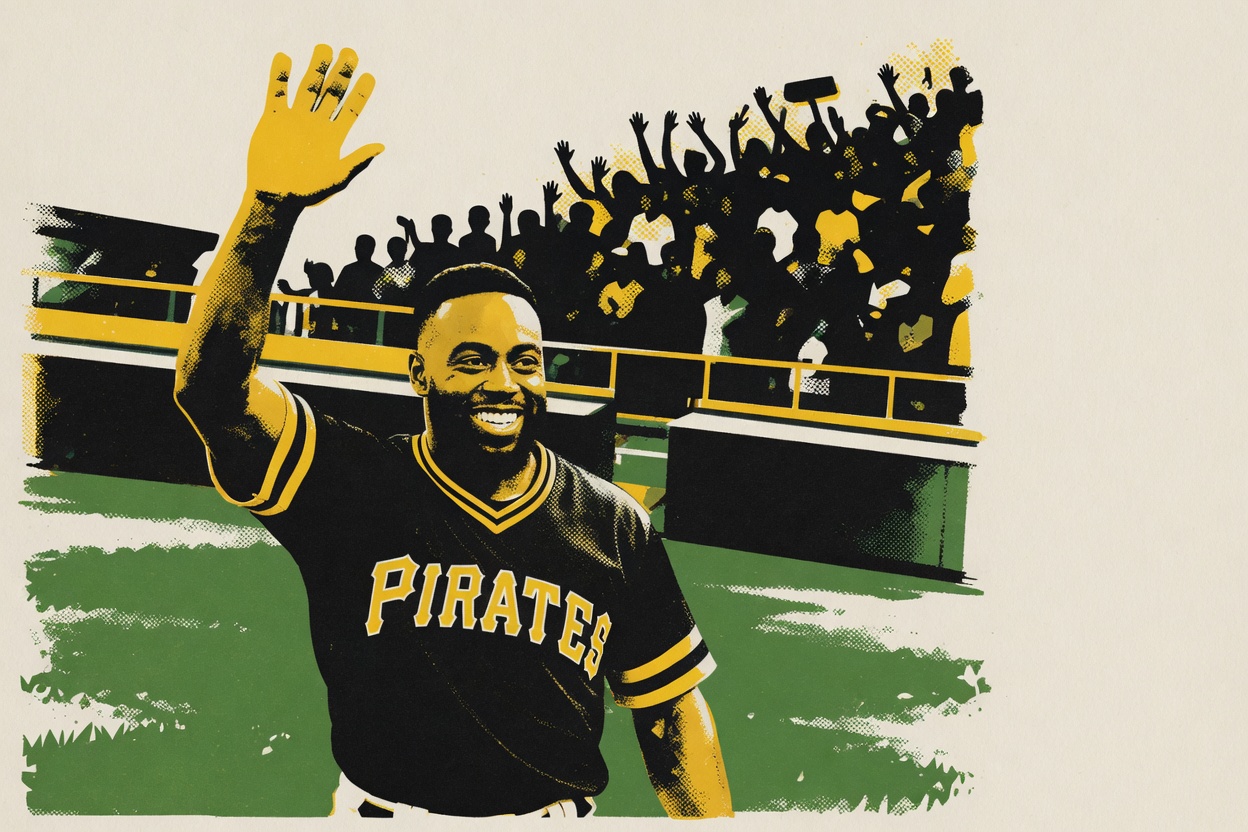
Josh Harrison had already retired. He said so himself on May 31, 2025, in a post to X marking the end of 13 major league seasons spread across six organizations. No fanfare, no ceremony, no one-day deal. Just a player who hadn't appeared in a big league game since July 2023 telling the world he was done.
So when the Pirates signed him to a one-day contract on Friday, Aug. 7, 2026, and let him retire officially as a Pittsburgh Pirate, the paperwork wasn't the point. Harrison, now 39, wasn't deciding to stop playing. He'd made that call more than a year earlier. What Pittsburgh gave him last weekend was something the actual mechanics of retirement never provide: a proper goodbye, in the one place that felt like his.
That gap between the two moments is what makes this worth writing about. Strip it down, and the one-day retirement contract is a piece of theater. It changes nothing on a man's baseball-reference page that actually matters. And yet it's become one of the more quietly humane traditions in the sport, a ritual invented purely for sentiment and closure, laid on top of a career that had already, technically, ended. It's one of the best small things baseball does.
Why it works for a player like Harrison
Harrison is the exact profile this tradition was built for. He wasn't a franchise cornerstone who never left. He bounced. After eight seasons in Pittsburgh (2011-18), he played for the Tigers, Nationals, Athletics, White Sox, and Phillies. His final big league appearance came with Philadelphia on July 30, 2023, against the Pirates, a bit of scheduling poetry. He went 0 for 3.
But everyone who followed him knew where he belonged. "From the minute that I was traded over in 2009, I felt like I was home," Harrison said. "Not just saying that to say it." That's the tell. Plenty of well-traveled veterans have a team they're associated with. The one-day contract is for the ones where the association is emotional, not just statistical.
His Pittsburgh years earn the sentiment. Harrison made the National League All-Star team in 2014 and 2017. His 2014 was the standout: a .315 average, an .837 OPS, a ninth-place finish in NL MVP voting, and a glove that had him bouncing between third base, the outfield, second, and short. He was part of the core that pushed the Pirates to three straight playoff appearances from 2013 through 2015, the only postseason baseball Pittsburgh has seen since 1993, ending a run of 20 straight losing seasons. If you're a Pirates fan of a certain age, that group is the good memory. Harrison is stitched into it.
He also gave the franchise one of the strangest highlights of the last decade. On Aug. 23, 2017, he became the first player in AL-NL history to break up a no-hitter with an extra-inning walk-off home run, taking Rich Hill deep in the 10th for a 1-0 win over the Dodgers. Hill had been perfect through eight. You don't script an exit line like that, but it's a nice one to have on the resume when the city throws you a party.
The part I like best
What sells this send-off isn't the ceremony itself, though the details are charming: a press conference and a batting practice viewing on Friday, then a T-shirt giveaway for the first 20,000 fans at PNC Park on Saturday, Aug. 8, an on-field ceremony, and a first pitch ahead of the Pirates' game against the Mets. It's how it came together.
By Harrison's own account, he was visiting PNC Park in June, his first time back since coming through as a visiting Phillie in 2023, when a conversation with owner Bob Nutting sparked the idea. Nutting approached him roughly six weeks before the weekend about retiring a Pirate, and Harrison, by his telling, never gave it a second thought. "I was never gonna say, 'Let me retire a Pirate,' but it's always cool when it happens naturally and organically," he said. "That's how I wanted it to be."
That's the difference between a gimmick and a gesture. Nobody engineered a narrative. A former player showed up, an owner told him he mattered, and the rest followed. Nutting framed it as the start of something broader, a push to reconnect the franchise with its alumni: "I think the alumni group has been so important to Pittsburgh... We wanted to do a better job of reconnecting... I can't imagine a better person to start with."
Start with the guy fans actually loved. Smart.
What Harrison got, that a stat line never gives
Harrison's career numbers are the honest numbers of a good, useful, well-liked ballplayer: 1,080 hits, 73 home runs, 91 stolen bases, and a .270/.316/.396 line with a 95 OPS+ over 1,208 games. Solidly above replacement, never a superstar. The Pirates once believed enough in him to hand him a four-year, $27.3 million extension. He was, in the language of the trade, a very good complementary player.
That's precisely the kind of career the one-day contract dignifies. The Hall of Famers get their plaques and retired numbers. This tradition exists so the tier just below, players who meant more to a city than their WAR suggests, get their moment too. Harrison put it plainly: "As a player, you don't sit there and think about your numbers or what you meant to a city. I just kind of lived in the moment... But it's cool to be acknowledged that way."
Acknowledgment. That's the whole product. It costs the franchise a T-shirt run and an afternoon, and it hands a player and a fan base a full-circle ending they'd otherwise never get. There's an argument, made elsewhere and worth flagging as opinion rather than fact, that a Pirates team currently in a rough patch could stand to remember what made that 2013-15 group tick. Maybe. But I'd keep the send-off separate from the standings. This weekend wasn't about fixing the roster. It was about a city telling a man it hadn't forgotten him, more than a year after he'd already said his own goodbye.
"It's our home away from home," Harrison said. "For it to come full circle is really special." Baseball didn't need to give him that. It's better that it did.