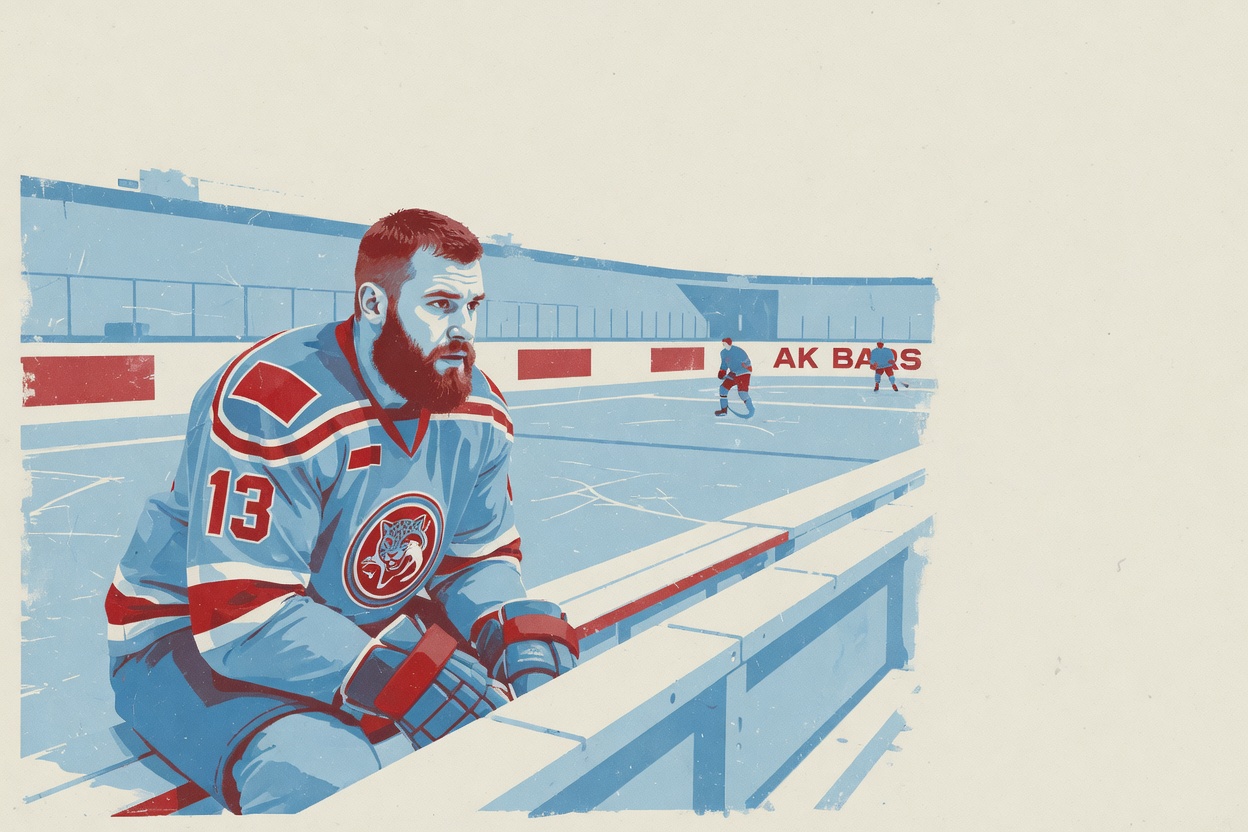
Kevin Hayes signed a seven-year, $50 million contract with the Philadelphia Flyers back in 2019. On Monday, September 21, 2026, he announced his retirement in a statement posted by the KHL on its X account, after five scoreless games with Ak Bars Kazan. From franchise centerpiece money to a foreign league's social-media sign-off in about 15 months, that's not a slow fade. That's a trap door.
"I have decided to end my hockey career," Hayes said in the statement. "I can no longer play at the level I am capable of because my body does not allow me to perform at my best. And I cannot accept not being in top form."
It's a proud player admitting his body stopped cooperating, and there's something admirable in the honesty. But how he got to that admission is the real story here.
The freeze-out nobody will put their name on
Hayes, 34, became an unrestricted free agent this summer once his Flyers deal ran out. Nobody bought him out. Nobody waived him in some dramatic Sunday-night purge. He just hit the open market, and NHL teams decided, collectively, he wasn't worth a contract.
Consider who this is. Hayes finished with 185 goals and 445 points across 805 games with the Rangers, Jets, Flyers, Blues, and Penguins, twelve NHL seasons in all. He was a middle-six center who killed penalties and worked the power play, the kind of two-way player coaches say they can never have enough of. He had six seasons of 40-plus points and a career-best 54 with Philadelphia in 2022-23, the same year he made his only All-Star team. In the playoffs he put up 26 points in 56 games, and as a rookie in 2015 he chipped in seven points in 19 games while the Rangers pushed all the way to the Eastern Conference Final before losing to Tampa Bay in seven.
That's a real NHL career, one that mattered. This summer, the market treated him like a name off an old roster.
The body was giving warnings, and the league read them coldly
I'll be honest about the counterargument, because it's a fair one. Hayes' last NHL season was a mess. He played just 28 games for Pittsburgh, undone by an upper-body injury on the first day of training camp that landed him on injured reserve. He didn't debut until November 8, 2025, and then a lower-body injury closed the book in March. He managed four goals and eight points in those 28 games. In the KHL, the same story kept writing itself: his last outing was a 3-2 loss to HK Sochi in which he played a season-low 13:10 and didn't register a shot.
So yes, the reasons a front office would pass are sitting right there. Age 34, an injury-riddled walk year, shrinking ice time. I'm not pretending those flags aren't real.
But my take, and I'll flag it as opinion since no GM has gone on record explaining any of this, is that the NHL is too quick to decide a veteran is finished the moment his body wobbles. This is a player whose durability problems were never a secret. He once played through a blood infection and three surgeries to get into 48 games with the Flyers, the same season his brother and fellow NHLer Jimmy Hayes died in 2021. His pain tolerance was documented. So was his character in the room. And not one team wanted to find out whether a healthy summer might bring some of it back.
The cautionary part
The cheapest asset in hockey is a veteran depth center on a minimum contract. The scarcest thing in hockey is a room full of guys who make everyone around them better. Hayes was both, and the league still let him drift to Russia as essentially his only professional option, then watched him quit inside a month.
Even now, there's a human side to this worth noting. Penguins coach Dan Muse offered this: "What an incredible career, what an incredible person, too. There's certain people that will always stand out in your mind when you're a coach, and he's definitely going to be one that I remember throughout the rest of my career. Just the way he handled himself last year, the teammate that he is, the person that he is."
That tribute is warm and real. It's also a little damning. If the people inside the sport valued him that much, how did every one of them decide, at the same time, that he wasn't worth a phone call?
Here's what I'd tell any front office that treats aging depth like disposable inventory. The line between a serviceable veteran and out of the league entirely is one bad injury and one quiet summer. Nobody cut Hayes. They just never called. And that not-calling is its own kind of decision, the kind that ships a real NHL player halfway around the world to find out on the ice what a healthy camp might have told everyone for free.
He was drafted 24th overall by Chicago in 2010, never played a game for the Blackhawks, and built a genuine career anyway by betting on himself with the Rangers. Fitting, then, that the end came with nobody willing to make one last small bet back.