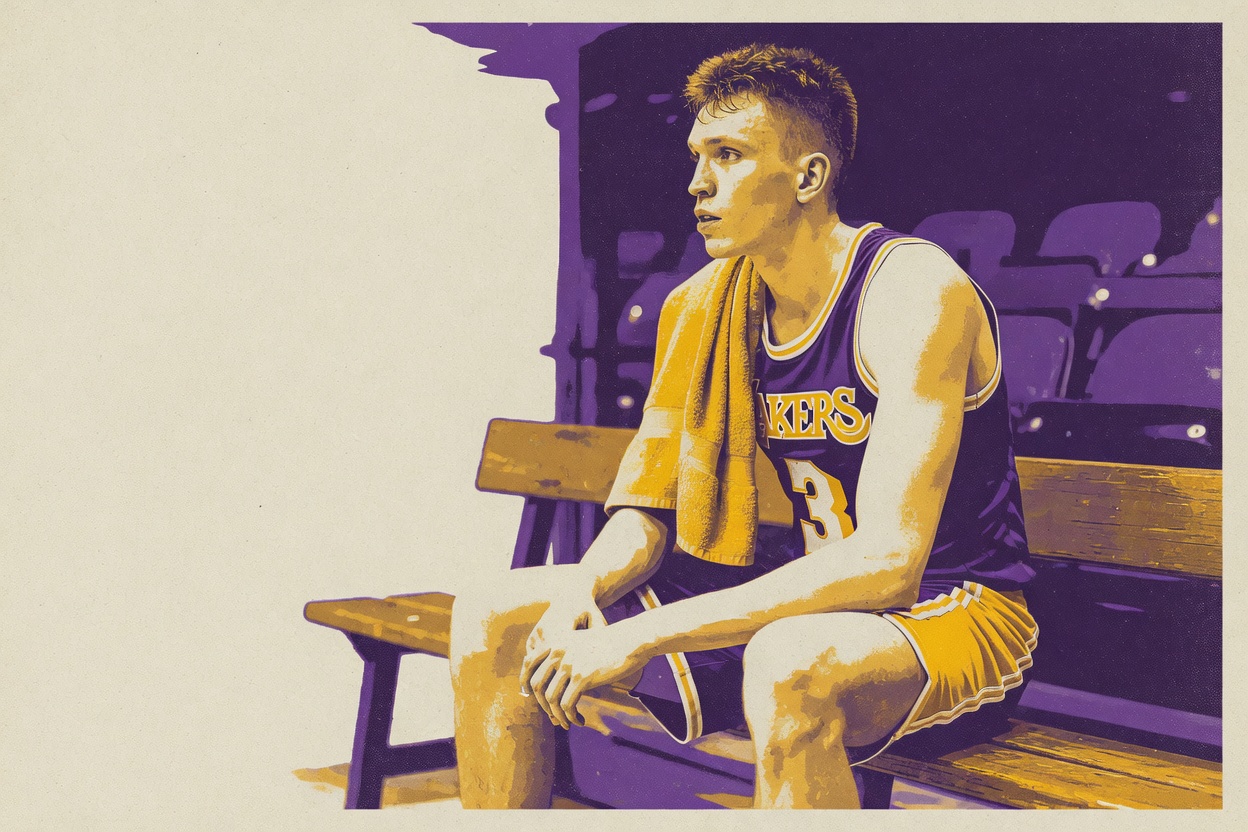
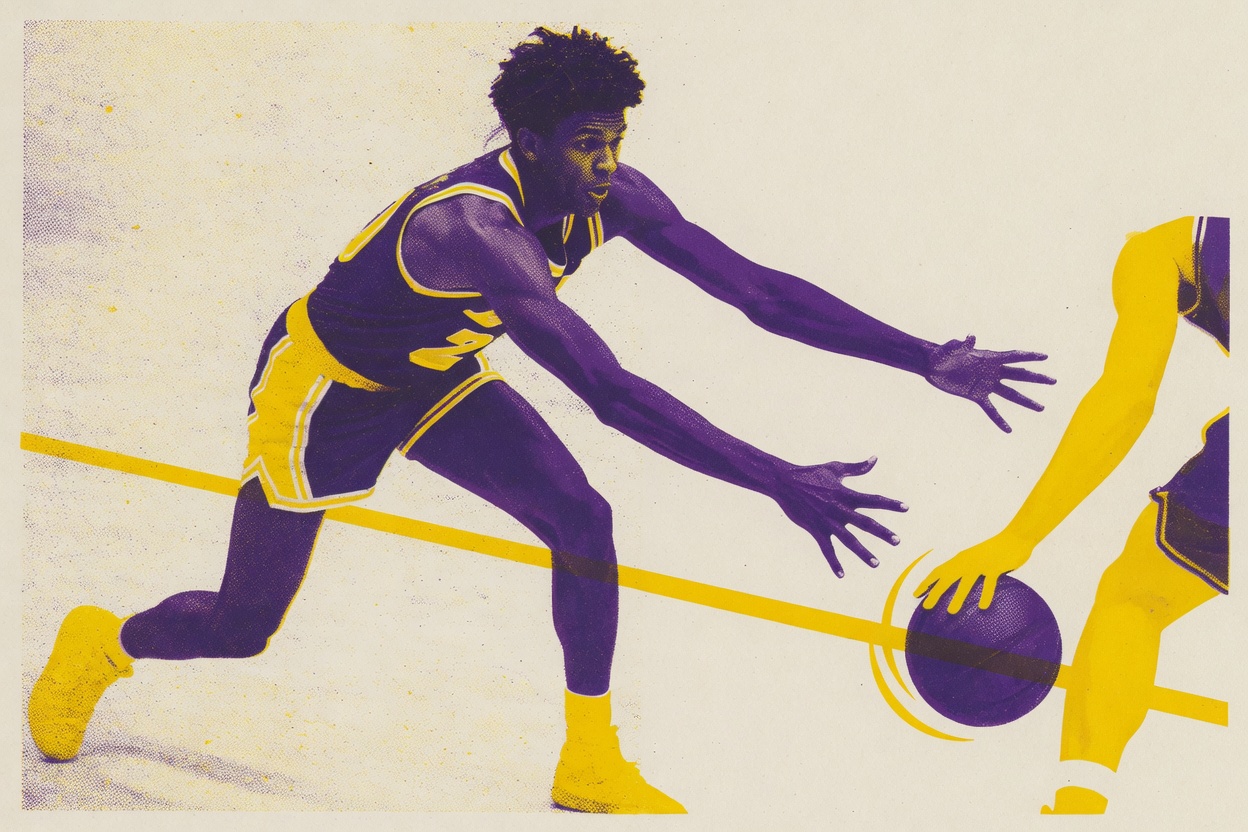
Every offseason has a headline move and a fine-print move. For the Lakers this summer, the headline was Walker Kessler, brought in via trade and set to sign a four-year, $130 million contract that cost Utah a stack of future draft capital: unprotected first-rounders in 2031 and 2033, plus swaps in 2028 and 2030. The fine-print move, reported this week by ESPN's Shams Charania and independently confirmed by the Associated Press, is Matisse Thybulle on a one-year veteran-minimum deal worth about $3.3 million.
The second move tells you more about how this front office thinks.
Here's the situation the Lakers put themselves in, and I mean that as a compliment. They entered free agency with the ability to create more than $50 million in cap space, then spent north of a quarter-billion dollars this summer and came out the other side with no cap exceptions left. In plain terms, barring a sign-and-trade, minimum contracts are the only tool they have left to add players. When your shopping cart is capped at the dollar menu, you look for the item that's badly underpriced. Thybulle, at a $2.45 million cap hit on a one-year deal, is that item.
Start with what he does. He's a 6'5" wing and a two-time All-Defensive selection, both Second Team, in 2020-21 and 2021-22. Per ESPN Research, he led the NBA in steals and deflections per 36 minutes last season among players who appeared in at least 20 games. That's a specific, disruptive skill, and it happens to be the one the Lakers need most right now. The roster around Kessler tilts hard toward offense. Luka Doncic is on his extension, Austin Reaves is locked in for four years, and Yahoo's roster analysis makes the connection plainly: a backcourt built to score needs strong perimeter defenders in front of the rim so Kessler isn't absorbing a nonstop line of drivers. The Lakers finished last season 18th in defensive efficiency, then watched their best perimeter stopper leave. Marcus Smart declined a $5.4 million option and signed with Houston. Add the departures of LeBron James and Rui Hachimura, and you've got a team with a glaring hole and almost no money to fill it.
So the front office did the reasonable thing: it stacked value. Thybulle isn't a one-off. He's the latest in a run of minimum-salary depth pieces that also includes Kevon Looney and Ziaire Williams, each of whom counts as only $2.45 million against the cap, same as Thybulle. It's not a splash. But it looks, at least from here, like a strategy: pay real money once, at center, then build the rest of the roster out of cheap, functional parts.
Now the honest part, because a value play always has a catch. Thybulle's catch is health. He's played 45 games total over the last two seasons, missing time after thumb surgery (a torn ulnar collateral ligament) and dealing with recurring knee and ankle issues. Last season with Portland he averaged 5.8 points and 2.0 rebounds across 30 games while banged up. That's a real risk, and it's the reason he was available at this price instead of commanding the multi-year deals defensive wings usually get. The encouraging counterpoint, per Yahoo, is that he finished the year healthy, averaging around 20 minutes a game over the final month and playing rotation minutes in Portland's first-round loss to San Antonio.
A one-year minimum is built for exactly this kind of bet. If the knee holds and the three-point stroke travels (he shot 41.8% from deep over the past two seasons, in a limited 45-game sample), the Lakers have found a rotation defender for pennies. If it doesn't, the deal expires in a year and the cost was negligible. You're not risking much to find out.
One mechanical wrinkle worth flagging: adding Thybulle pushes the Lakers to 16 players on standard guaranteed contracts, one above the 15-man limit, so somebody gets waived or traded before opening night. That's a corner they'll have to solve, not evidence anyone overreached.
Not everyone loves this offseason, either. Lakers insider Jovan Buha, relaying the internal mood rather than grading it, said that "more often than not, there was an acknowledgment that we might have taken a step back this season," pointing to the lost top-end talent. That's a fair read on the roster's ceiling. But ceiling isn't what a $2.45 million signing is about. Thybulle isn't meant to replace LeBron's production. He's meant to replace Smart's defensive value at a fraction of Smart's price, and on that narrower job, the fit is clean.
One thread is still open as of this writing. The Lakers have reportedly discussed a sign-and-trade for Jonathan Kuminga with Atlanta, and per NBC Sports the sides aren't close. That's unresolved, so I won't pretend to know how it lands. What I do know is that whether Kuminga arrives or not, the Thybulle deal holds up on its own logic: a specific need, a specific skill, and a price that makes being wrong survivable. In a thin market where they'd already spent their real money, that's the version of aggressive the Lakers could actually afford.