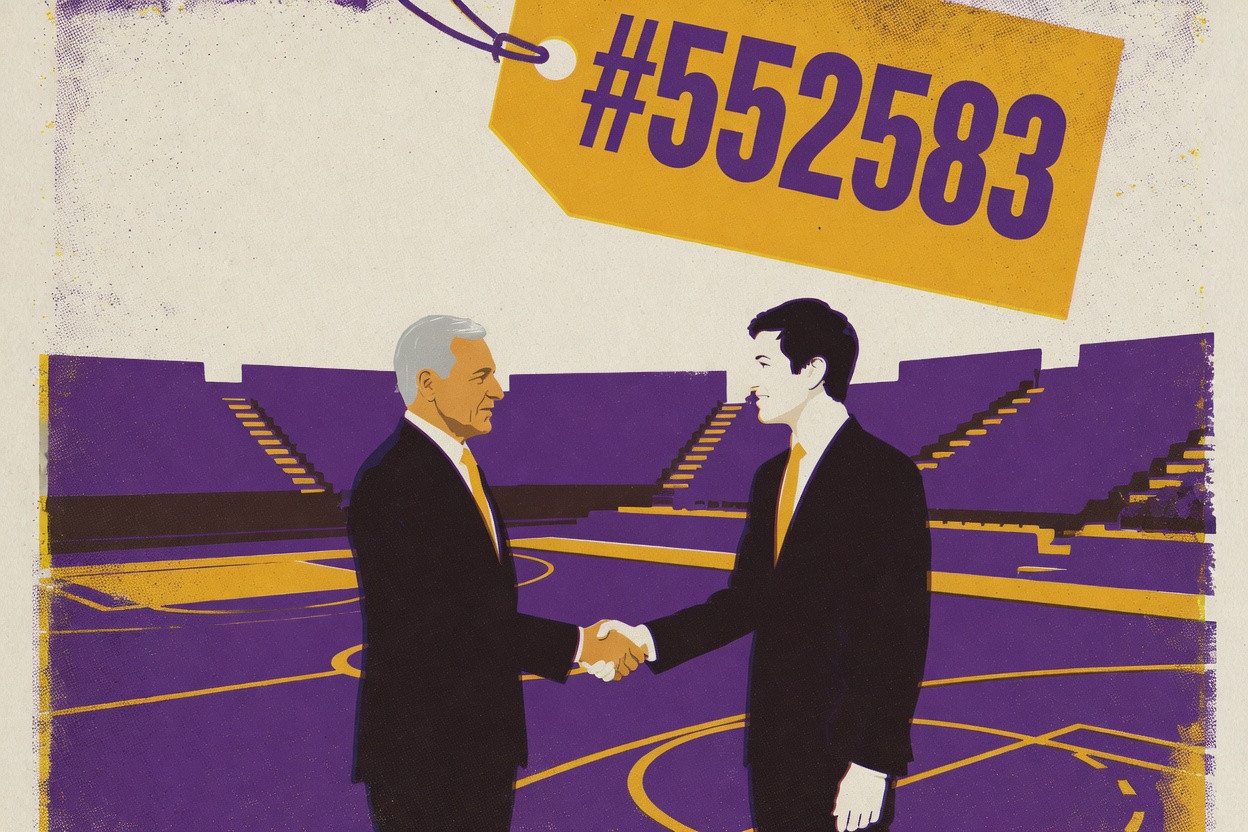
Here's a number to sit with: $12.5 billion. That's the reported price Josh Kushner and Bob Iger have agreed to pay for the Los Angeles Lakers, which multiple outlets call the largest sum ever paid for an American sports franchise. The deal broke on Wednesday, August 12, and it still needs approval from the NBA's Board of Governors, expected to be taken up at a meeting scheduled for next month. So nothing is closed. But the shape of the thing is already clear enough to be alarming.
What should bother you isn't the price. It's the clock.
Mark Walter bought a controlling interest in the Lakers from the Buss family last year, at a valuation of roughly $10 billion. That purchase was agreed in June 2025 and didn't officially close until October 30, 2025. Depending on which date you use, Walter's run as majority owner works out to about 10 months, or 14, or just "less than a year." Pick whichever number you like. They all point at the same uncomfortable fact: the man barely had time to change the letterhead before selling for a reported $2.5 billion profit. For context on how far the ground has moved, Jerry Buss bought this franchise for $67.5 million in 1979.
That's a hell of a trade. It's just not how someone acts when they actually see the Lakers as a team and not a position.
No auction, no shopping, no warning
The detail that turns this from a big number into a genuinely strange story is how fast it happened. According to ESPN's reporting, the offer arrived on a Sunday, and by Wednesday morning an agreement was in place. Roughly 72 hours. Walter, per that same reporting, hadn't been shopping the Lakers, and it doesn't appear he sought competing bids. There was no auction. You don't get an auction on the crown jewel of the sport unless someone chooses not to hold one.
The rest of the league noticed. Front Office Sports reported that the sale caught the ownership class off guard, with one source close to ownership calling it "one of the most bizarre things I've ever seen" and adding, "My phone's ringing off the hook with people saying they're stunned." A former NBA governor put the obvious question plainly: "Why would you sell a team within a year, and especially without an auction? Especially a premier asset like the Lakers."
When the people who own the other 29 teams are this rattled, it's worth paying attention. These aren't sentimental fans. They think about franchises as investments too, and even they found this hard to square.
Buyers who wanted an NBA team, any NBA team
Kushner and Iger weren't chasing the Lakers specifically. According to ESPN's Ramona Shelburne, they were in the process of bidding on the NBA's planned Las Vegas expansion team. The reported number for that Vegas franchise was climbing close to the roughly $10 billion Walter paid for the Lakers, and CBS Sports' analysis notes that once you add the cost of building a Vegas arena, the price gap between an expansion team and the most storied brand in the league nearly disappeared. So they pivoted. They were shopping for an NBA franchise, any NBA franchise, and took whichever one came available first.
That's not a knock on their business sense. It just describes how the buyers themselves seem to have approached this. In this telling, the Lakers weren't the dream so much as the better deal sitting on the shelf.
And the buyers know each other. Kushner, 41, founded the venture capital firm Thrive Capital and is co-founder and vice chairman of Oscar Health. Iger, 75, was succeeded as Disney's CEO this year by Josh D'Amaro, ending his second term. Per CNBC, the two have been business partners before: Iger joined Thrive Capital earlier this year. Kushner holds a minority stake in the Miami Heat, which he'll have to sell to clear the Lakers purchase, and previously held a minority stake in the Memphis Grizzlies. He's also the younger brother of Jared Kushner. Kushner's Thrive was recently connected to a proposed $4.2 billion FIFA deal that FIFA president Gianni Infantino withdrew earlier this month, a separate subplot worth watching.
My point isn't to indict anyone. It's that this is a world of interlocking money where the same handful of people trade enormous assets among themselves, and a basketball team is now one of those assets. The fans in the seats aren't part of that conversation. They're the yield.
What it looks like from the locker room
The cleanest way to feel this is through the guy who has to play through it. Once the deal closes, Luka Dončić, entering his ninth NBA season, will have played for five different majority owners in that time. This is the same Dončić who, per league scoring numbers, led the NBA at 33.5 points per game last season. LeBron James, who announced in July that he was leaving for the Philadelphia 76ers on a two-year, $8 million deal, is already gone. Whatever continuity the Lakers were supposed to offer their new franchise player, ownership isn't part of it.
The irony here is thick. Front Office Sports noted that in the months since taking over, Walter's group had begun overhauling both the business and basketball sides of the operation, the kind of moves that suggest a plan to hold for years. Then he sold. You can rebuild a front office or you can flip the asset. Doing both inside a year is whiplash.
The parts nobody has settled yet
A few things genuinely aren't resolved, and I won't pretend otherwise. The Buss family retained a minority stake and, under the 2025 deal, a guarantee that Jeanie Buss stays on as governor. Iger has said the new group intends to honor that agreement. But Shelburne herself said the specifics for the Buss family are still being worked out, so treat anyone's role as an open question.
There's also a federal subplot. Prosecutors in Manhattan and the SEC are reportedly examining disclosures tied to insurers Walter controls, and Bloomberg has reported that Walter and his Guggenheim Partners firm are working to raise cash amid it. Tempting as it is to connect that to a hurried sale, no outlet has confirmed the investigation drove this deal, and Walter's companies deny wrongdoing. So I'll note the timing and leave it there. The Dodgers, Chelsea, and the WNBA's Los Angeles Sparks, all part of Walter's holdings, aren't included in this sale.
The worry underneath the good news
Magic Johnson welcomed the buyers warmly, saying Lakers fans "couldn't have two better owners." Maybe he's right. Iger ran the most successful entertainment company on earth, and running the Lakers well is at least partly an entertainment problem. I'm not predicting doom on the court.
My concern is structural, and it's an opinion, so take it as one. Forbes raised a version of it too, asking whether owners are starting to treat teams as quick investments rather than long-term stewards. When a franchise can change hands twice in under a year, at record valuations, sold to buyers who were just as happy with a different city entirely, the team stops being a fixed point in a community and becomes a line in a portfolio. Positions get sold when the return is right.
The Lakers will be fine as a business. The valuations only go one way for now. But if the lesson billionaires take from this is that you can buy the crown jewel, redecorate for a few months, and flip it for a couple billion in profit, then the next Lakers fan who falls for an owner's vision should probably read the fine print on how long visions last.