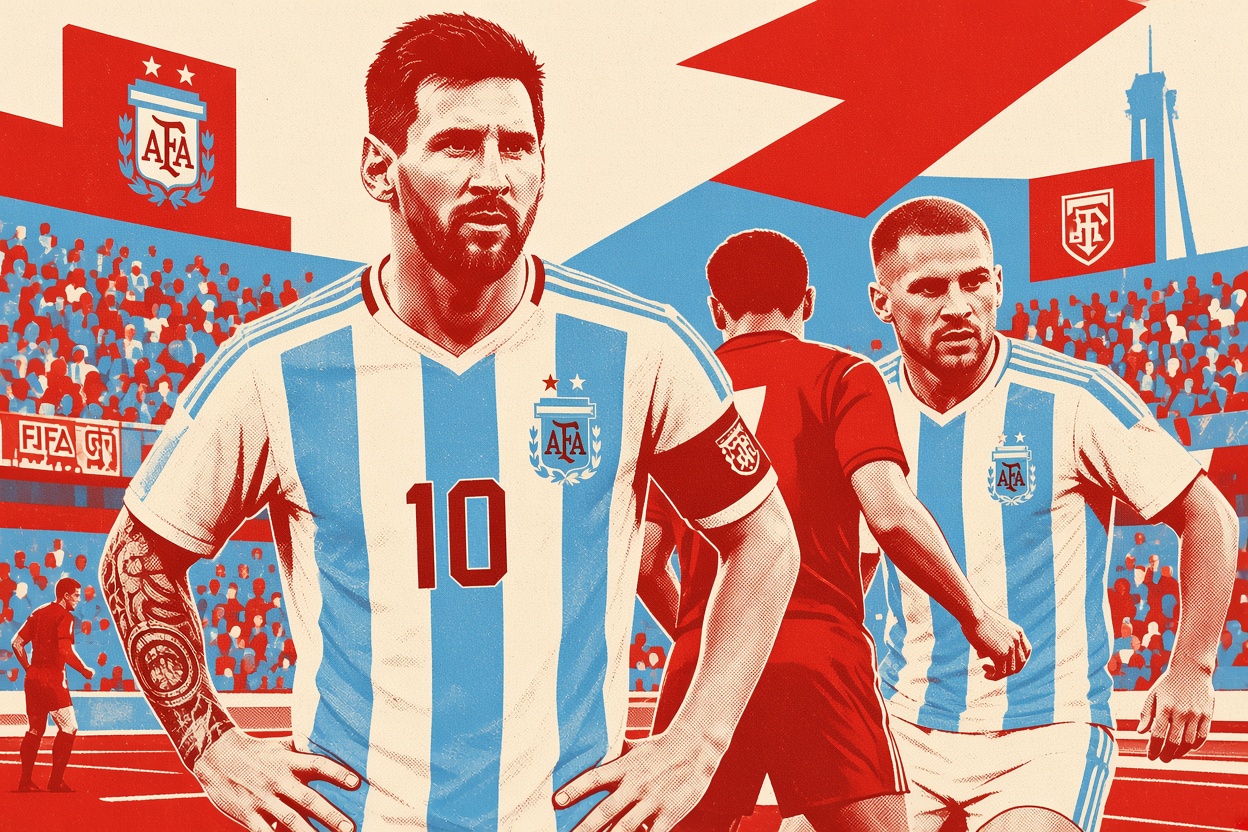
Argentina didn't lose the World Cup final because they were tired. They lost it because Spain were better for a hundred and twenty minutes, by a distance that still looks embarrassing on paper. Spain had twenty shots. Argentina had two. The defending champions, a side that scored nineteen goals on the way to that final, didn't register a single attempt until extra time. Eyes tell you that much.
Alexis Mac Allister, who actually played it, said as much this week. In an interview released on November 3, he opened with the only honest line available to him: Spain were much better and deserved to win. Then he added the fatigue part, playing every three days, the mental exhaustion of the England semifinal, and everything wrapped around it, and said maybe that drained some of their energy. Both things are true. The second doesn't rescue the first.
The run was genuinely brutal. Argentina survived Cape Verde 3-2 after extra time in the round of 32, a match in which they came within an own goal of the kind of upset that would have followed them around forever. They outlasted ten-man Switzerland 3-1, again after extra time. Then came England, 2-1, two goals in the final minutes, the heaviest fixture on the continent for anyone in that dressing room. Three matches that went the full hundred and twenty minutes inside roughly two and a half weeks, bracketing the most emotionally loaded ninety they will ever play. Of course that leaves marks.
Tired legs explain why Argentina had nothing left to punish Spain with. They explain the flatness, the absence of a second gear. They explain why Messi was wading through setting concrete, touching the ball barely more than four dozen times with no moment of magic in him. They don't explain how Spain created a flood of chances against a defense that's supposed to hold its shape no matter how heavy the schedule. Spain conceded one goal across the entire tournament. One. They suffocated everyone they met, then did it again in the final.
Enzo Fernández got himself sent off with two yellows, forcing Argentina to play all of added extra time a man down, which is its own self-inflicted wound. Ferran Torres settled it in the 106th minute. By then the result had the feel of inevitability, the kind ESPN called the worst World Cup final in living memory, won by Spain through sheer persistence and belief that their quality would tell.
Mac Allister deserves credit for what he refused to do with his answer. Since July, a corner of Argentine support has been chasing darker explanations, reading the team's calmness as evidence that something was off, something arranged, something hidden. Mac Allister shut that down flat. He comes from a footballing family, he said, and they know these things don't exist. He credited Spain first and mentioned the schedule only as context. Nicolás Tagliafico made a similar point about the emotional, physical and mental toll. Neither of them turned it into a grievance.
That's the adult answer, and it's the one the people still litigating this on Messi's behalf should copy. You can admire how far Argentina dragged themselves on will alone, through two extra-time survivals and a semifinal comeback for the ages, and still accept that the team that controlled the final from the first whistle to the last deserved the trophy. Both are true.
Spain won it. A better side on the day, and the man who lost it has already told you so.