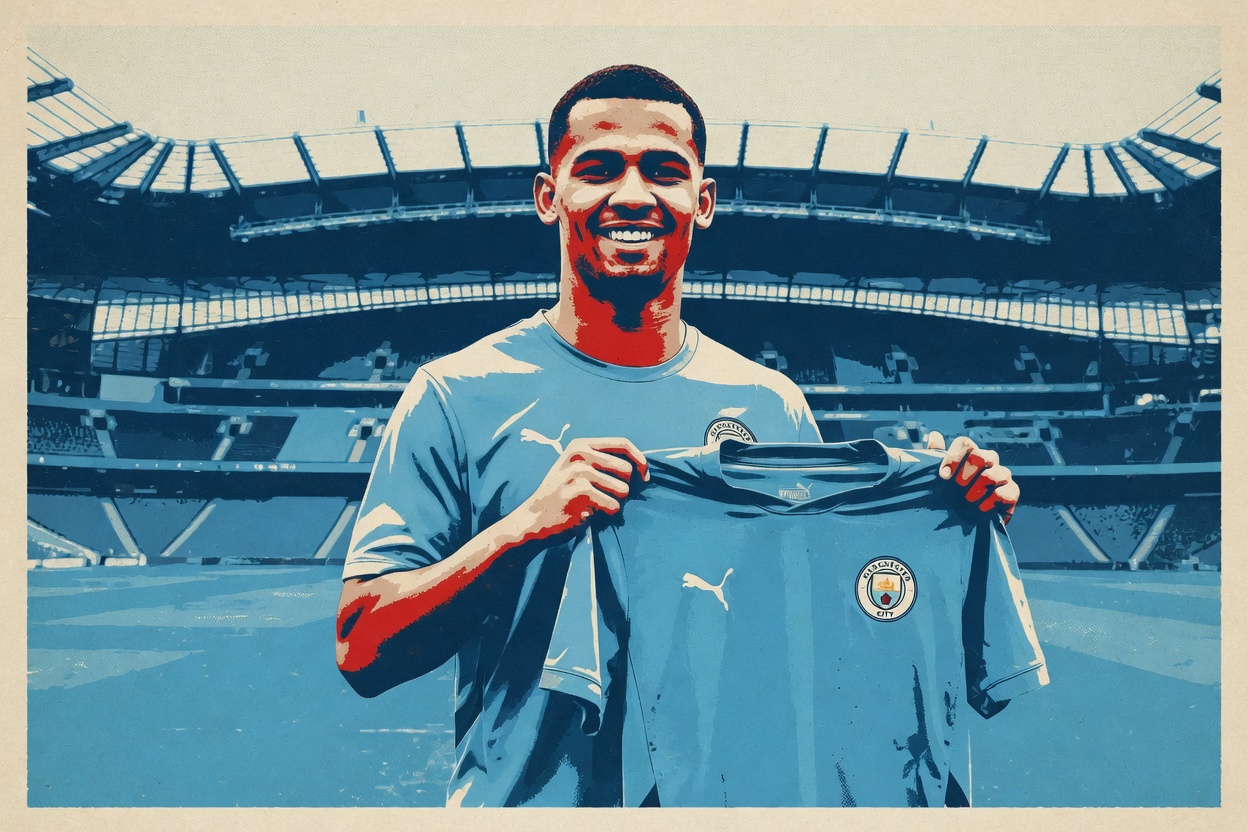
Deadline day is supposed to reward the club that moves first. Tottenham did the legwork on Iliman Ndiaye. They chased him, agreed terms, and, according to one report, had a medical booked. Then Manchester City walked in, agreed a deal with Everton and the player, and left with him anyway.
That's the part worth sitting with. City wanting a winger, or having the money, surprised nobody, everyone already knew both. What stands out is how easily it happened. A rival's near-finished piece of business became City's in the final hours of the window, and the player's own words made clear where his heart had been all along.
"It's easy to make the decision about whether you want to be at Manchester City or not," Ndiaye said. "You can see the recent history; you want to be part of that project." He called it an "easy decision" and added that "there was nothing else that I wanted other than joining Manchester City." Read that as a dig at the clubs he turned down if you like. It's also just the plain truth of the modern market: when City decide they want you, the other suitors are mostly there to set the price.
The deal itself is reported at £60m plus £5m in add-ons, a total around £65m, on a five-year contract for the 26-year-old. On its own, that's a serious outlay. On this particular day, it was almost a footnote.
City also signed Enzo Fernandez from Chelsea for £125m, a fee that equals the British transfer record, matching the £125m Liverpool paid Newcastle for Alexander Isak. Fernandez signed a five-year deal and rejoins Enzo Maresca, his old Chelsea manager. One media tally put City's deadline-day spend on the two players at around £190m. That's less a transfer window than a demonstration.
What makes the Ndiaye episode sting for Tottenham is this: City reportedly needed a wide forward in the first place because they'd let Savinho and Omar Marmoush join Spurs earlier in the window. Spurs helped create the vacancy, then had the player they'd lined up to fill their own attack taken by the club they'd just sold to. City had gone for Cody Gakpo first, had an £80m bid rejected by Liverpool, and pivoted. Spurs had also gone for Gakpo, also missed, and pivoted to the same man City then took.
Spurs didn't fold. Roberto De Zerbi's side turned quickly back to Chelsea and closed a loan for Mykhailo Mudryk, with a reported option to buy, and added Tosin Adarabioyo. Those are real signings by real footballers. They're also, unmistakably, plan B, arranged in the hours after plan A got lifted out of their hands.
None of it breaks any rule. It doesn't need to. A summer in which UK spending reportedly cleared £3.2bn ended with one club equalling the national record and hijacking a rival's target on the same afternoon, and the market just absorbed it. City are early into life after Pep Guardiola, who stepped down last summer after a decade, with Maresca now running an aggressive rebuild. The season's only a couple of rounds old, so any table talk is premature. The power balance, though, was settled long before kickoff.
This wasn't City's most expensive move of the day, but it was their most revealing one. When you can outspend the field and still land the bargain, the deadline isn't really a race anymore.