Nobody has found a bribe. No regulator, no auditor, no police force, not even the new council bosses now quietly backing away from the paperwork, has produced a single pound passed under a table. This isn't a story about officials caught taking cash, and it may never become one. What actually happened should bother you more.
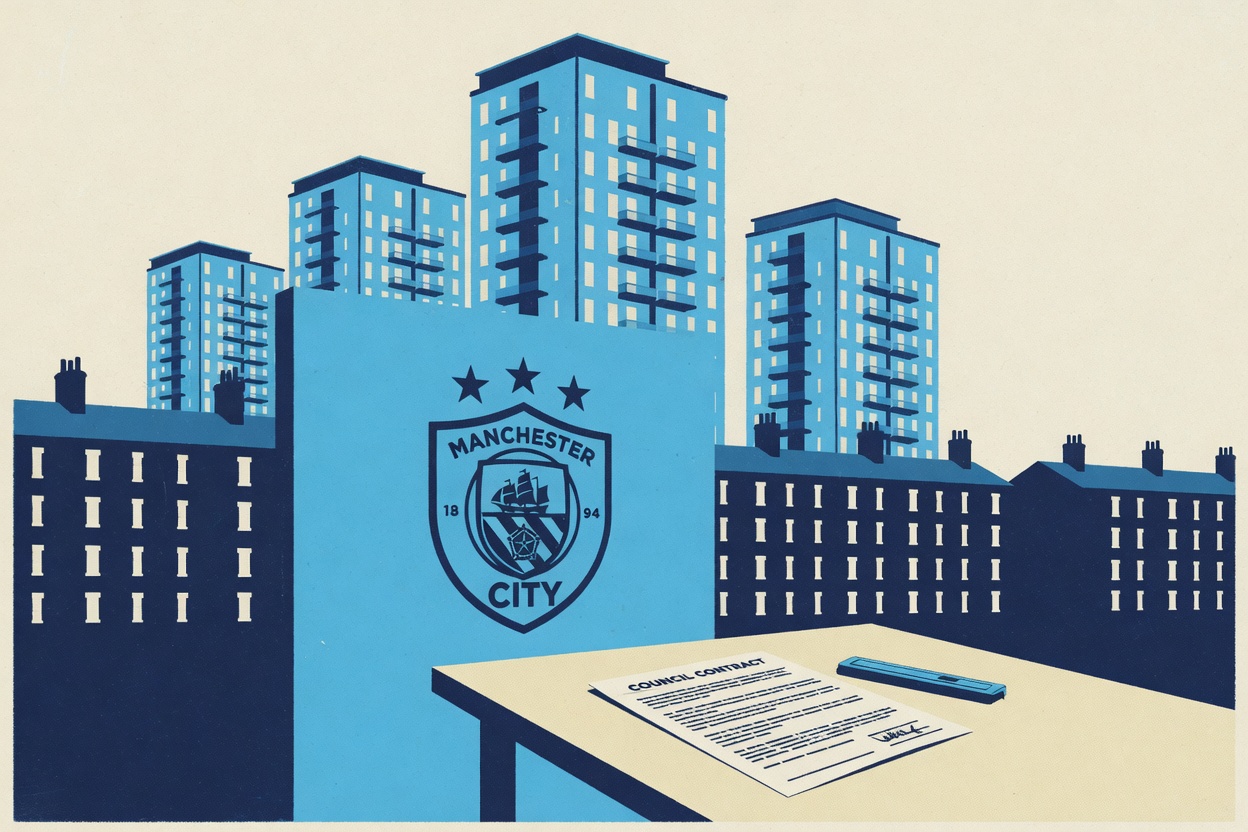
In 2014 Manchester City Council and Sheikh Mansour's Abu Dhabi United Group set up a joint venture called Manchester Life to redevelop Ancoats and New Islington. In December 2015 Sir Howard Bernstein signed a collaboration agreement handing that venture a ten-year right of first refusal over council-owned land in those districts, an agreement that runs until December this year. Across the decade that followed, close to 1,800 homes went up on it. The council's share of the profit came to less than £3m, with the first overage payment of £2.9m only landing in the last couple of years.
Look at how the money was carved up and the number stops being a surprise. The structure let ADUG recoup its development costs and bank a guaranteed return, 8% in phase one and 10% in phase two, before the council saw a penny. The council stood at the back of the queue on its own land.
The council has a defense. It says the land had failed to attract market interest since the financial crisis, independently appraised at £5.2m, with the £2.9m in overage on top of that an above-market return. Maybe the parcels really were that grim. But a ten-year exclusive with the profit front-loaded entirely to the buyer isn't what you sign if you think the land might one day be worth something, and Ancoats obviously became worth something. A 2022 University of Sheffield study found the council had sold 999-year leaseholds "below comparable rates" and "sold the family silver too cheap," calling it "a transfer of public wealth to private hands that is difficult to justify as prudent," and put the Manchester Life property held by Jersey-based ADUG subsidiaries at nearly £350 million. A North-West developer told The Times it was a "sweetheart deal" with "the red-carpet treatment where other British-based developers are not." The profits sit offshore, so the council can't even properly audit whether it was shortchanged.
Richard Leese and Howard Bernstein own this. They ran the council for the better part of two decades and signed off on the arrangement, writing these terms into existence. The current leadership under Tom Stannard and Garry Bridges is right to review it, and in October the Manchester Life deal was struck off the council's register of significant partnerships. But "seeking assurances" and a fuller financial report due in January 2027, filed as a non-public Part B document ratepayers won't be allowed to read, amounts to the bare minimum. More is owed.
Then there's Andy Burnham, who didn't negotiate this contract but spent years as the public face of the city region that lived comfortably alongside it. When the Premier League commission found City guilty of all but one of 115 charges in late September, with the club now appealing into the New Year, Burnham's first move was to say he'd be "really concerned to lose" the owners and praise them as "such a huge partner in the building of modern Manchester," before a hasty walk-back. That reflex is what a decade of this coziness does to a politician.
Reporters chasing a crime here are chasing the wrong thing. A public body got outplayed by a sovereign-wealth fund and called the loss regeneration. The names on the hook are Leese and Bernstein, and the political culture around them that was too flattered by Gulf money to read the contract hard while it still mattered.