Here's a question sports fans almost never ask about the men who own their teams: where does the money come from?
With Mark Walter, we may finally find out, and it's not because MLB or the NBA went looking. Federal prosecutors in Manhattan and the Securities and Exchange Commission are examining whether Walter or his businesses committed fraud tied to insurance-company lending, whether he concealed financial connections while borrowing billions of dollars from insurers he controls.
No charges have been filed, and Walter and his businesses haven't been accused of any crime. A federal investigation isn't proof of anything. TWG Global, Walter's holding company, says he has "always acted in good faith" and is "cooperating with authorities," adding it's "confident these matters will be resolved favorably." Keep that in mind through everything that follows.
But the fact that a case isn't proven doesn't mean it isn't serious. And the way sports leagues wave off their owners' outside businesses as somebody else's problem is exactly the reflex I want to argue against.
The empire, not the ballclub
Walter isn't just a guy who bought a baseball team. He's the chief executive of Guggenheim Partners, the Chicago investment firm, and he owns two Delaware life insurers: Delaware Life Insurance and Clear Spring Life and Annuity. Those companies sit at the center of the probe. Investigators are examining related-party transactions involving those insurers' private credit holdings, some of which reportedly helped finance Walter's own purchase of the Dodgers, and whether they were properly disclosed to insurance regulators.
Stop on that for a second. The money that helped buy your two-time defending World Series champions may be tangled up in the same web regulators are now pulling apart. That's not some distant corporate matter with no bearing on the game. It's the plumbing underneath the trophy.
The dollar figures are still moving, so treat any single number with care. One accounting centers the probe on roughly $16 billion in private credit loans issued by the two Delaware insurers. Delaware Life and Clear Spring both received grand jury subpoenas in February and have since run internal reviews, and estimates of how much of those investments tied back to Walter's other businesses have been revised upward more than once. When a company's own numbers get corrected upward by that much, "nothing to see here" isn't a serious response.
There's also a detail that reframes everything else. The FBI's Chicago field office confirmed it executed a court-authorized search for a mobile phone and laptop on an aircraft at Midway International Airport on Sept. 18. That happened roughly ten months before the public learned about it in late July 2026. The search was already on the record while the sports world was busy handing Walter a coronation.
The coronation problem
Here's the timeline that makes my skin crawl. Walter reached an agreement with the Buss family to buy controlling interest in the Lakers on June 18, 2025, and the sale was approved on Oct. 30, 2025. Then he struck a deal to sell the Lakers to Joshua Kushner and Bob Iger at a record $12.5 billion, just over a year after buying in.
I want to be careful here. No reporting has established that the Lakers sale was caused by or timed to the investigation. Anyone telling you it was is guessing. But the sequence, buy the team, agree to flip it at a record price, then watch the fraud-probe details go public, looks bad on its own terms. "Looks bad" is allowed to matter even when "proven" isn't there yet.
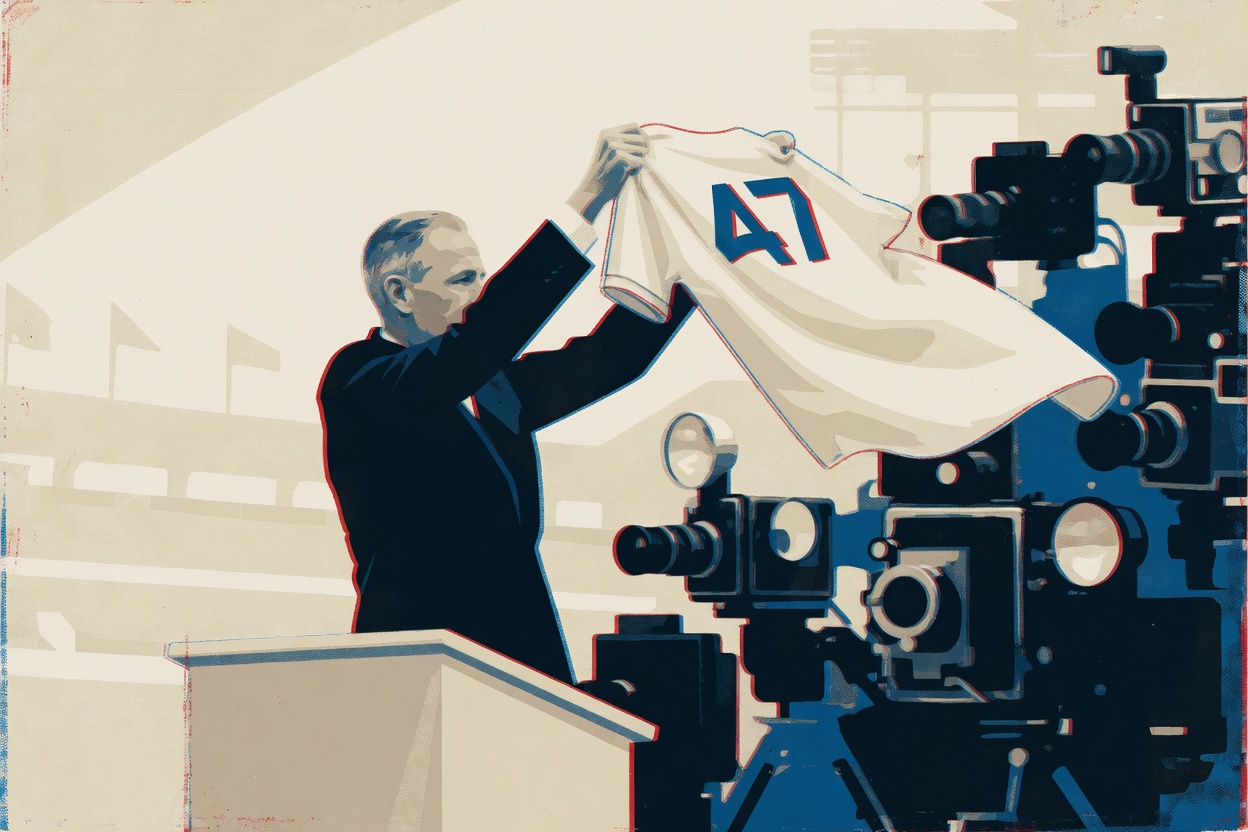
Meanwhile, the access on display tells you how insulated a winning owner becomes. At a White House Rose Garden event, Walter presented President Trump with a commemorative Dodgers jersey bearing the number 47 and a World Series ring. Trump praised the team's "great ownership" and called Walter a friend. That's not evidence of anything improper, and I'm not pretending it is. What it is: a snapshot of a man moving through the most powerful rooms in America while a grand jury poked at his companies. Nothing connects the two. Everything about the optics says untouchable.
Why the leagues get a pass they shouldn't
MLB's own constitution gives the commissioner authority to discipline an owner for conduct not in the best interests of baseball, up to and including forcing a sale. That power exists, and it's been used before. George Steinbrenner was suspended from day-to-day Yankees operations in 1974 by commissioner Bowie Kuhn after he pleaded guilty to making illegal campaign contributions to Richard Nixon. Frank McCourt lost the Dodgers in 2012.
So don't tell me the tools aren't there. The honest reason nobody expects them to be used is simpler and uglier: Walter's teams win, and winning buys silence.
McCourt and Walter aren't the same story, and I won't pretend they are. McCourt was found to have personally misused club funds. The Walter matter is about insurance-regulatory disclosure and alleged fraud across his broader empire, not looting the Dodgers' till. The teams are believed to run on revenue independent of the insurance businesses. Fine. But whether a league is willing to even ask the question shouldn't depend on whether the money leak is inside the clubhouse or two holding companies over.
Rob Manfred has made a habit of deferring to owners' business judgment. On Dodgers spending, in an earlier and unrelated context, he called them "a really well-run, successful organization" whose choices are "consistent with our rules." That's the instinct I'm worried about, applied to a much heavier subject. As of this writing, no public MLB or NBA statement specific to the Walter probe has surfaced. I'm not accusing either league of stonewalling. I'm saying the burden should be on them to show they're paying attention, and right now there's no sign they are.
Winning is not a character reference
The Dodgers are the two-time defending World Series champions chasing a three-peat, and as of games through Aug. 19 they sat around 77-51 atop the NL West, even after a rough patch that left them 5-10 since Aug. 1. On the field they're excellent. On the field is not where the questions live.
Walter's group bought the Dodgers for $2.15 billion in a deal that closed in 2012. Fourteen years later he's a 66-year-old billionaire whose name sits on top of one of the sport's crown jewels, and the standard reflex is to treat his financial life as none of our business because the product is good.
That reflex is the whole problem. If Walter is cleared, and he may well be, that will be worth stating plainly. But a corporate mogul borrowing billions from insurers he controls should draw the same scrutiny whether or not his baseball team is chasing history. The trophy case doesn't audit the balance sheet. Somebody should.