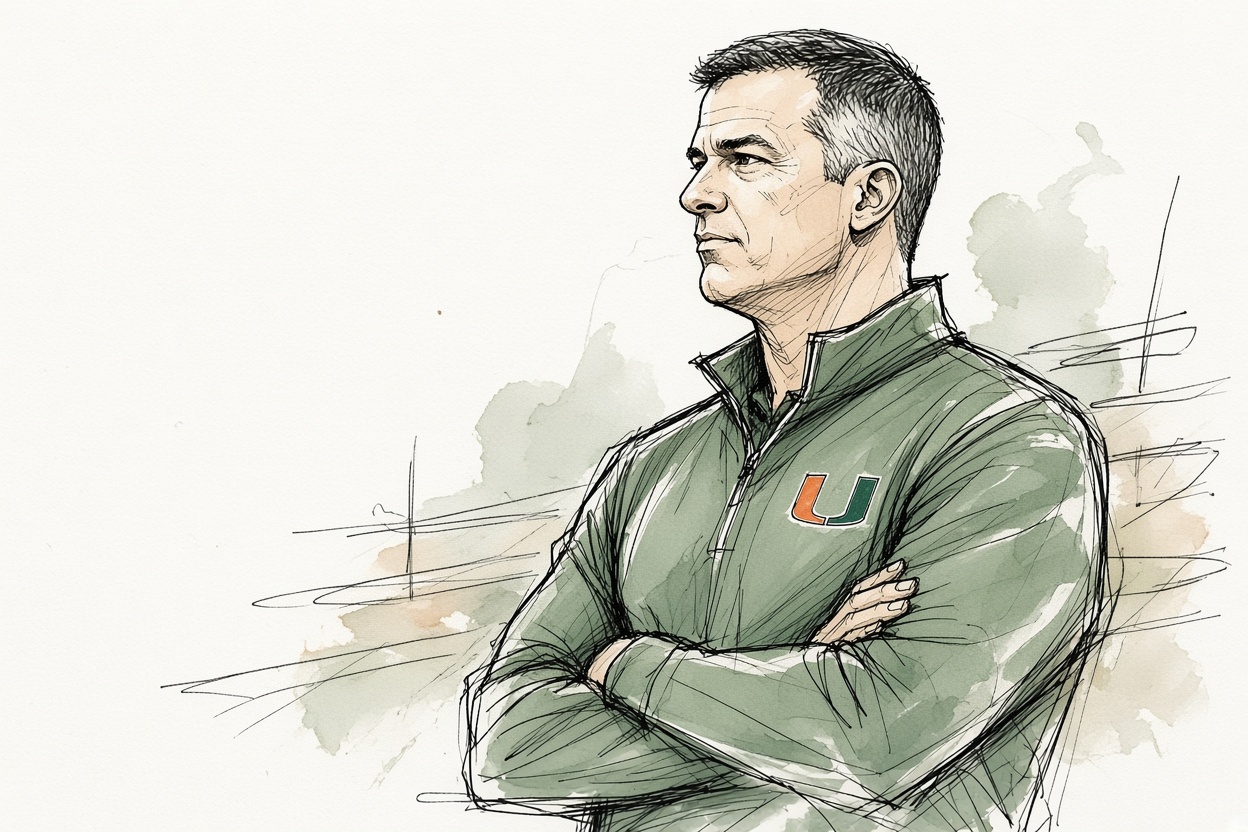
Somewhere between the final whistle and the next morning, a boring, correct football decision turned into a conspiracy. Miami beat Duke 36-25 on Saturday, and instead of talking about the game, a chunk of the sport spent its energy asking why Mario Cristobal's staff didn't just "close it out" clean, why there were stoppages late, why the final kickoff wasn't a real onside try. The answer is simple, and it isn't flattering to the people asking: none of that happened the way they think it did.
Start with the kickoff, since that's the loudest complaint. With 20 seconds left and Duke out of timeouts, Miami squibbed the ball. Duke had its hands team on the field prepared for a possible onside kick, anticipating exactly what people now claim Miami refused to try. Bryce Fitzgerald fielded the squib cleanly for Miami, and that was the game. Miami just ran the lowest-risk play available for a team up two scores. You don't gift an opponent a short field for no reason when they need two scores and have no timeouts. Trying a real onside kick there would've been reckless, and any coach who actually did it would deserve the criticism people are wrongly aiming at Cristobal now.
The timeout accusation is worse, because there isn't anything behind it. Nothing in the official record shows Miami using timeouts late to stretch the clock or pad a plus-money cover. What the record does show is Duke's own beat writers grumbling about officials handing Duke extra review stoppages on calls that didn't need a second look, then letting Duke snap the ball at tempo to dodge a fumble review altogether. If anyone shaped the final minutes to their advantage, it was Duke, benefiting from the whistle.


Duke's own penalties are a real problem, just not a late-game one. False starts and offside calls on both sides of the ball turned up in the second and third quarters, the kind of self-inflicted, pre-snap mistakes a team playing with poise doesn't make in a game it's trying to win. A program that wants to be taken seriously as competitive needs its operation to stop beating itself. That's on preparation and discipline, and it falls on Manny Diaz's staff. Miami's sideline just did its job.
The spread theory deserves one sentence because it's checkable and it's wrong: Miami was favored by 13.5 and won by 11. Miami didn't cover. Duke covered the number as the underdog. If Cristobal's staff were somehow managing the ending to protect a line, they did a spectacularly bad job of it, because the number says the opposite of what the conspiracy claims.
The honest version of this is that it was normal clock and personnel management in a game Miami controlled. Nothing sinister about it, and no asterisk needed. Miami played the smart, boring endgame a two-score lead calls for, and the people mad about it are mad at a fourth quarter that never happened.
If you need a villain for why this game felt messier at the finish than the scoreboard margin suggested, look at the review booth that kept bailing Duke out of its own mistakes, and look at a Duke operation that handed Miami penalty yardage and sloppy execution for four quarters. Cristobal's staff did nothing wrong here. Pointing a finger at them for playing it safe with a win in hand aims at the wrong team entirely.