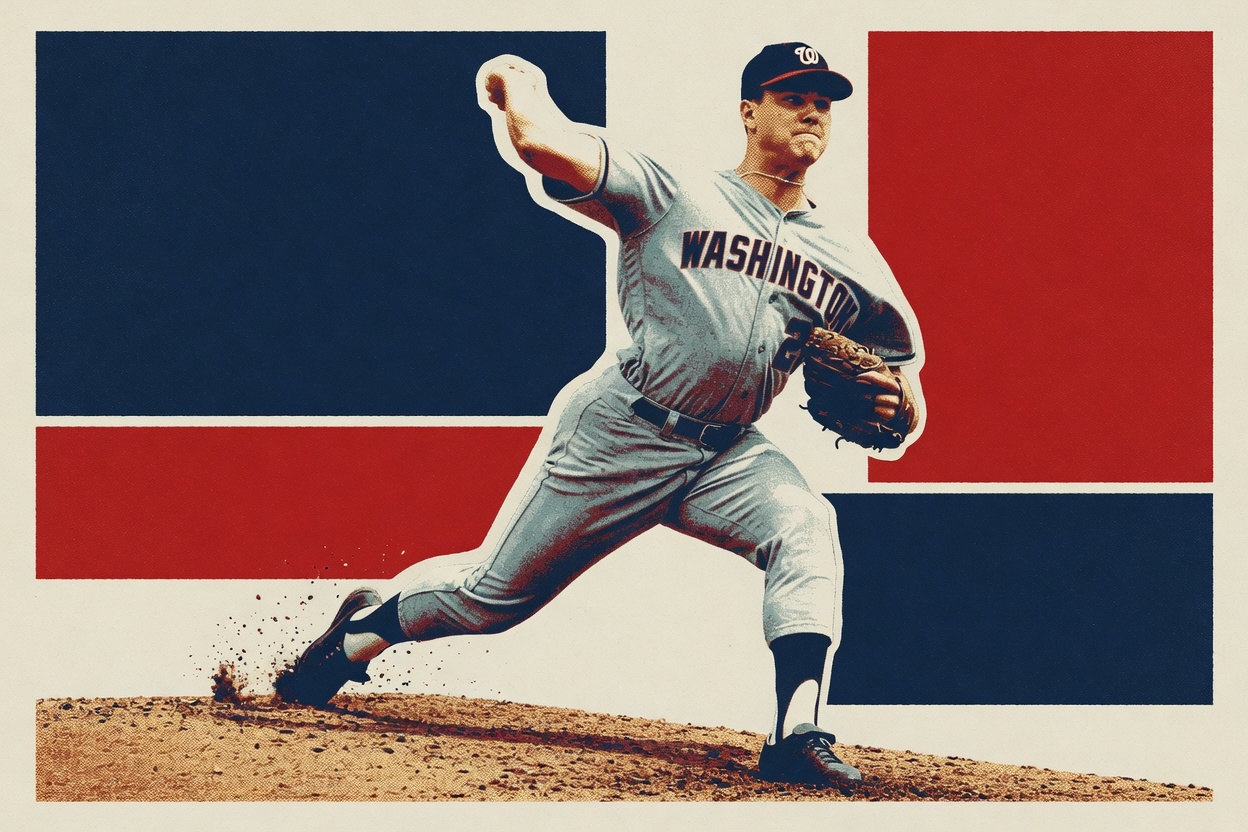
There's a version of this story where the Nationals look brilliant, and there's a version where they look like a last-place team talking itself into hope. Both start from the same place: Cade Cavalli, coming off the best season of his life, now signed through 2030 with a club option for 2031.
The Nationals announced the four-year extension Friday: $47 million guaranteed, climbing to $70 million if Washington exercises the 2031 club option. It's the first long-term deal handed out by president of baseball operations Paul Toboni, who took the job a year ago. A first big commitment tells you what a front office values, and Toboni's answer is simple: reward the player who came up through your system and produced.
And produce he did. Through 31 starts this season, Cavalli carried a 3.12 ERA, eighth among National League starters, with 194 strikeouts across 164 2/3 innings and a 12-5 record in his first full year as a rotation regular. The second half was better still: a 2.05 ERA with 84 strikeouts in 66 innings. Entering Friday he'd held opponents to three earned runs or fewer in 29 of his 31 starts, the best mark among all pitchers, ahead of the Yankees' Cam Schlittler, the Brewers' Jacob Misiorowski and the Guardians' Parker Messick. Then, on the day the ink dried, he went out and shut down the Cardinals in a 9-1 win. If you're going to sign a contract and immediately validate it, that's how.
The catch is the elbow, and the pattern around it.
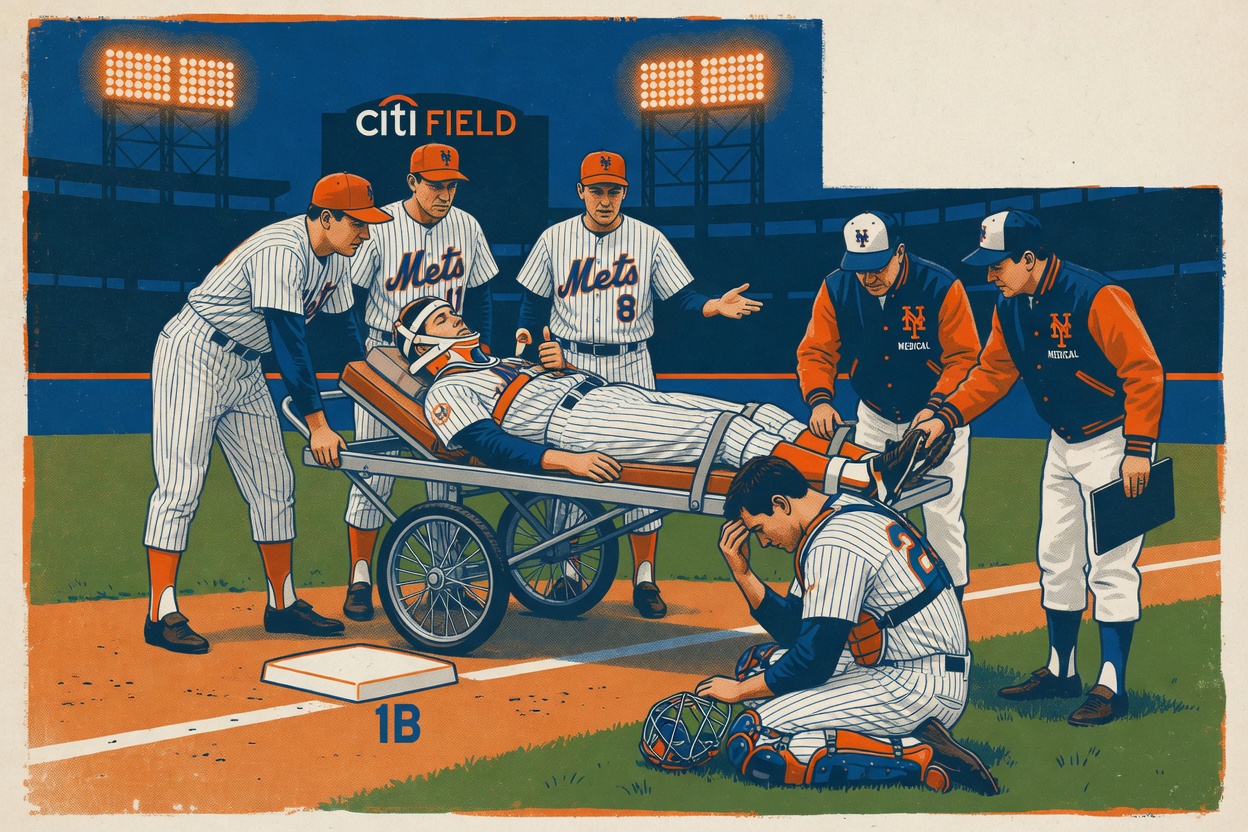
Cavalli sprained the ulnar collateral ligament in his pitching arm during a spring game against the Mets in March 2023, had Tommy John surgery a week later, and then hit setback after setback. He went nearly three years between major league appearances before rejoining the rotation in August of last year. When he came back, he made 10 starts and posted a 4.25 ERA over 48 2/3 innings, a workmanlike, feeling-his-way return. This year he blossomed. But in late August a 93.1 mph comebacker off the bat of the Marlins' Javier Sanoja caught him on the lower leg and sent him out of the game. The diagnosis was benign: right calf discomfort, negative X-rays, what Cavalli himself called a charley horse or a dead leg. He pitched effectively the rest of the way. On its own, the leg injury is nothing. Stacked onto the elbow history, it's why smart people will squint at this deal.
Paying a pitcher who's already had Tommy John isn't reckless. Half the sport has been through that surgery. The real question is never whether he's been hurt, it's how much you paid and how well you protected yourself. On that score, the Nationals did this right. Four guaranteed years at these numbers isn't franchise-altering money for a starter who just pitched like a top-ten NL arm, and the club option on the back end lets Washington keep the upside without getting trapped by the downside. Compare that to what happens when a team commits nine figures to a pitcher still early in his return from the same surgery, and the modesty of this deal starts to look smart.
The loyalty angle is real, and I don't think it's a weakness. Toboni is running a rebuild, and rebuilds only work if young players believe that performing here gets rewarded here. His message, in his own words, is that the Nationals "want homegrown players to know that if they come here and carry themselves the right way, go about their work the right way," the club will take care of them. Cavalli is the proof of concept. He was a first-round pick, drafted 22nd overall in 2020, who debuted in 2022, blew out his elbow, disappeared for the better part of three years, and clawed back into being one of the better starters in his league. If you can't build a culture around that guy, who?
The wishful-thinking case is straightforward: he has one dominant season, a surgically repaired elbow, and a body that's already taken a scare this year, and you're betting he holds up into the next decade. That's a fair worry. Pitchers break. This one already has.
But asset management means pricing risk, not avoiding it entirely. Washington priced this one carefully, bought out the arbitration years that would have been getting expensive anyway, and took free agency off the table entirely. For a team that isn't winning now, locking in a controllable, front-of-rotation arm at a manageable rate is exactly the kind of move you make so that when the rest of the roster catches up, you already have a foundation piece under contract. Call it a gamble if you want. It's the sensible kind.