Goaltending is the most mentally brutal job in team sports, and the NHL is the one body with the power to make it survivable. Hockey has spent decades treating whatever happens to goalies as a personality quirk, and Dan Robson's investigation for The Athletic, describing a league in the middle of a goaltender mental health crisis, shows what that habit costs.
The investigation reports goalies stepping away from the game, or leaving it entirely, because of anxiety, OCD and other mental health problems made worse by the stress of the position. Sports psychiatrist Dr. Carla Edwards digs into why those struggles show up so often in the crease. Nobody who has watched a goalie skate to the bench after a soft one should need it explained.
The job is the problem
A winger who blows a coverage gets to hide inside a shift. Five guys share the blame for a bad goal right up until the puck crosses the line, and then it belongs to one person, on the scoreboard and on his stat line, every night he plays. No other player in the sport carries a running public grade on every single mistake. That's the position as designed, and it's why this is uniquely crushing.
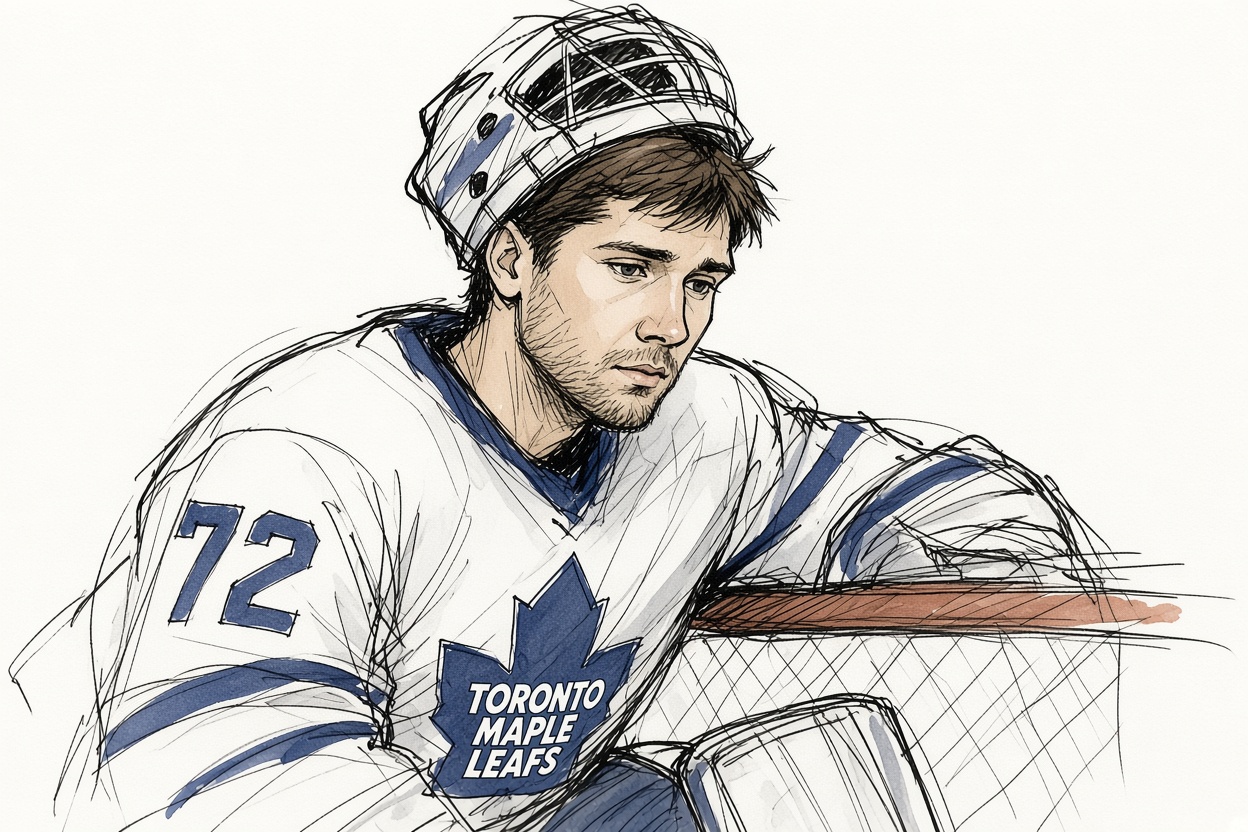
If this only hit fringe goalies, you could wave it off. It hit Linus Ullmark. In late December of the 2025-26 season, with Ottawa dead last in its division and dragged down by poor goaltending, he took a mental health leave and worked with a professional from the NHL/NHLPA player assistance program. He missed 35 days. He came back at the end of January, finished the worst season of his career with an .881 save percentage across 28 starts, and later revealed he'd been having panic attacks, sometimes between periods.
As of November 18, he's 10-1-0 with a .940 save percentage through 11 games, leading the NHL, and Ottawa sat atop the Atlantic Division as of November 17. Good. He earned every bit of it. The comeback proves help works. It also proves the help showed up once he was already out of the lineup.
You laughed at the coping mechanism
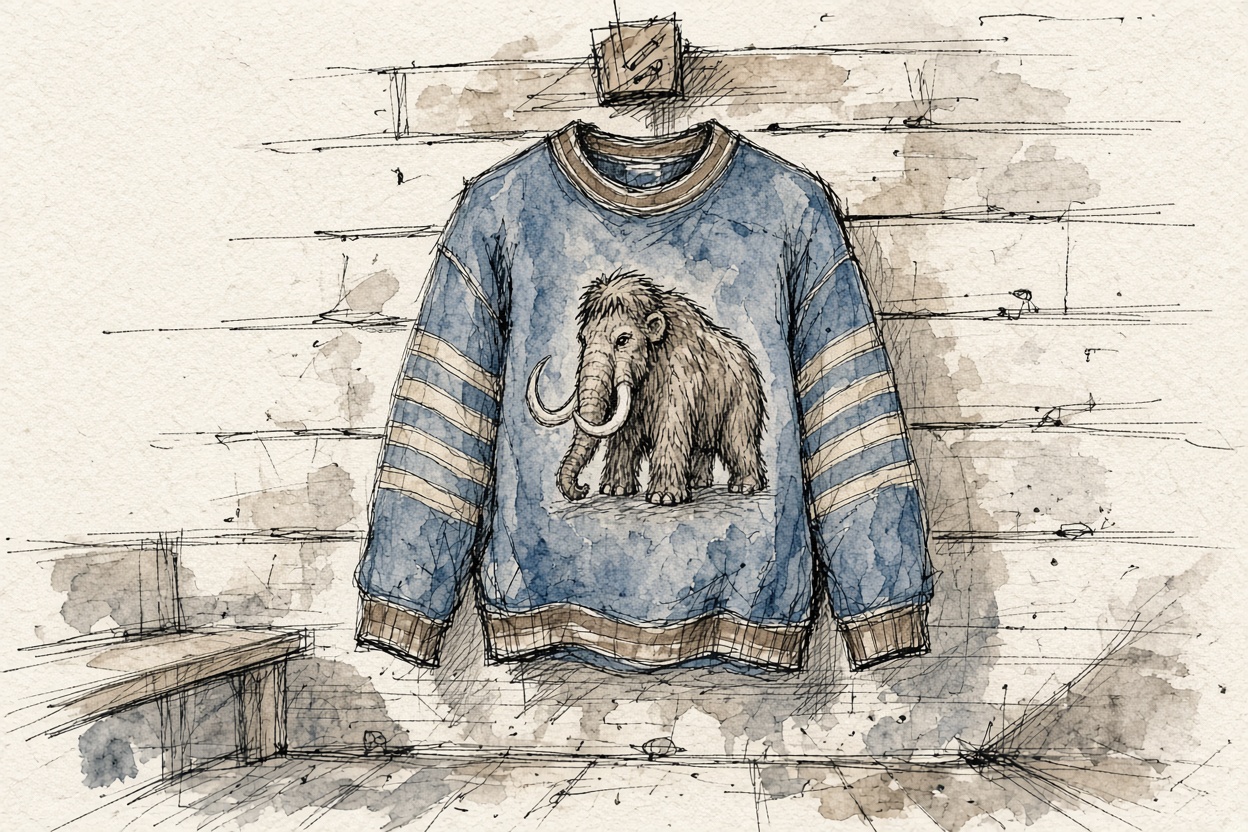
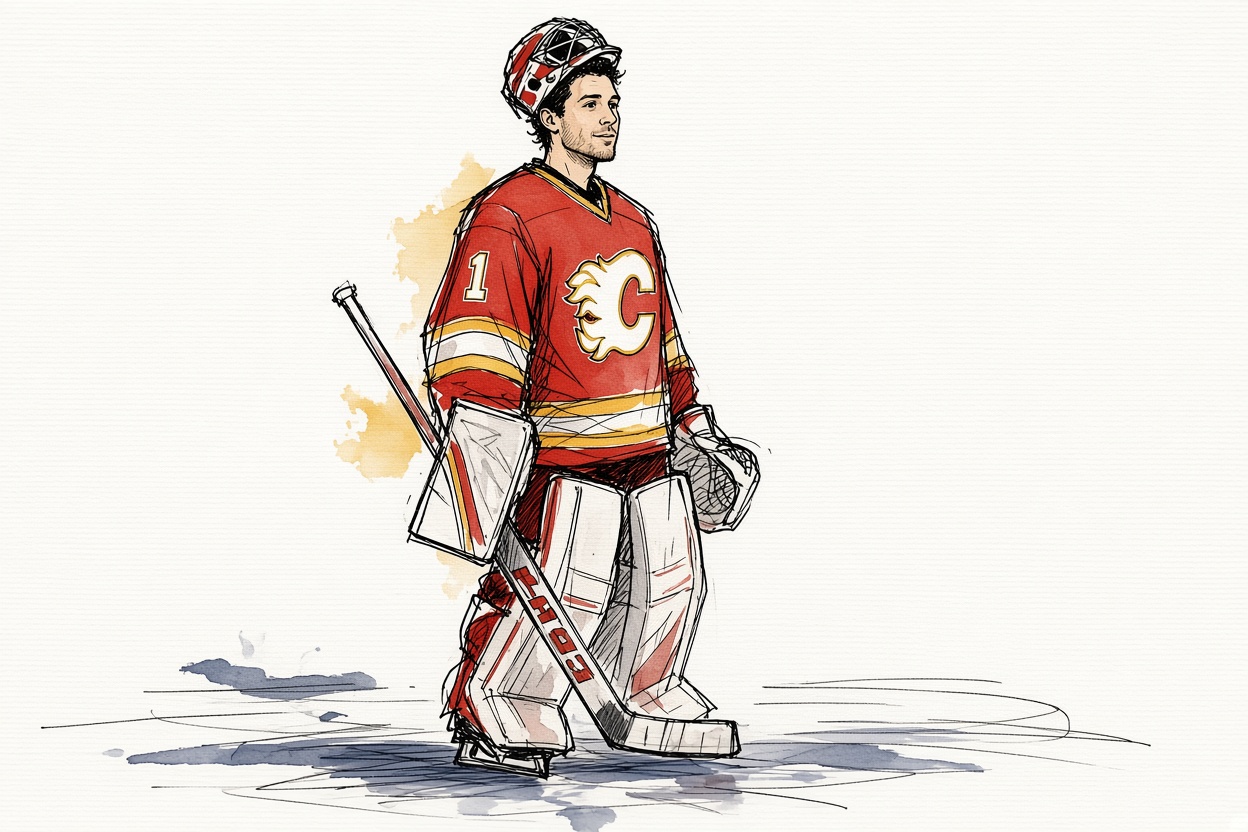
Then there's Devin Cooley, who has turned goalie survival into a catchphrase. "Nothing matters. Nobody cares. We're all going to die." He's said it in enough post-game interviews, first with San Jose and now with Calgary, that it keeps going viral as another wacky goalie story. He's selling sweatshirts with it for charity.
What he's actually describing is darker than a bit. He has said "my conscious brain is really bad at playing goalie." He has said "I have to find the humour in my mistakes because otherwise I will internalize it and it will grow and make me angry and upset." From his crease, he looks through his mask at fans of all ages in the stands and tells himself: "They're all going to be dead. Nobody's going to remember this."
That's a man building a wall between himself and a building full of people grading him. It's smart, and it works for him. It's also a guy doing his own psychological engineering in real time because the job demands it. You clipped it and laughed. So did everyone else.
Hockey has always done this. Gilles Gratton, as the story goes, told teammates he'd been reincarnated from a Spanish Inquisition soldier, and once refused to play for the WHA's Toronto Toros because the moon was in the wrong part of the sky. That story has been told as comedy for decades. "Goalies are weird" has been the sport's all-purpose explanation for anything happening behind a mask, and it let everyone off the hook.
The backup excuse
Teams split the starts now, and the backup shares the load. That's the case for saying the position isn't as exposed as the investigation suggests. A tandem splits the schedule, nothing else. On the night you play, every goal is still yours alone, and the guy at the end of the bench is the one who takes your crease if you crack.
The best support system any NHL tandem ever had was a hug. Ullmark and Jeremy Swayman started embracing after Bruins wins in 2021-22, and it became the famous goalie hug. It worked because two goalies happened to care about each other. When Ullmark was traded to Ottawa, he retired it: "that's for me and Sway only." Friendship is luck. A league can't run its most dangerous job on luck.
Whose job it is
The goalies are already doing their part, and doing it in public. Ullmark took the leave and came back. Cooley talks openly about how his head works. The fans who scapegoat goalies after losses are a real problem, but you can't govern a crowd. The NHL and the NHLPA can govern a league, and they already have the program that helped Ullmark. Make it standard on every team, staffed and built into a goalie's week the way video sessions are, so he sees someone before the panic attacks start instead of after.
Until the NHL treats mental health care for goalies as standard equipment, as basic as the mask, every goalie who steps away from the crease is on the league, and on nobody else.