Kyle Davidson built a case, said it out loud, and repeated it for two years. Then he tore it up.
When he traded Patrick Kane and let Jonathan Toews walk in 2023, Davidson wasn't vague about why. He wanted a clean room for the next Blackhawks. At the time, he called it "an impossibly difficult decision," and he made clear the front office wasn't looking for input from the old guard, telling reporters it was harder for players to weigh in on moves like draft evaluations when they weren't fully informed. His logic held together in its own way.
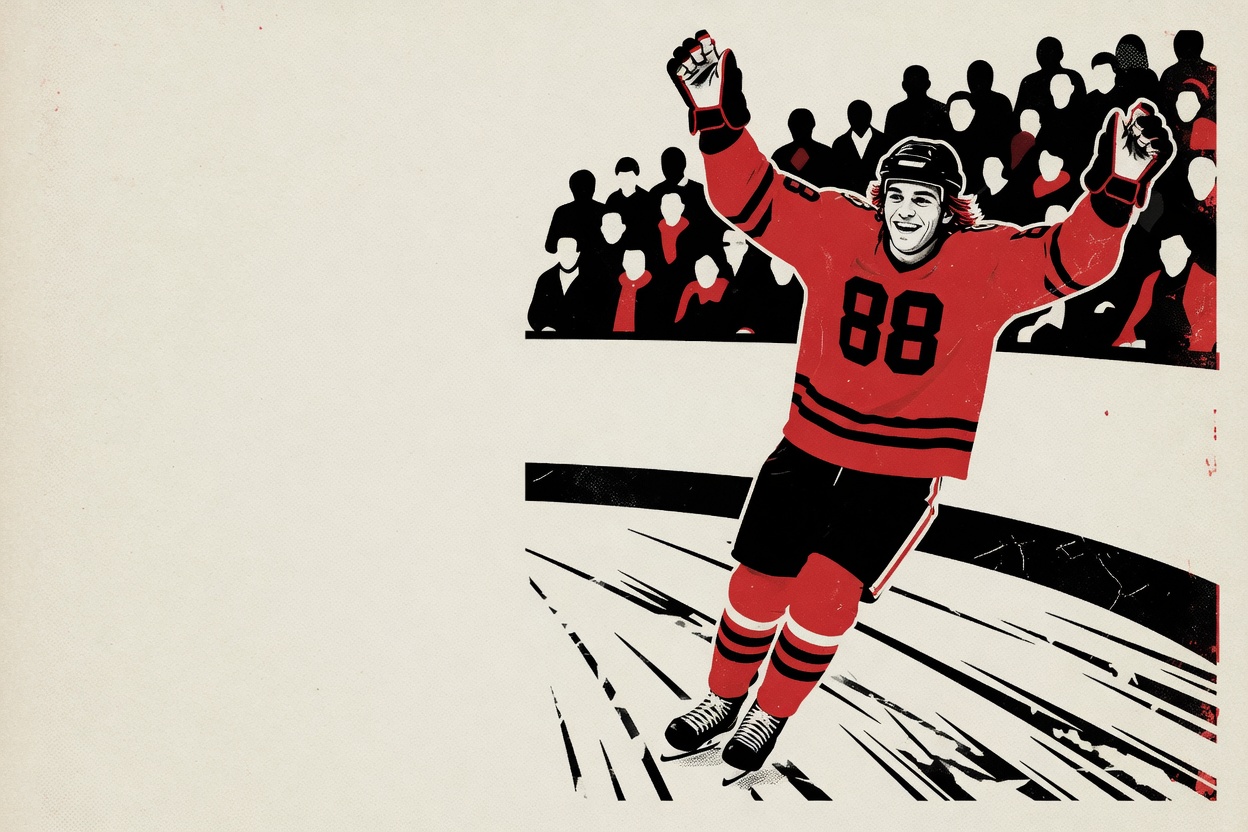
On Thursday, he reversed course. Kane is back in Chicago on a two-year, $16 million deal, $8 million a year, with a full no-move clause.
Here's what this is and isn't. It isn't a bad hockey bet on its own terms. Kane put up 57 points in 67 games with Detroit last season. He's a three-time Cup winner with this franchise and second in team history in points. The man can still play. Grade the signing purely as a talent transaction and it checks out fine.
But that's not the interesting question, and it's not the one Davidson spent two years answering. The real question is what happens to the blank slate he built. Davidson's whole pitch to Bedard's generation was that this room belonged to them, that nobody would waltz in and suck up all the oxygen, that leadership would grow "organic" instead of getting handed down from franchise royalty. You can't preach that in 2023, then bring back the second-most important player in franchise history in 2026 without admitting the thesis had a shelf life.
There's a generous read: Davidson decided enough leadership growth had already happened that Kane's return won't knock it off course. Maybe. That's a reasonable bet. It's also a convenient one, and I don't quite buy it. If the growth were really that far along, you wouldn't need the emergency call to the legend who defined the last era. The whole point of the reset was to stop deferring to those players. Kane walking back through the door is deference in a red sweater.
Worth noticing who did the recruiting, too. Bedard, after signing his own five-year, $75 million contract, publicly lobbied for this. "I can't imagine his first game back at the [United Center]... how much juice that would bring," he said. That's a young star asking for a mentor, and it's genuinely sweet. It's also the exact dynamic Davidson said he was trying to avoid: the young core deferring to the star before they'd fully grown into stars themselves.
There's a wrinkle that makes the timing stranger still. Bedard won't be there for the reunion, at least not at the start. He had left shoulder surgery and is expected to miss roughly four months, pointing to a return sometime in November, weeks after the team's Oct. 6 home opener. So the guy who lobbied hardest for Kane won't even be on the ice with him when Kane pulls the Indianhawks sweater back on. The emotional centerpiece of this signing is sidelined for the opening chapter.
The honest read on the whole thing: Davidson chose feeling over framework. Kane, who grew up in Buffalo, spent the final weeks of free agency weighing a homecoming with the Sabres against a reunion in Chicago. Chicago won that tug-of-war on sentiment as much as strategy. Sentiment sells tickets just fine. It's a shakier reason to unwind the one principle you told everyone would guide the rebuild.
I'm not saying this blows up. Kane could be a terrific tutor for Bedard, the United Center will roar for his first game back, and everyone goes home happy. That's the optimistic version, and it's plausible. My take is narrower, and harder to dodge: a general manager who spent two years insisting the past had to clear out for the future just decided the past was too good to leave on the table. Star power and nostalgia beat the plan. They usually do. The bill, if there is one, comes due later, when "organic" leadership has to figure out whose room it actually is.