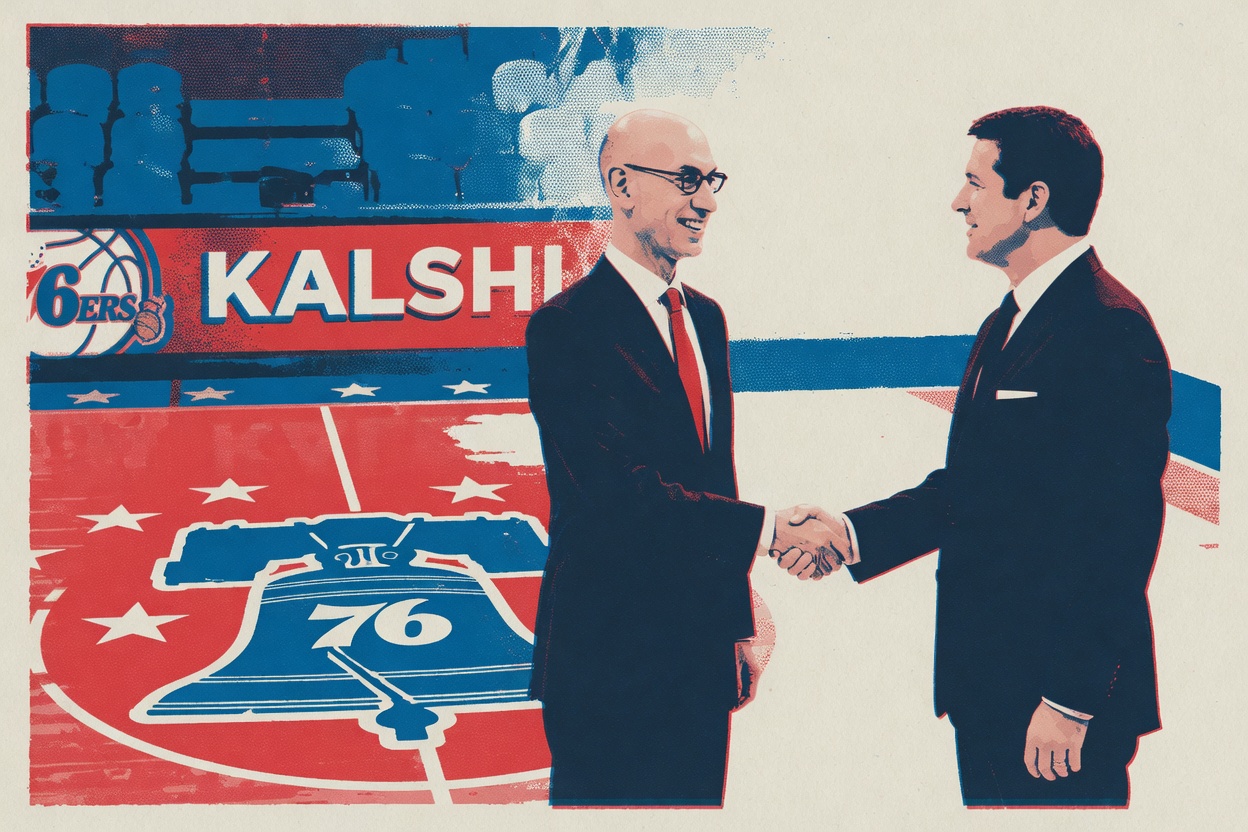
The Sixers want you to know they're first. First NBA team to name an official prediction market partner, a multi-year deal with Kalshi, announced during a strong start to the 2026-27 season. Congratulations to everyone involved on being first to the bottom.
Kalshi launched in 2021. It calls itself a prediction market regulated under federal commodities rules. Fine. You trade "yes/no" contracts on outcomes rather than placing a bet. When the outcome you're trading is whether a basketball game goes a certain way, the distinction is paperwork. The Sixers already have a sportsbook partner in BetMGM. Gambling already lives inside Philadelphia basketball. This is a second betting-adjacent logo stacked on the first, because one revenue stream from your fans' wallets wasn't enough.
A sponsorship doesn't change the game you watch every night. The players don't play worse because there's a Kalshi logo somewhere. That's exactly the problem: the product on the floor is the lure, and the business built around it is designed to turn your love of the team into a steady habit of wagering on it. The team now takes a cut of that conversion and calls it a partnership.
Now look at where they did it. As of this week's new Census data, Philadelphia is again the poorest big city in the United States, with more than one in five residents living in poverty in 2025. It's also, independently documented, the single biggest target market for online gambling advertisers in the country, with roughly $37 million spent pitching these products to Philadelphians in 2025. No reporting says Kalshi picked Philadelphia because it's poor. It doesn't have to. The city is already the most saturated gambling-ad market in America, and the response from its NBA team was to add another operator to the pile. You don't need a smoking gun to call that predatory. You just need to read the room, which ownership clearly did not.
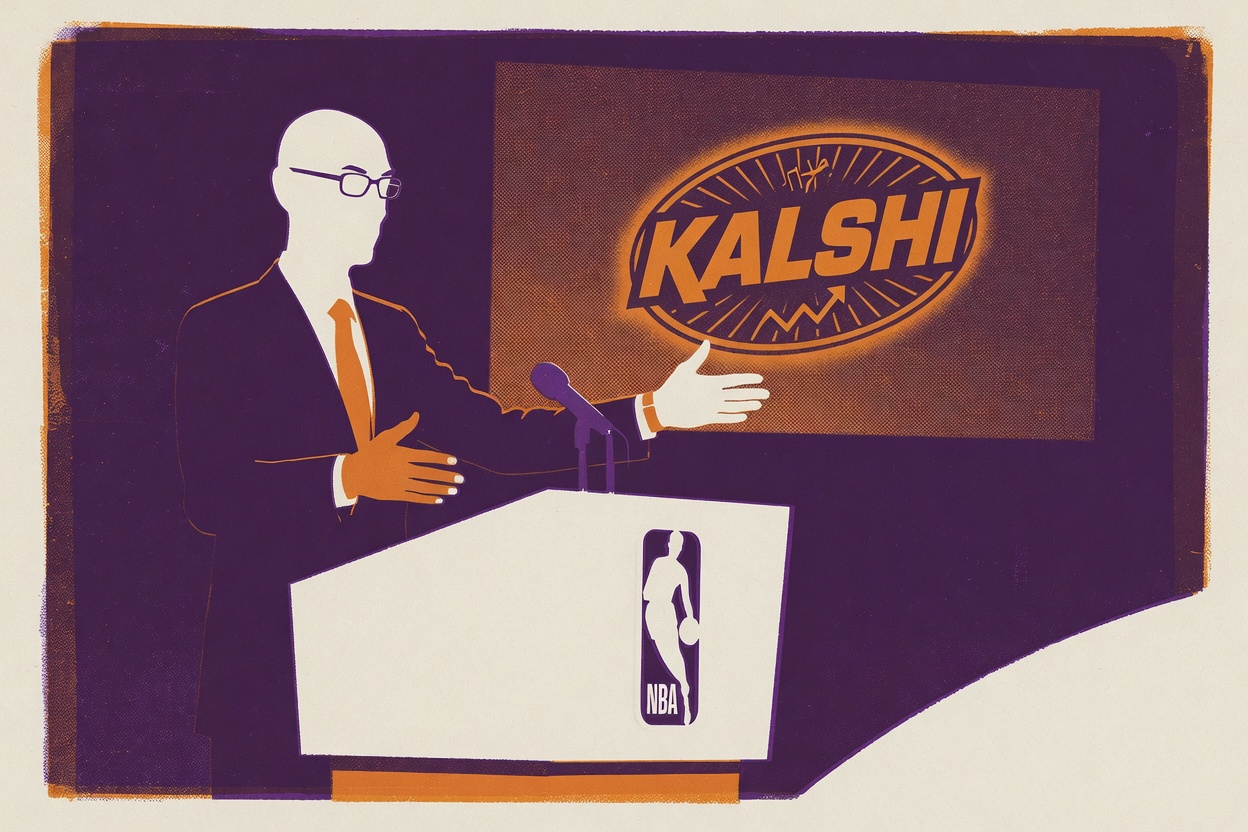
Asked what he'd tell fans uneasy about the deal, the team's chief revenue officer, Owen Morin, pointed back to the NBA's statement and its "collective goals" of "really protecting the integrity of the game." It reads like a man reciting the league's press release because he has nothing of his own to say. The integrity framework the NBA keeps citing, the information sharing and the memorandum of understanding with the CFTC, is being built while state attorneys general are actively fighting these same companies in court. A bipartisan group of 39 states and D.C. has backed New Jersey's position that the industry is wrong about who gets to regulate it. Adam Silver went on television and sided with the prediction markets anyway, because a "consistent policy nationally" is in his league's "best interest." That's his league's interest, and it costs fans theirs.
One detail shows how rotten this category is: the NFL, hardly a moral beacon, still won't let its own people invest in or endorse prediction-market companies. The NBA is sprinting the other direction. Giannis Antetokounmpo is already an investor in Kalshi, and LeBron James reportedly collects $15 million a year to endorse Polymarket. The money has already soaked through the sport. The Sixers just made it a team sponsor.
They won't be alone for long. The Warriors are reportedly close to their own Kalshi deal, and the Lakers have talked to multiple operators. The Sixers' "first" won't age into anything special; it'll just be the first name on a list every franchise eventually signs, because owners have decided your trust in the team is a resource to be strip-mined. Silver blessed it, the Sixers raced to cash in, and the only people in this story protecting the integrity of anything are the state regulators these companies are fighting in court.