The Detroit Red Wings are not fine. This loss proves it. A team that's basically okay doesn't build a 4-1 lead in Sunrise and then watch Florida take it back, and it doesn't lose its fifth straight game by handing a three-goal cushion to a team that walked in winless against the Atlantic Division.
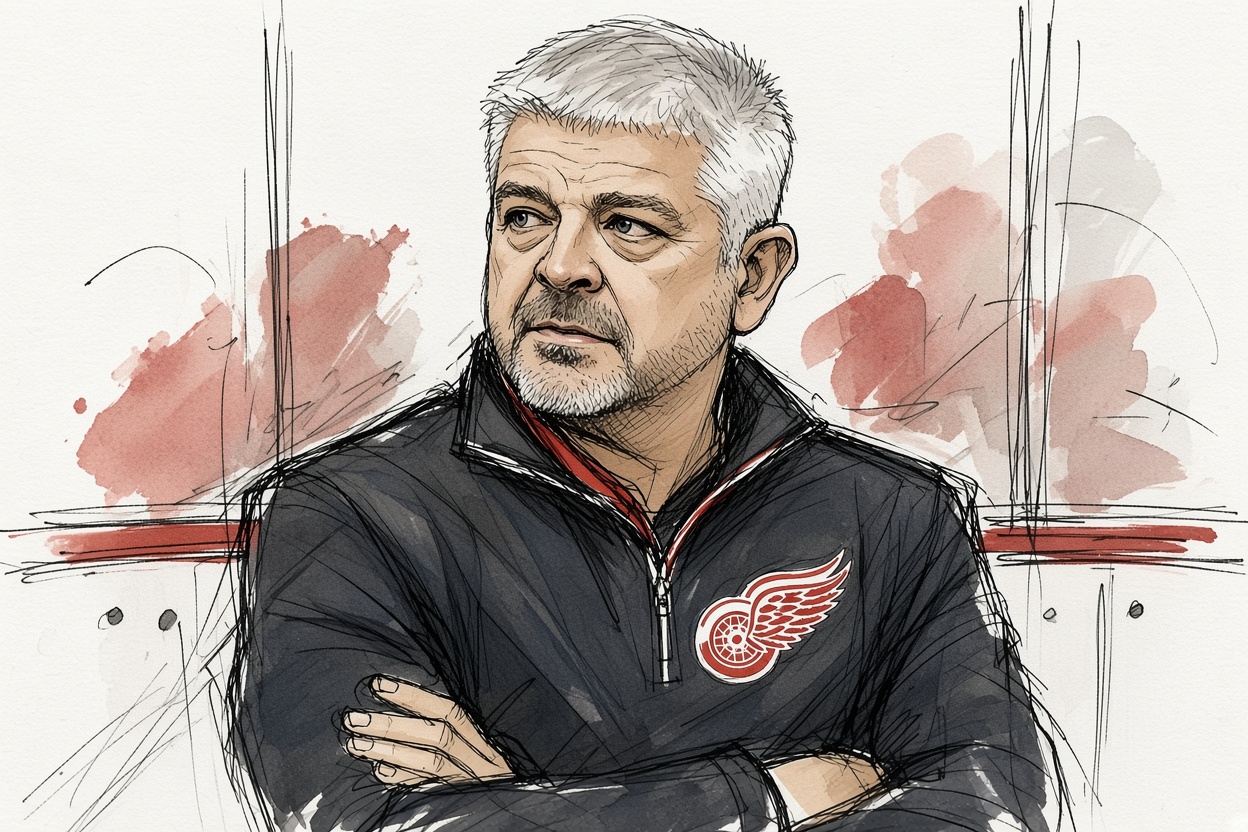
And a coach whose team just turtled on a multi-goal lead doesn't say what Todd McLellan said afterward: "I don't think we lost our poise. We lost our momentum that we worked really hard to earn in the first 40 minutes of the game."
That distinction is the problem. Poise and momentum are the same thing when you're protecting a lead in the third period. The Red Wings had both, then gave both away. McLellan went to the podium and blamed a vibe that slipped. His group stopped competing. If the people in charge can't name what happened, they can't fix it.

 Rating
It's a pattern. Detroit has lost six of its last seven, and gone 3-7-0 over its last ten. The record sits at 7-10-3, for a franchise that just finished ten straight seasons outside the playoffs, the longest active drought in the league. A single collapse would be an anomaly. A collapse that fits this neatly into a two-week stretch is a diagnosis.
The defense is too thin to hold anything, and Thursday showed exactly how that breaks a game. Florida needed a push and Detroit had nobody on the back end to slam the door. Anton Lundell finished it off with his second of the night, with 2:40 left, after the Panthers came all the way back from three down. Detroit couldn't defend a lead against a team that had been struggling to beat anyone in its own division. The Panthers left with two points and a jump to 11-7-2. Detroit left with the same questions it's been asking for a decade.

There was one good thing in all of it. Andreas Englund, the rugged defenseman Detroit claimed off waivers from Calgary back in late September, scored his first goal in an NHL game since October 2024. Good for him. A journeyman blueliner finally getting one should be the feel-good note of the night. Instead it's the saddest part of the recap, because even a moment of real competence got buried under a group that found a way to lose anyway.
A rebuilding team doesn't have to protect every lead, the thinking goes. The only thing worth tracking is what Detroit gets out of its best players' contract situations. That reasoning only holds if the young players are actually learning to win underneath the losses. Blowing a 4-1 lead and calling it a momentum problem teaches the young players that leads are optional and accountability is just a word for press conferences.
The roster is thin, and that's on the front office. The late-game collapse is on the bench, and ten years of this is on everyone. McLellan can call it momentum if he wants. Everyone who watched the third period knows his team quit on a lead, and knows he's the one who's supposed to stop that from happening.