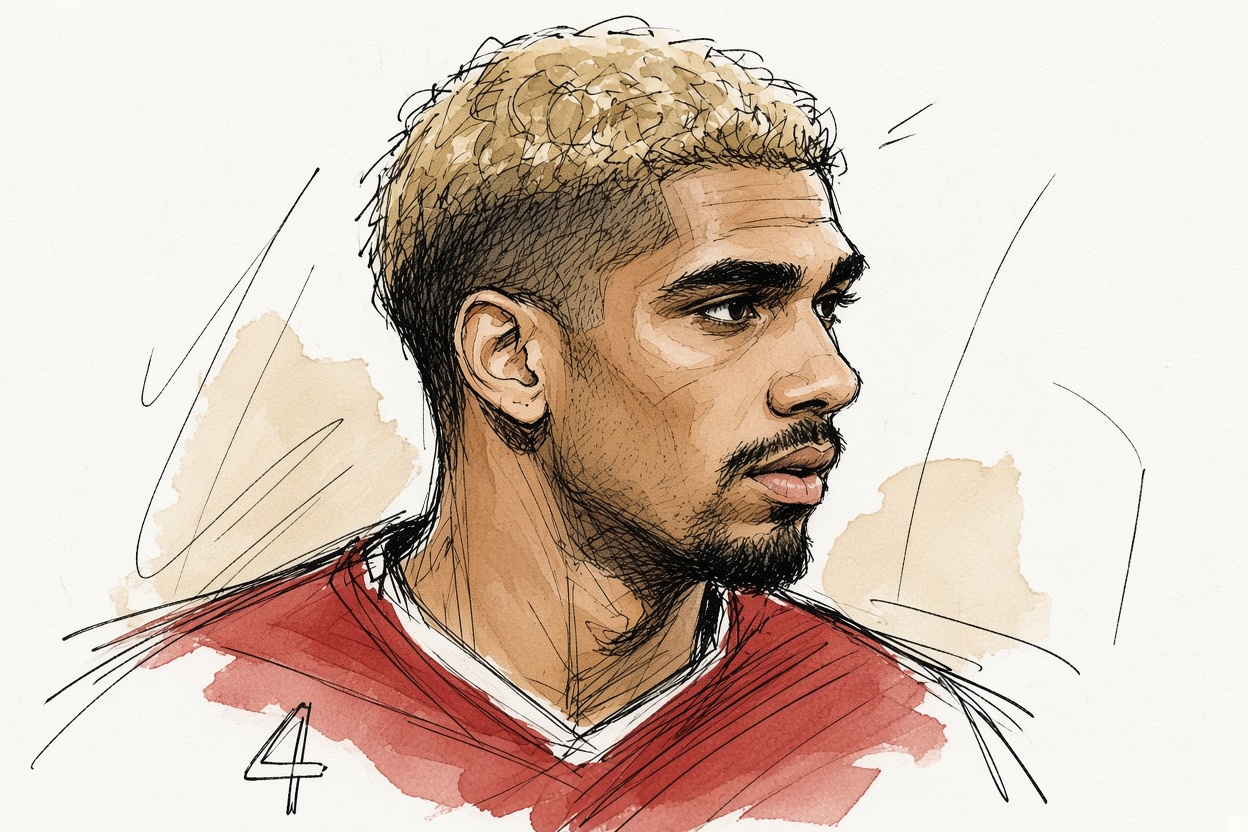
Ronald Araujo was a good defender stuck in a system built to make him look like a liability. Now that he's out of it, the picture is easy to read.
Liverpool took him on a season-long loan from Barcelona for 2026-27, with a buy option worth around €55m. They paid no loan fee, they're covering his wages, and Araujo took a pay cut to make it happen. A player who needed the move badly enough to accept less money has spent the opening months of the season looking like one of the smartest bits of business anyone did this year.
He won Liverpool's Standard Chartered Men's Player of the Month award for October. He also picked up the Premier League's Player of the Matchweek honor for Matchweek 8, after a strong showing in a 2-0 win over Brighton. He scored headers in October wins over LASK and Villarreal. And he's done most of it at right-back, under Andoni Iraola, despite being a natural centre-back. That's a lot of praise for a man who, not long ago, had a chunk of Barcelona's support openly calling for him to be sold.
His talent never went anywhere. The physicality, the recovery pace, the aerial power, the stubbornness in a one-on-one: all of that was always there. What changed is the job. At Barcelona, Hansi Flick asked him to defend a brutally high line and step into traps far from his own goal, and when it went wrong it went wrong in the biggest moments: costly errors in the Champions League exits against PSG and Inter Milan. Araujo told everyone this was coming. Back in 2025 he said, "I've never played like this, and I don't think almost anyone here. I watch a lot of football and the only one that does something similar is Liverpool, but not as risky as us." He named the problem out loud, and he was still the one who got buried for it.
At Liverpool, Iraola dialed the risk back to a level Araujo can actually live in, and the mistakes stopped being headlines. He's the same defender he always was. The difference is a coach who builds around what he does well.
The blame for the Barcelona chapter sits with Flick. He built a title-winning structure and then refused to bend it an inch for a player whose strengths it actively smothered. Barcelona's hierarchy earns a share too, for letting the loudest corner of the fanbase turn a tactical mismatch into a verdict on a man's ability, and for never finding him a role that fit over several years of trying.
You could call Barcelona naive here, moving on from a genuinely special defender too soon. His current form makes that argument on its own. But letting him leave was the right call. Flick's football and Araujo's skill set were a bad marriage, and a loan with a buy option gave both sides a clean exit. The real failure happened earlier: years where everyone could see the fit was broken and nobody in charge did anything but keep feeding him to the line.
Araujo made real errors at Barcelona, and pretending otherwise would be silly. But errors produced by a system are the system's errors as much as the player's. He needed a coach willing to meet him halfway. Iraola gave him that in about two months; Barcelona had years and never bothered.