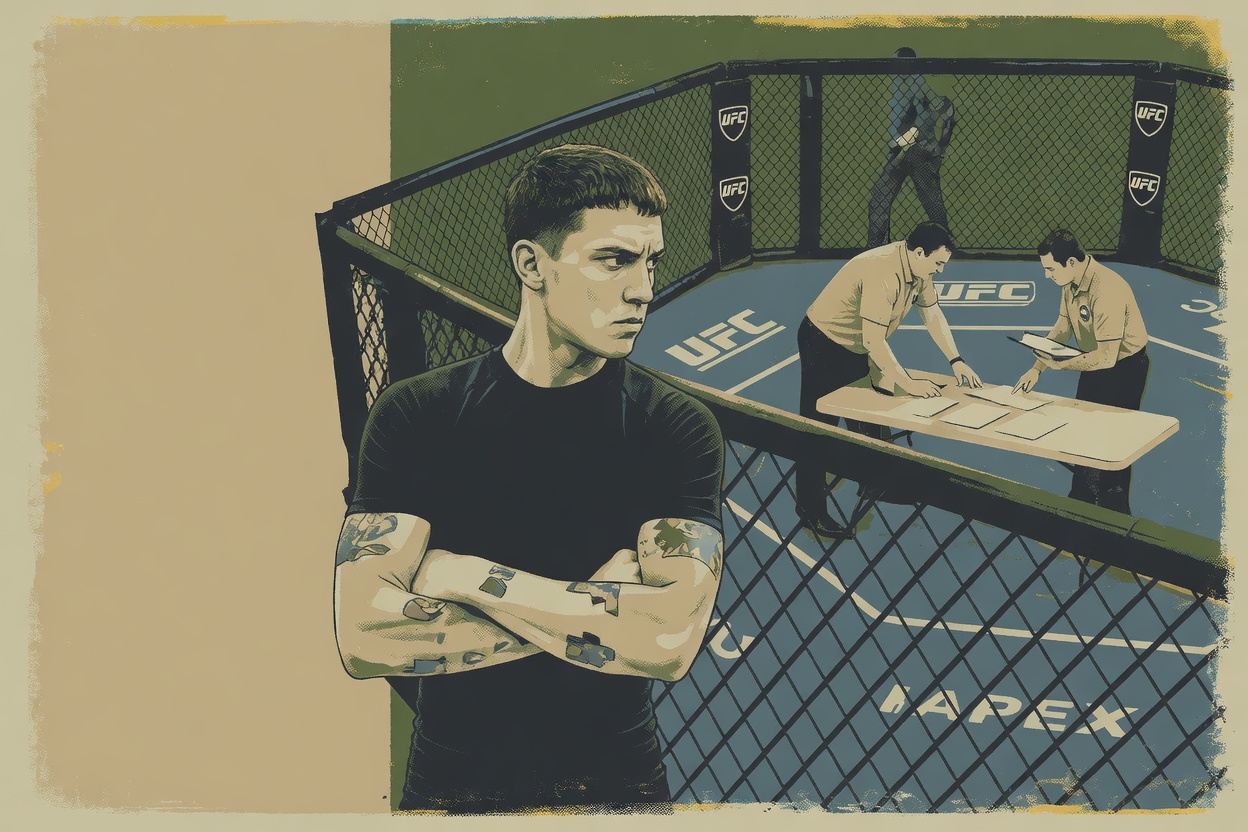
Here's the honest answer to the question fans keep asking about Sedriques Dumas. He kept getting UFC fights because losing on camera turned out to be good business, and the promotion happily rode that until it ran out of road.
At UFC Fight Night: Rosas Jr. vs. Barcelos, Dumas lost by first-round submission to Luis Hernandez, a Miami-Dade deputy making his UFC debut. Hernandez took the bout on short notice and weighed in seven pounds heavier, at 204 to Dumas's 197. Dumas had originally been booked against Mickey Gall at middleweight before the matchup collapsed and got rebuilt at light heavyweight against a debutant who'd had barely any time to prepare. He still lost inside a round. Then the UFC cut him. The run had lasted roughly three years.
Think about how much had to go right for the promotion to keep this going as long as it did. Dumas lost far more than he won inside the UFC. He's been arrested multiple times in Florida on charges including battery, robbery and burglary. All of that became the sell. This particular fight got packaged around the storyline of a working cop against a man with a stack of pending charges, and people tuned in because they wanted to watch him get beaten. The UFC knows the difference between a fighter fans respect and a fighter fans want to see humbled, and for a while it was perfectly content to book the second kind.
His losing streak becoming content is what's worth being angry about. That Dumas isn't good enough was obvious from the start. A promotion that constantly talks about the best fighting the best found a soft, reliable niche in feeding a guy to opponents so the audience could enjoy the beating. Hernandez, a debutant on two days' notice, was handed a name he was heavily expected to finish, and he did. That's matchmaking built around a punchline.
His pile of losses could say as much about who he was fed as about what he can do, and he shouldn't be this easy to stop. Tying every cage failure to his legal file is a cheap way to feel good about watching a man struggle. None of that lets the UFC off the hook. The promotion picked the opponents, shaped the story around them, and kept the cameras rolling on a man it clearly didn't believe in anymore. If the matchmaking was the problem, the matchmakers own it.
The timing of the release explains exactly how the calculation worked. Dumas was useful right up until he wasn't. Arrests didn't end the run, and neither did the mockery. What ended it was a debutant needing one round to do the thing everyone paid to watch, after which there was nothing left to sell. The UFC cut Dumas the moment the hate-watch stopped being worth the embarrassment.
The uncomfortable truth for anyone who kept clicking is that the promotion read the room perfectly. It saw that a fighter people loved to jeer would move eyeballs, and it kept serving him up until the joke wore thin. Dumas is gone now, and the people who booked him get to walk away as if they were never part of it.