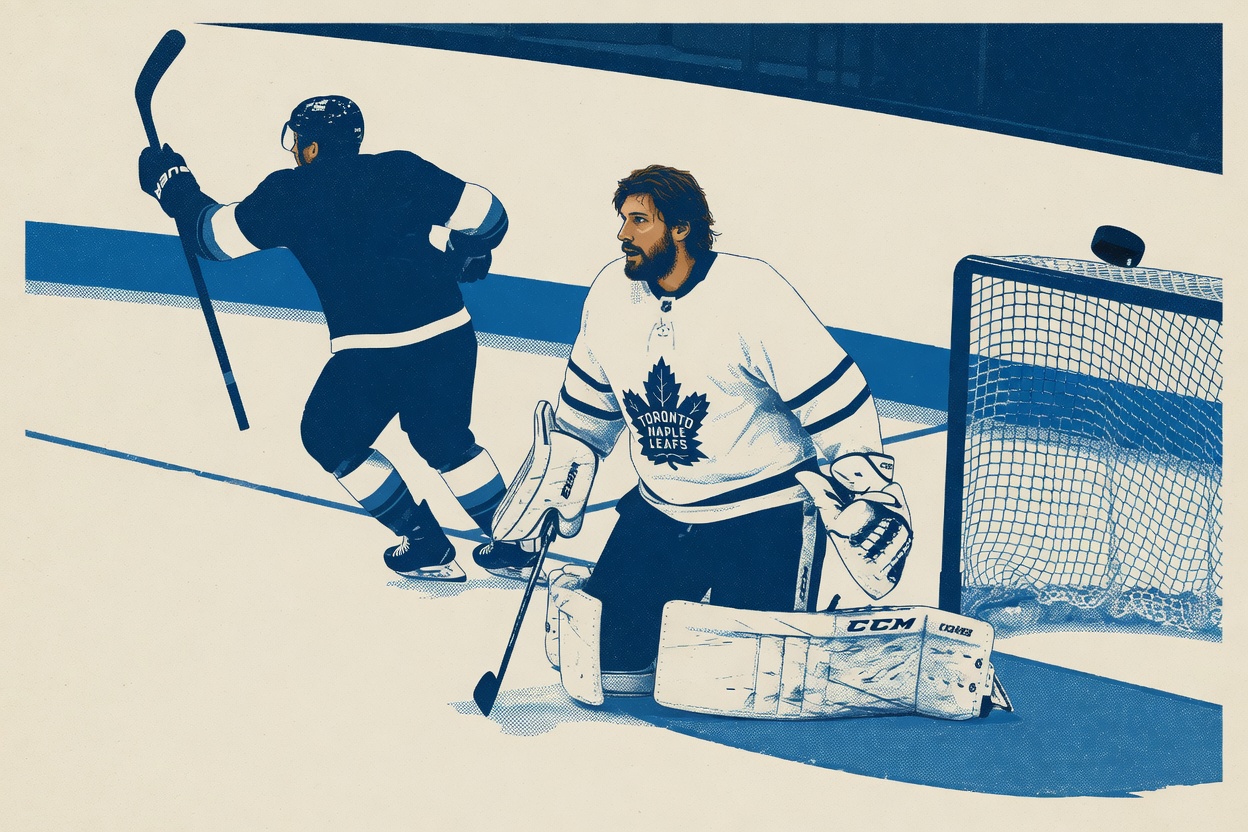

Detroit broke this itself. The Red Wings had roughly $16.8 million in projected cap space, second most in the league, and still turned a 23-year-old top-pair defenseman's second contract into a standoff with a countdown on it. It's a front office fumbling something it had every resource to get right.
The Dec. 1 RFA deadline is about five weeks out, and nobody has signed anything, though this is still moving. Detroit reportedly offered six years at around $8.5 million, roughly what Moritz Seider makes at $8.55 million. Edvinsson's camp has been looking at the $9 to $11 million range on a deal up to seven years, with $11 million the high figure floated. That's a gap, but a fixable one for a team that just handed Alex DeBrincat $91 million over seven years this month.
Now consider the image at the center of all this. Edvinsson paid for his own insurance so he could practice with the team that drafted him sixth overall. "I've increased my insurance a little bit extra now," he said. He skated at camp, didn't play a preseason game, then flew home to Sweden to train with Frolunda while the two sides stopped moving. A young player bought his way onto the ice in good faith while the people running the franchise couldn't decide between a bridge deal and term.
This could be read as hard-nosed negotiating on a big number, and teams are allowed to say no to $11 million. But a team playing genuine hardball doesn't have interim GM Shawn Horcoff on record saying he has "zero interest" in trading the guy and that it's "not something I'm entertaining," while Pierre LeBrun reports Detroit has talked Edvinsson with up to 10 teams, San Jose and Boston among them. Negotiate hard or field calls from a third of the league, pick one. Doing both at once, loudly, means the front office lost control of its own story.
A trade isn't mechanically inevitable. Horcoff still has the deadline, the cap room, and full authority to sign a $9 to $10 million compromise today. But once a player is said to prefer a trade, rival GMs start circling in double digits, and your own GM is denying and entertaining a deal in the same breath, this stops looking like a normal negotiation. Edvinsson hasn't filed a formal trade request, which is what separates his situation from Dylan Larkin's. Larkin has already asked out.
Start with what Detroit wants in return. LeBrun has pointed to the Dobson, Sergachev, Byram and Nemec comp class, multiple real assets, and Jeff Marek says Detroit wants players, not picks and prospects. That narrows the field hard. Carolina has motive and offer-sheet noise dating back to summer, but an offer sheet is a pressure tactic, and after Alexander Nikishin re-signed there Sunday on a one-year deal, that lever matters less. San Jose has been engaged but is trying to protect its own young core. Seattle is the cleanest structural fit: cap room, a hole on the left side, and the kind of young defenseman a package could be built around. If this doesn't end with a signature, that's the most realistic landing spot.
Where he ends up matters less than how Detroit got here. A cap-rich team let the Nikishin and DeBrincat comparables build the market on a player it drafted, then stood there while the rest of the league priced him. Whoever's sitting in Detroit's GM chair on Dec. 1 owns that, and they should.