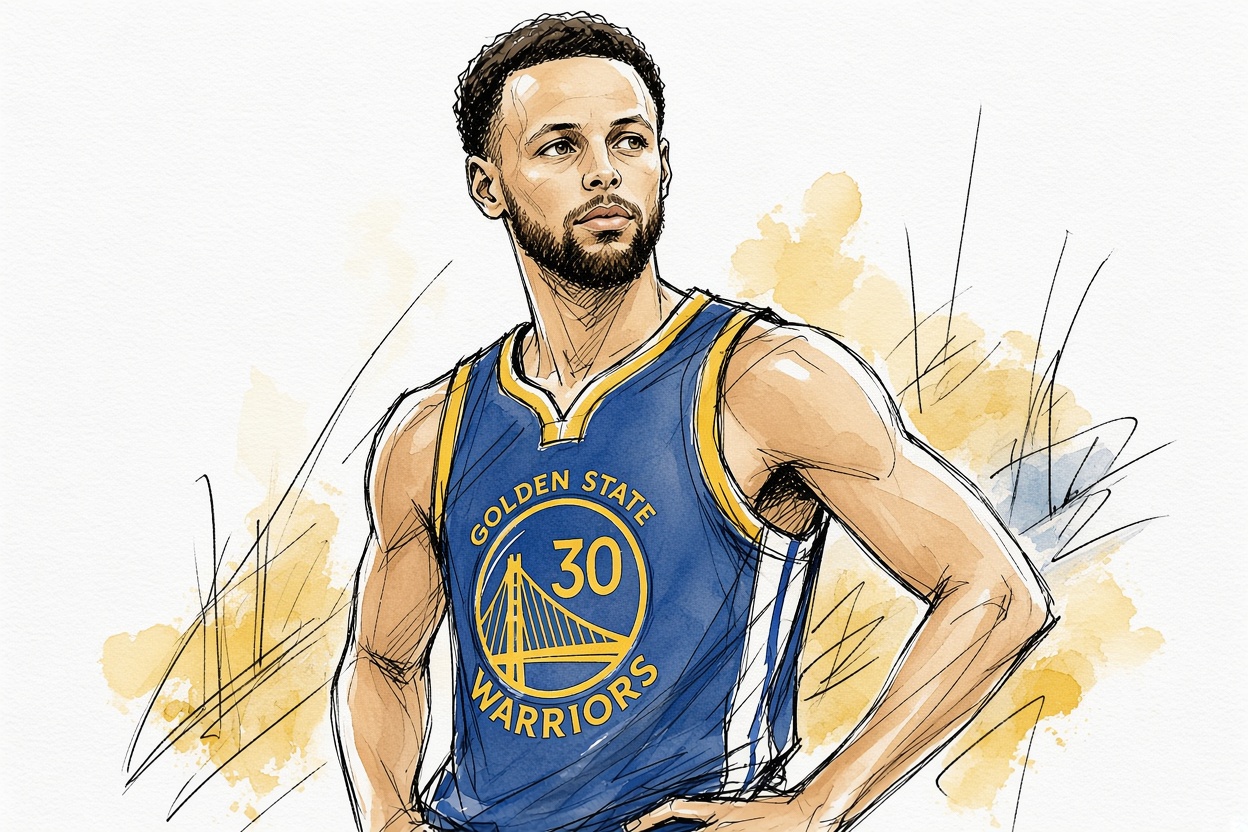
Steph Curry says he can see the exit sign from where he's standing. That's a long way from announcing retirement. The panic over one reflective interview says more about how much everyone dreads the end than about when it's actually coming.
The quote that launched a thousand obituaries: "It sucks because it's a part of your mortality," Curry told Anthony Slater of ESPN. "Basketball mortality." He was talking, in part, about watching Jimmy Butler tear his ACL in January, and about managing his own body at 38. He's processing a hard year out loud. Fans are the ones turning that into a farewell tour.
Look at what he actually said about his future. "I assumed that it would probably be one of, if not, the last contract I signed," he told Slater. "I'm not afraid to say it. But maybe I'll surprise myself and want to keep going." That's a man leaving the door wide open. He even said he'd take a smaller role to keep winning: "It would not kill my ego." You don't game-plan a reduced role if you're measuring yourself for a rocking chair.
The injuries are real. The knee is the scary one: deteriorated cartilage put pressure on the wrong parts of the joint, a bone bruise formed, and limited blood flow slowed the healing. That cost him 27 games last season while Golden State sank to 37-45 and missed the playoffs. Separately, there's the oblique tear the Warriors confirmed this month, and there's no return date yet. The team's two-week reevaluation lands around November 26, and Shams Charania reported the absence could stretch toward a month. Two real injuries in ten months, at 37 and then 38. That's a body sending signals.
When healthy this season, though, Curry wasn't limping toward anything. Before the oblique injury, he was averaging 27.8 points, 3.7 rebounds and 3.9 assists while shooting 50 percent from the floor and 45.7 percent from three (ahead of his pace from the unanimous MVP season, by one widely shared stat). The team started 0-3, then won eight straight. He's a top-tier guard dealing with maintenance problems: a knee that occasionally acts up, an oblique that currently won't let him play.
The clock should worry the Warriors front office way more than it worries the fans crying in their City Edition jerseys. Curry told the world his championship window is finite and then handed them the money to pry it open wider, choosing a middle contract option and leaving roughly $10 million more in cap flexibility and about $20 million under his max. His deal runs through 2028-29, the season he turns 40, with a player option in his own hands. He did his part. He bought them room.
The guy who rewrote the sport, won four titles, two MVPs, a Finals MVP, Olympic gold, and owns the all-time three-point record, has told his bosses in plain language that the greatness has an expiration date, and he's funding the effort to beat it. The urgency belongs to the people who keep finding reasons not to build around him while he's still this good. Their excuses are the ones running out of time.