Real Madrid have a genuine grievance from Sunday's derby, and they've buried it under a mountain of nonsense.
Start with what actually happened at the Metropolitano. Atlético beat Madrid 2-1 on September 20. Alejandro Grimaldo scored a second-half penalty after Dean Huijsen was sent off for bringing down Giuliano Simeone, Jonathan David added a second, and Antonio Rüdiger pulled a late one back. Madrid dropped to fourth in the table on the day. A bad afternoon, but an ordinary one in the life of a title contender.
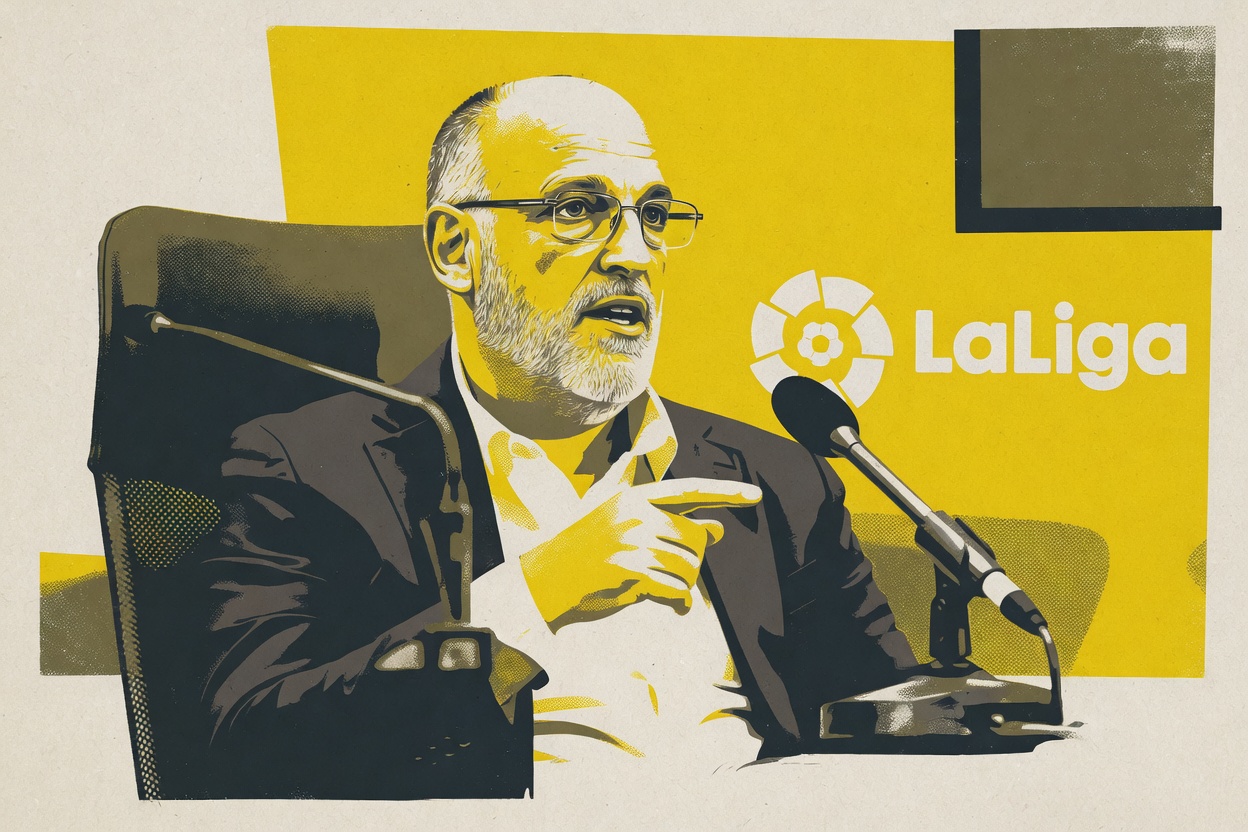
The response was anything but ordinary. Instead of a losing dressing room and a few pointed questions about the refereeing, Madrid's machine cranked into full persecution mode: the language of conspiracy, of a club forever wronged. LaLiga president Javier Tebas met it head-on, calling the conspiracy framing a "smokescreen." He's right.
The red card was the right call
Madrid's narrative wants you to forget one thing: the Huijsen sending-off, the decision that actually turned the game, looks correct. Even Madrid's own match report lays out the sequence without controversy. In roughly the 50th minute, Ortiz Arias awarded a penalty against Huijsen for the foul on Giuliano and showed a yellow, then went to the monitor after a VAR prompt and upgraded it. It was a last-man foul. The RFEF and LaLiga published the VAR audio for the incident. You can dislike the outcome. You cannot credibly call a last-man foul that denies a goalscoring chance a conspiracy.
That's the problem with building a fortress out of every defeat. When you treat a textbook red card as evidence of a plot, you spend the credibility you'd need for the calls that genuinely go against you.
And Madrid did have real complaints
This is where it gets frustrating, because Madrid weren't imagining everything. There was the 35th-minute incident when, by their own account, Bellingham reached a contested ball first and Cuti Romero planted his studs into the Madrid player's left knee. Ortiz Arias initially booked Bellingham, was sent to the monitor, rescinded that card and gave Romero a yellow rather than a red. Tebas himself reportedly agreed with Madrid that Romero should have walked. That's a serious officiating question, and a fair one.
Then there was the Kang-in Lee challenge on Federico Valverde, one of the match's most contested moments, for which no VAR audio was released and which drew nothing at all, not even a yellow. Reasonable people can argue that transparency should apply to every flashpoint, not just the ones the authorities are comfortable explaining.
So Madrid had two legitimate arguments and one clean red card against them. A club interested in actually changing Spanish officiating would lead with the first two and accept the third. Instead the whole thing got flattened into a single message: they're out to get us.
The megaphone problem
No club in the sport has a bigger platform than Real Madrid, and few use it more aggressively. When your own in-house channel is throwing around lines about the referee "hanging out with Barcelona players," you're no longer critiquing officiating, you're running a campaign. And a campaign that cries wolf over a correct decision does real damage to everyone who wants Spanish refereeing scrutinized honestly.
Legitimate criticism of officiating in this league has a real case behind it. Consistency and transparency in VAR are worth fighting over. But that fight needs credible plaintiffs. When the most powerful club in the country turns a justified red card into a persecution story, it makes the entire subject easier to wave away. It hands the authorities the perfect defense: they're just crying again.
Tebas and Madrid have been circling this exact argument for a while, and he's hardly a neutral referee in the feud. He plainly enjoys the fight. But you can be an interested party and still be correct, and on the specific charge that Sunday amounted to a conspiracy, he is. Madrid's persecution reflex cost them a coherent complaint and devalued the real ones.
Huijsen was reportedly set to appeal his suspension as of this writing, and there may be more statements or a formal LaLiga move still to come. Whatever lands next, the lesson from Sunday holds. If Real Madrid want to be taken seriously the next time a referee genuinely wrongs them, they might start by admitting when a referee simply got it right.