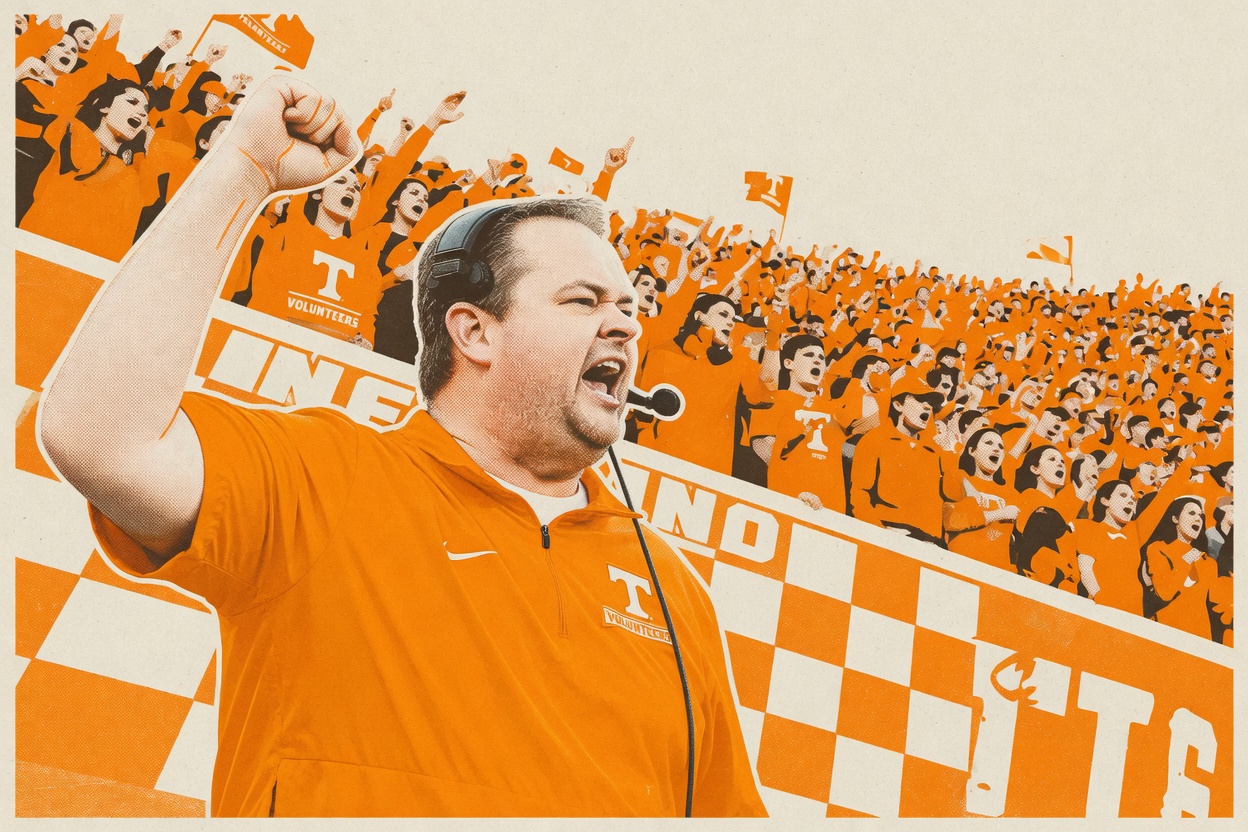
On October 17, Neyland Stadium peaked at 130.3 decibels during Tennessee's win over Alabama, measured by the University of Tennessee Health Sciences Department of Audiology and Speech Pathology. The crowd hit that mark after senior defensive end Tyree Weathersby's second-down sack with 3:56 left in the third quarter, with the Vols up 19-10, and the Crimson Tide answered the roar with a delay-of-game penalty. UT says the peak lasted seven seconds, and that 105 separate events topped 120 decibels during the game. The sellout crowd of 101,915 was Tennessee's 32nd straight at Neyland, a streak running since 2022.
All of that happened. The noise was overwhelming and the video proves it. What I don't buy is the sticker Tennessee Athletics slapped on the box.
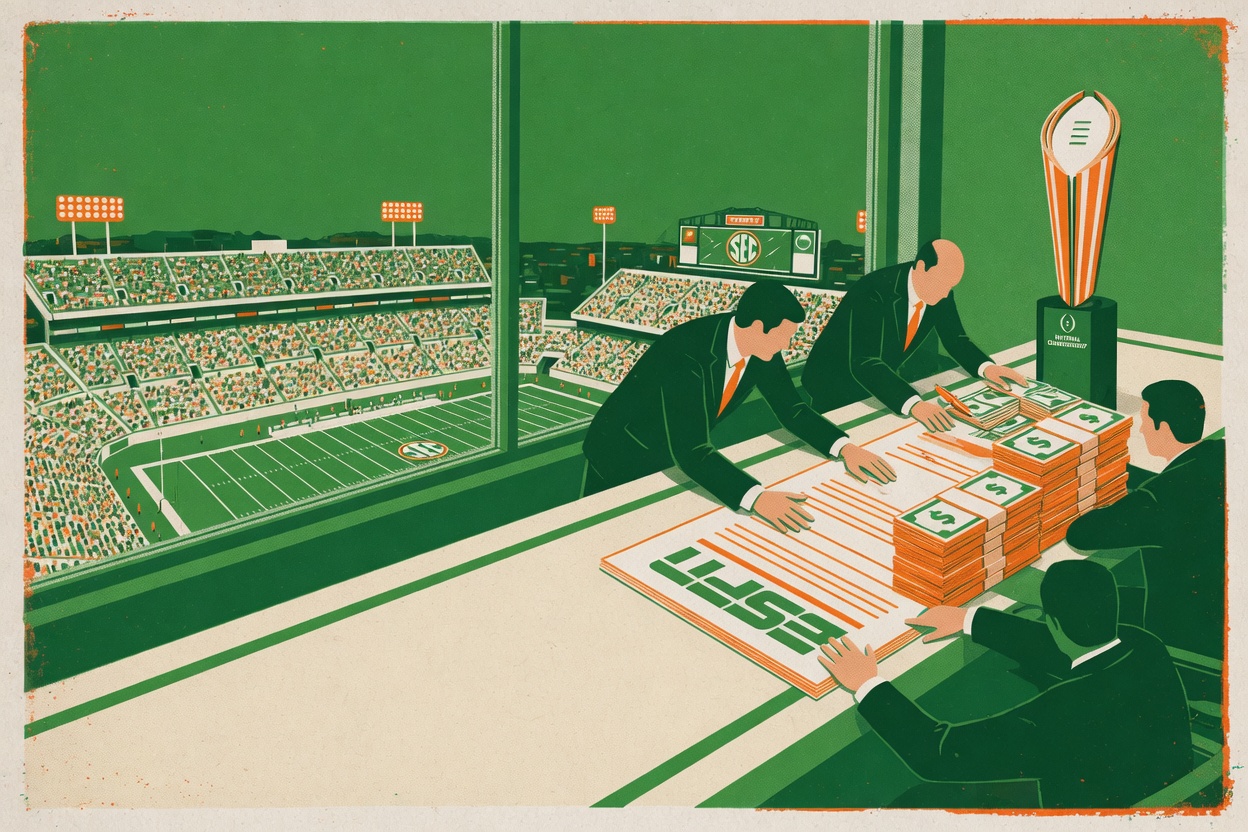
The phrase being repeated everywhere is "highest scientifically verified noise in college football history." Scientifically, verified, history, three words doing an enormous amount of work, and they were written by the same people who benefit from them. This is a university department measuring its own university's stadium, and then that university's athletic department issuing a press release crowning itself. No Guinness, no neutral party standing on the field with a certified meter and a clipboard. Tennessee measured its own stadium, and Tennessee declared the record. Call it what it is: a home game, scored by the home team.
The actual, independently adjudicated loudest-crowd mark belongs to Kansas City Chiefs fans at Arrowhead, 142.2 dBA, certified by Guinness back in 2014. That one came with its own caveat, since those attempts are usually prompted by the jumbotron begging fans to break the record. But it was signed off by somebody who doesn't wear the team's colors. Tennessee's number lives inside a carefully fenced category: "college football," "scientifically verified." Narrow the field enough and anybody's the champion of it.
One detail really undercuts the "history" language. Tennessee's own stadium has reportedly been louder. Fans have cited 137 decibels from Georgia's visit to Knoxville in 2023 for three years now. The 130.3 figure against Alabama is smaller than that. The only reason Saturday counts as the record and 2023 doesn't is that one got the official in-house stamp and the other didn't. The claim really amounts to this: Tennessee was loudest while its own audiology department happened to be certifying it. Change the measurement category, win the trophy you just invented.
Now the other half of the argument, the one you keep hearing: why does Neyland only get this loud for Alabama? It doesn't, and the record itself says so. Walk the timeline. Oklahoma in 2015 pushed it to 114 decibels. Ole Miss got it to 118 in 2021. Alabama did bring 125.4 in 2022. Georgia produced the unverified 137 in 2023. Alabama shows up twice, but so do a bunch of other ranked, high-stakes visitors. Neyland has been climbing these numbers for years against whoever's good enough to matter, and Alabama just happens to be the rivalry with a trophy, a 3:30 ABC window, and a six-figure crowd primed to lose its mind. Of course the biggest readings cluster around the biggest games. That's true of every great home crowd on earth.
None of this makes Neyland a fraud. The place is one of the nastiest environments in the sport, and the people who've stood in it, including a former Alabama quarterback working the broadcast who said the crowd was "definitely having an impact," aren't lying about that. Josh Heupel called them "the best fanbase in America," and on volume alone he's got a real argument.
The marketing wrapped around that crowd is the problem, and so is how much of sports media took the press release and ran it without asking who certified what. Tennessee authored a record, appointed itself the referee, and handed the paperwork to a public that assumed somebody neutral had checked it. The fans earned their roar. The athletic department invented the ribbon and pinned it on itself.