The UFC came back to China this weekend with a card it clearly wanted to look pristine. UFC Fight Night 286, branded UFC Shanghai, ran Saturday, August 29 at the Pudong Development Bank Shanghai Oriental Sports Center, headlined by two bantamweight contenders, and streamed in prime time on Paramount+. Thirteen fights, twenty-six fighters, a marquee main event, the whole shop window. Then Friday's weigh-ins happened, and three of those twenty-six fighters couldn't hit the number they'd agreed to.
Three misses on a single card is unusual enough that even level-headed outlets reached for words like "disastrous" and "clown show." The math is what stings. Andre Lima stepped on the flyweight scale at 127 pounds, a pound heavy, and will forfeit 20 percent of his purse to Namsrai Batbayar, who made weight cleanly. Fine. That's the system working: you miss, your opponent gets paid, the fight goes on. This was also Lima's second weight miss in his UFC run, its own conversation about repeat offenders.
The genuinely strange one was the strawweight bout. Julia Polastri weighed in at 118.5 pounds and her opponent Xiong Jing Nan came in at 117, both over the strawweight limit. Because they missed against each other, the fight rolled on as a catchweight and neither had to hand over a slice of their purse. It's a wash, and that's exactly the problem. When both sides break the same rule, the penalty cancels out to nothing. Two fighters failed the single most basic professional obligation in this sport and the box score of consequences read zero.
The real issue is what this does to oversight. China doesn't have the kind of government-sanctioned combat sports regulator you'd find in a U.S. state, so for this event the UFC acted as its own commission. That means the promotion booking the fights, selling the card, and profiting from the gate was also the body writing and enforcing the weight rules. There was no independent athletic commission double-checking anything. When the referee and the promoter are the same office, "we didn't lose any fights, so we move on" starts to sound less like discipline and more like a company grading its own homework and giving itself a pass.
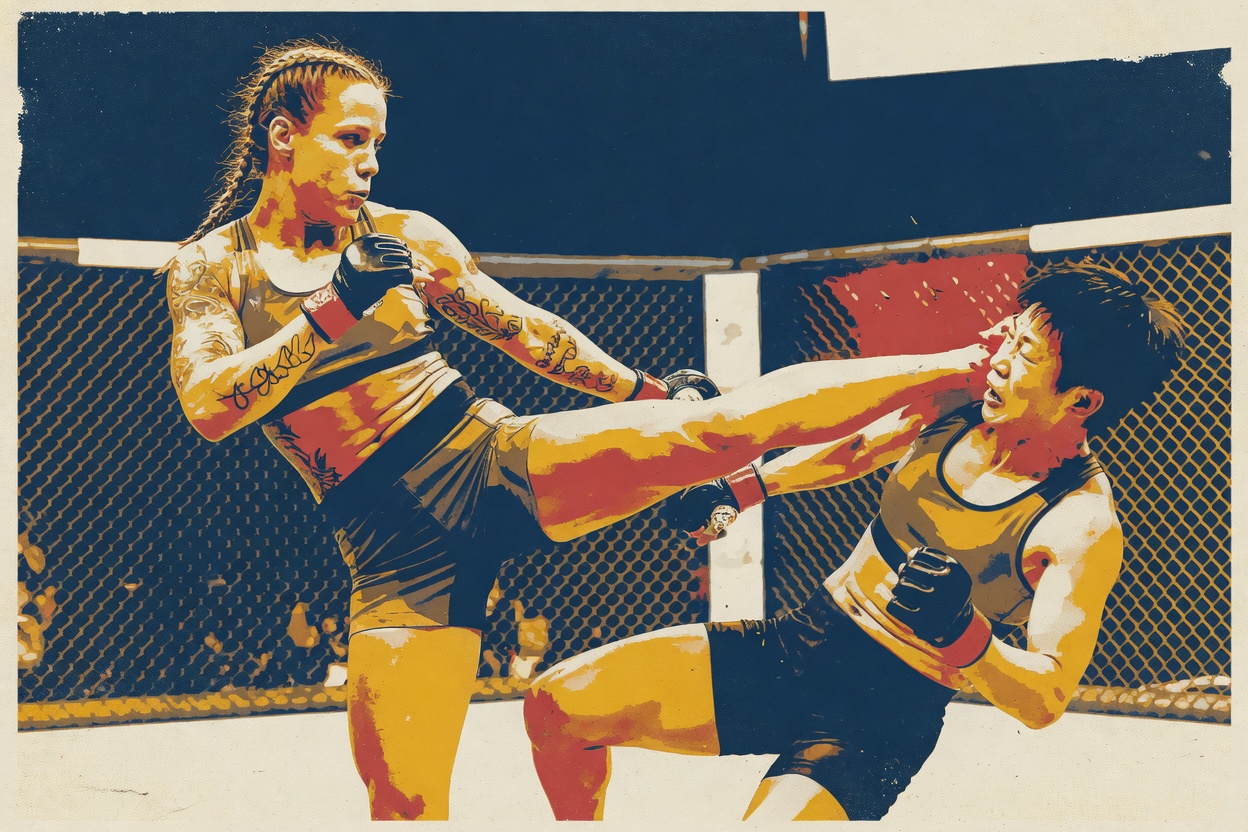
I'm not arguing the UFC should have scrapped fights and torched its own show in a market it spent years trying to re-enter. Fans came to see fights, and the fights happened. But leniency has a cost that showed up almost immediately. Polastri went out and knocked Xiong Jing Nan out with a head kick in the first round, and she'd reportedly have been in line for a Performance of the Night bonus had she made weight. That detail isn't fully confirmed, but the principle holds: the fighter who did the violent, memorable thing may have cost herself money by missing the scale, while the double-miss format spared her any penalty toward her opponent. The consequences land arbitrarily.
And the stakes were real. The main event, the reason this card existed in the first place, delivered an upset when Song Yadong knocked out Umar Nurmagomedov with a punch at 1:48 of the second round. Nurmagomedov had entered at 20-1, having rebuilt after his lone loss to Merab Dvalishvili with wins over Mario Bautista and Deiveson Figueiredo. A card with that much riding on it deserved a clean weigh-in. It got three misses and a self-appointed referee shrugging. If the UFC wants to keep running rooms with no independent commission, it needs harder, clearer consequences of its own, because right now the incentive structure quietly tells fighters that missing weight, especially in pairs, is close to free.