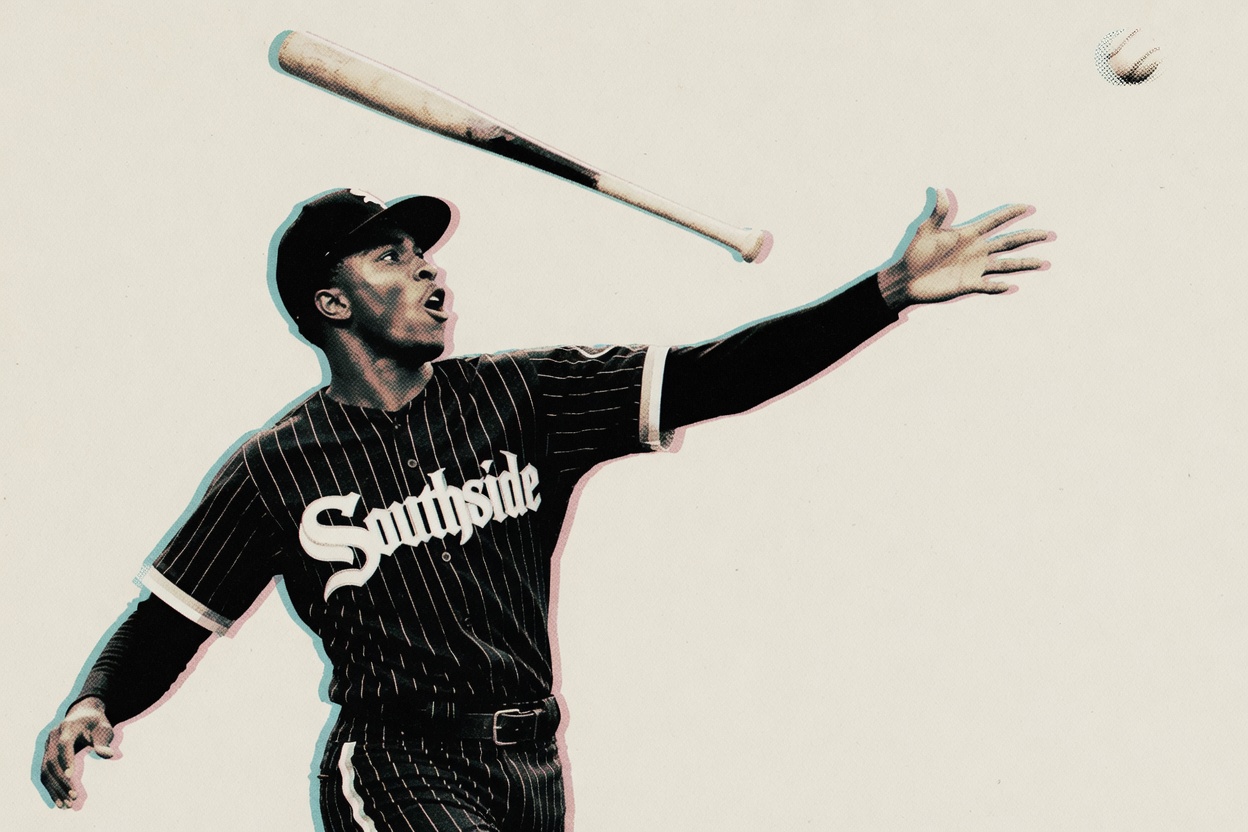
Tim Anderson said the thing out loud on Monday, and that's the part that will stick with me. Announcing his retirement after 10 major league seasons, he told the room the game no longer brought him joy, that it brought "a lot of pain," that just talking about baseball gave him anxiety. He said it on a Zoom marking the five-year anniversary of the Field of Dreams game, sweating and emotional. "I fought for the last two, three years," he said. "You know, I trained and I just couldn't get the body to operate like it used to."
You don't expect a two-time All-Star and a batting champion to walk away like that at 33. And it's a strange thing to hear from a player the league itself once put at the front of its marketing.
Go back to April 2019. Anderson flipped his bat after a home run against Kansas City, the benches emptied, and MLB's own Twitter account jumped in with "LET THE KIDS PLAY" and a clip of the toss. That wasn't a fan account or a hot-take columnist. It was the league. Barbara McHugh, then MLB's senior vice president of marketing, framed it as strategy: "We recognized that a growing number of players were showing more emotion." The league account told him directly to "Keep doing your thing @TimAnderson7" with the hashtag #LetTheKidsPlay. In Chicago he became the face of the "Change the Game" campaign. Baseball had spent years scolding exactly this kind of exuberance, and Anderson was the guy it picked to sell the reversal.
He backed it up, too. He hit .335 in 2019 to lead the majors, the first White Sox player to win an AL batting title since Frank Thomas in 1997. He batted over .300 for four straight years. He won a Silver Slugger in the shortened 2020 season, hitting .322 with 10 home runs in 49 games and finishing seventh in AL MVP voting. He made the All-Star team in 2021 and again in 2022. In the inaugural 2021 Field of Dreams Game, he took Zach Britton deep into the Iowa cornstalks for a walk-off that won it 9-8 over the Yankees. If you were designing a face for a sport that keeps insisting it has a marketing problem, you were designing Tim Anderson.
Then it fell apart fast, and I want to be careful here, because the causation is genuinely contested. Some of the retrospectives lean hard on injuries, and there's a real case for that: the body he mentioned Monday had been breaking down for a while. His 2022 All-Star season shrank to 79 games after multiple trips to the injured list, and his power dropped to six home runs. In 2023 he hurt his knee on a botched rundown in April, and by his own account he never hit like himself again. He finished that year at .245 with one homer in 123 games, drew a suspension for a fight with José Ramírez, and watched the White Sox lose 101 games. When it ended, Chicago declined his $14 million option and bought him out for $1 million.
What came next reads like a man the sport had already stopped planning around. He spent 2024 with Miami, hit .214 with no home runs in 65 games, and got designated for assignment. He signed with the Angels for 2025 to reunite with Ron Washington, hit .205 with a .499 OPS, and was released in May. His last major league game came on May 25, 2025.
So here's my read, and I'll flag it plainly as opinion rather than pretend the reporting hands it to me: the league was thrilled to borrow Anderson's charisma when it needed a mascot for "Let The Kids Play," and considerably less interested in the harder work of keeping a personality like his upright once the body started failing. A marketing campaign is cheap. Building around a star as his tools erode, protecting him through injuries and a public rough stretch, that costs something. The White Sox chose the $1 million buyout. Two other clubs took low-risk fliers and moved on within a season. Once the highlight reel stopped producing, nobody treated him as a foundation.
Maybe that's just baseball being baseball, a cold business that pays for present production and nothing else. Maybe the injuries were always going to win no matter who invested in him. Both can be true. But it's worth sitting with the contrast. The sport put Anderson on the poster for its future and then let that future evaporate quietly in Anaheim, a .205 average and a release notice, while the machinery that had once tweeted at him personally said nothing.
The White Sox will honor him before their September 17 game against Detroit, wearing the black-and-white "Southside" City Connect uniforms, the ones from the 2021 AL Central team, for the only time this season. It's a nice gesture, and he's earned it. But a team that will break out a special uniform to say goodbye is the same one that declined to keep him around when the numbers stopped cooperating. Beloved when he was electric, disposable the moment he wasn't.
Monday's version of Anderson, anxious and worn down by a game that used to be pure fun, is the exact opposite of the guy MLB filmed flipping his bat and told the world to celebrate. Somewhere in between, the sport got everything it wanted from him and gave back a $1 million buyout and a tribute night. If you're wondering why baseball still struggles to build lasting stars, the arc from "LET THE KIDS PLAY" to a joyless retirement Zoom is a decent place to start looking.