The flag was correct. That's the uncomfortable part for everyone who watched Libya's bench erupt and decided a robbery had taken place. It hadn't. The assistant referee got it exactly right, and the people screaming at him were arguing against a rule most of us learned before we were ten.
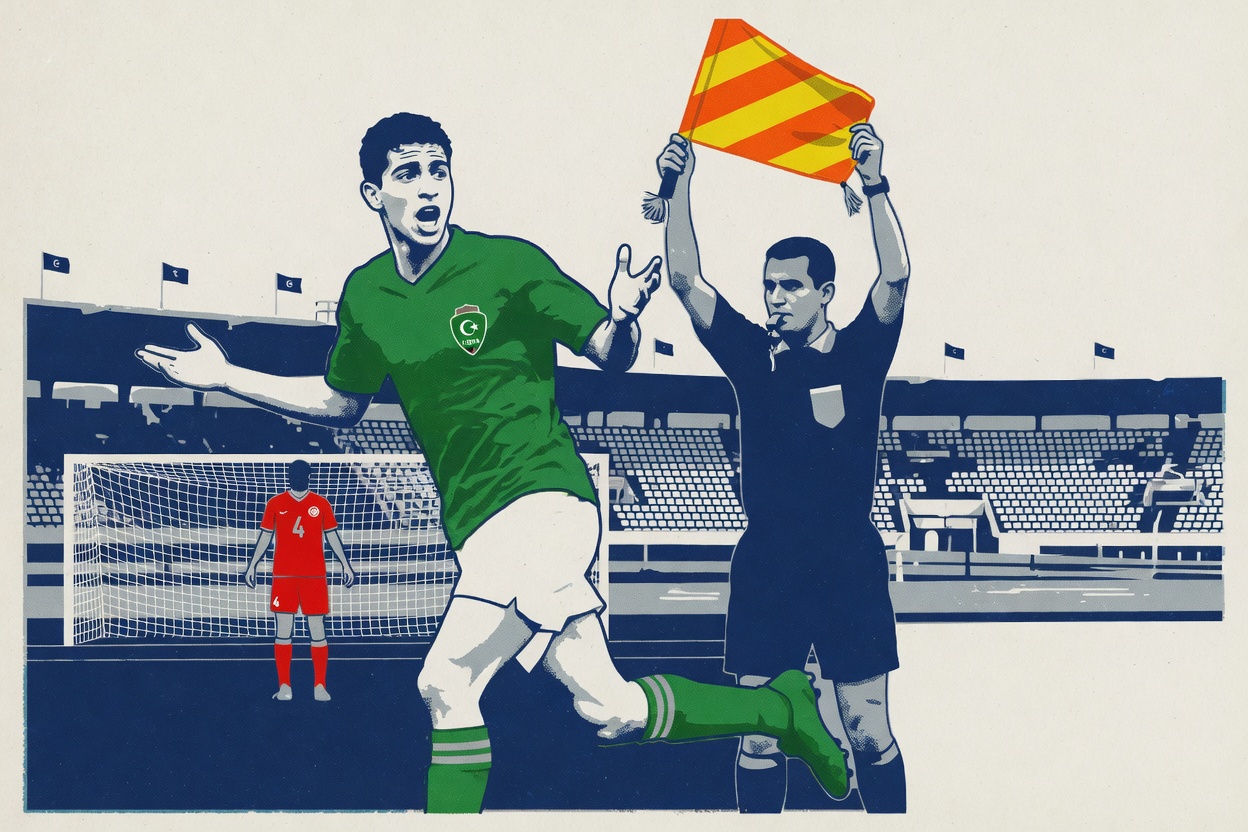
Tunisia and Libya were level at 1-1 deep in stoppage time at the Suez Canal Stadium, in the UNAF qualifiers for the 2027 U-20 Africa Cup of Nations. Tunisia threw everyone forward for a corner, including goalkeeper Selim Bouaskar, who trotted up into the Libyan box chasing a late winner. The corner came to nothing. Libya broke. Four of them poured upfield against a single retreating Tunisian defender, with Bouaskar stranded at the wrong end of the pitch and an open net waiting. Then the flag went up.
You can see why it looked outrageous in the moment. The goalkeeper was nowhere near his goal, so the instinct is simple: empty net, nobody back, how is that offside? The instinct is wrong, for a reason the laws spell out plainly. Offside is measured against the second-last opponent, whoever that happens to be. The keeper usually fills that role only because he's normally the one standing on his line. Pull him out of that spot and the math changes.
So it changed. With Bouaskar marooned upfield, the lone defender tracking back became the last opponent, which made Bouaskar, way up the other end, the second-last. For the Libyan runner to be onside he needed two Tunisians between himself and the goal when the ball was played. He'd outsprinted everyone. He was ahead of that second-last opponent. He'd also already crossed the halfway line by about a metre when the pass went, and the law only spares you if you're in your own half. Two separate ways to be onside, and he met neither.
This wasn't an easy call to make in real time, and the assistant referee still got it right. He deserves credit for that.
What the Libyan players and staff did deserves criticism. Confronting officials over a decision the laws back to the letter just shows you don't understand your own sport. Everyone who actually broke the play down reached the same verdict. The only controversy here was manufactured by people who didn't know the rule and got loud about it anyway.
The maddening part is Libya didn't need any of it. The draw had already ended Tunisia's hopes of competing for a qualifying place. Libya, who'd taken nothing from their first three matches, salvaged a point and kept themselves breathing ahead of their final group game against Morocco on October 6. A result worth building on, turned into a grievance about a flag that was never going to come down.
Referees get hammered constantly, often fairly. This wasn't one of those times. The man with the flag understood offside better than a dugout full of people paid to.