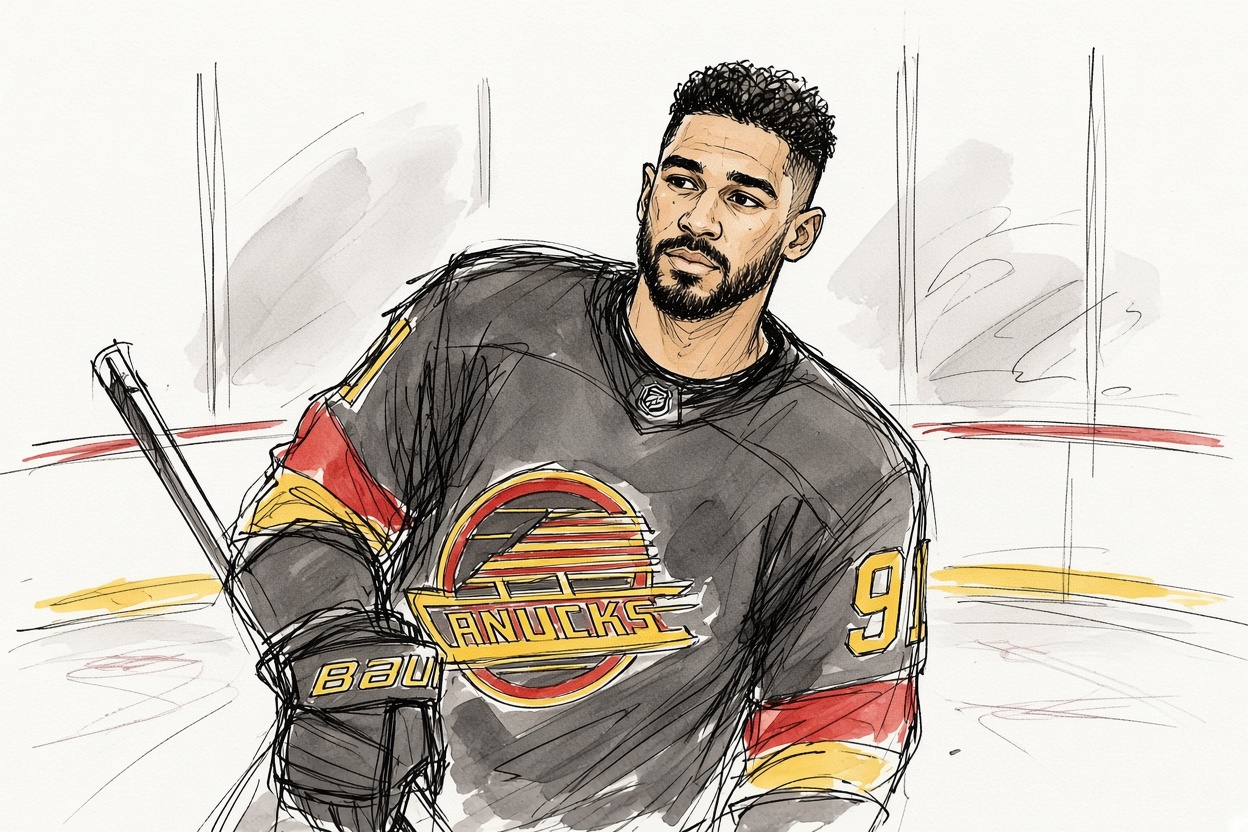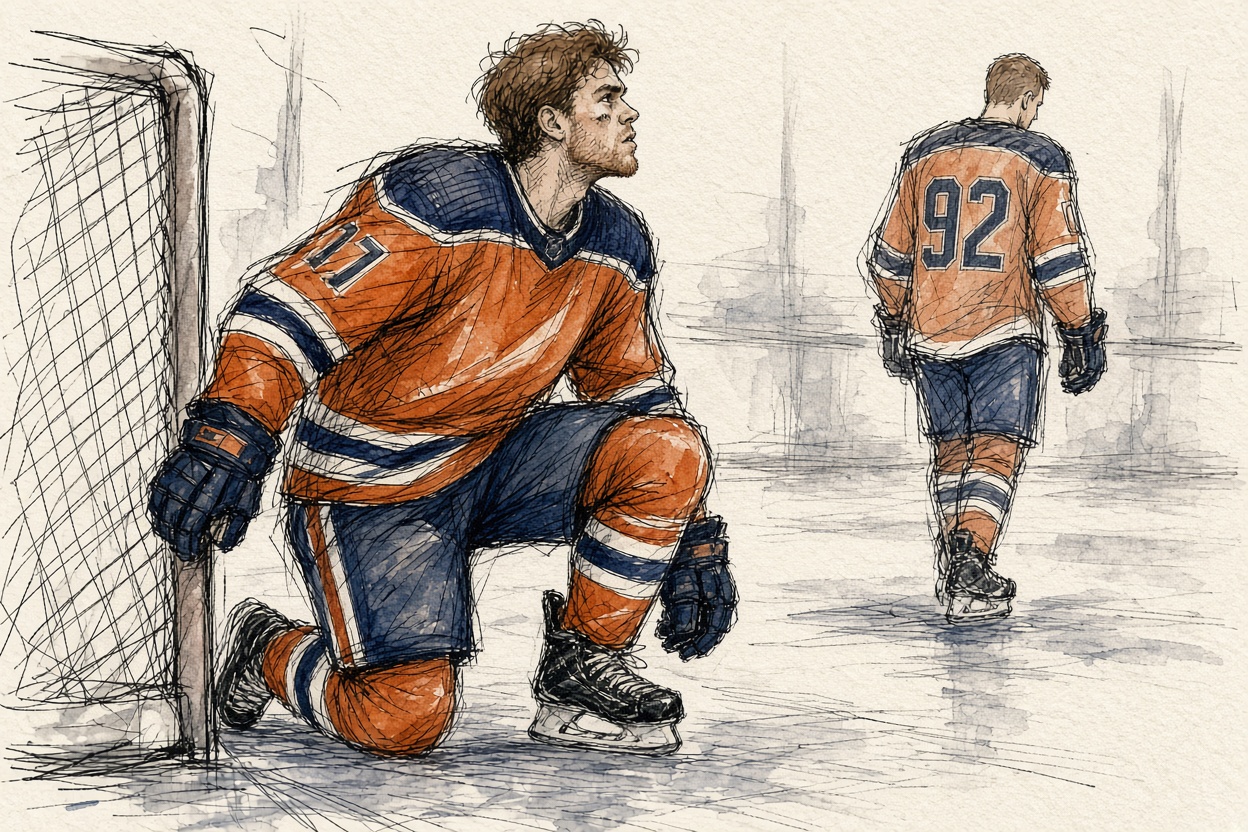
Drew Helleson drove the best player in the world leg-first into the post and the net, and the officials called nothing on the hit itself. That's where this game came off the rails, and it happened before Podkolzin threw a single punch.
Podkolzin was right to go after Helleson. When a defenceman sends your captain crashing into steel and mesh just over eight minutes into a game that already had playoff venom in it, a response is coming. That's hockey, and McDavid himself said he appreciated it. Podkolzin has done this before, too. Back in January, after Jonathan Kovacevic hit McDavid, Podkolzin dropped the gloves, Kovacevic fought back, and the whole thing ended with a tidy two, five and ten with everyone staying on the ice. Loyalty like that is a feature.
Where Podkolzin loses me is the degree. By every account, Helleson stopped engaging and Podkolzin kept going. That's the line. One answer, a few punches, a message sent, and he's still in the game. Instead he turned a statement into a beating, and the moment Helleson wasn't fighting back, referee Cody Beach had exactly one call available to him: a one-man fight. The instigator minor, the fighting major, the game misconduct. Seventeen penalty minutes, and the Oilers down a forward for the rest of a one-goal game. The rulebook doesn't require two willing bodies for a fight to exist. Once Podkolzin was the only one throwing, he was the aggressor by definition. On that specific call, the officials got it right, and no amount of Oilers outrage changes it.
 Rating
The real failure belongs to the officials, and it happened before the Podkolzin penalty. A penalty on Helleson's hit sends McDavid to the power play instead of to the ice. A whistle half a beat sooner, once it was obvious the fight was one-directional, gets Podkolzin a standard fighting major instead of an ejection. The crew missed the hit that started this, then let a lopsided fight run long enough to force the harshest version of the call. They lost control of the sequence and handed the consequences to the two players on the ice, while Helleson skated away with a single unsportsmanlike minor on a night he put McDavid into the net.
The one honest argument for the Ducks is that Helleson was within the physics of a net-front battle: McDavid was driving hard, bodies collide, pucks and limbs go everywhere. That's an argument for interference, or for nothing, and it's an argument the officials get to make with a whistle. They chose nothing. You don't get to wave off the hit as incidental and then treat the reaction to it as the only thing worth punishing.

Mike Babcock said after the game that Helleson started it by taking a run at his captain. He's right about the spirit of it. McDavid called the play "dangerous" and said he'd been badly hurt on exactly those kinds of collisions before, and that fear is the reason a teammate felt he had to step in. The league's own account says McDavid wasn't hurt this time: he went to the room to get checked, then came back to finish with a goal and three assists in a 5-4 loss. That's luck. It has nothing to do with how the game was officiated.
Podkolzin owns the misconduct because he kept swinging at a man who'd quit. The officials own the reason it ever became necessary. They let the hit go, then let the mismatch run too long, and that cost the Oilers a forward in a one-goal game.