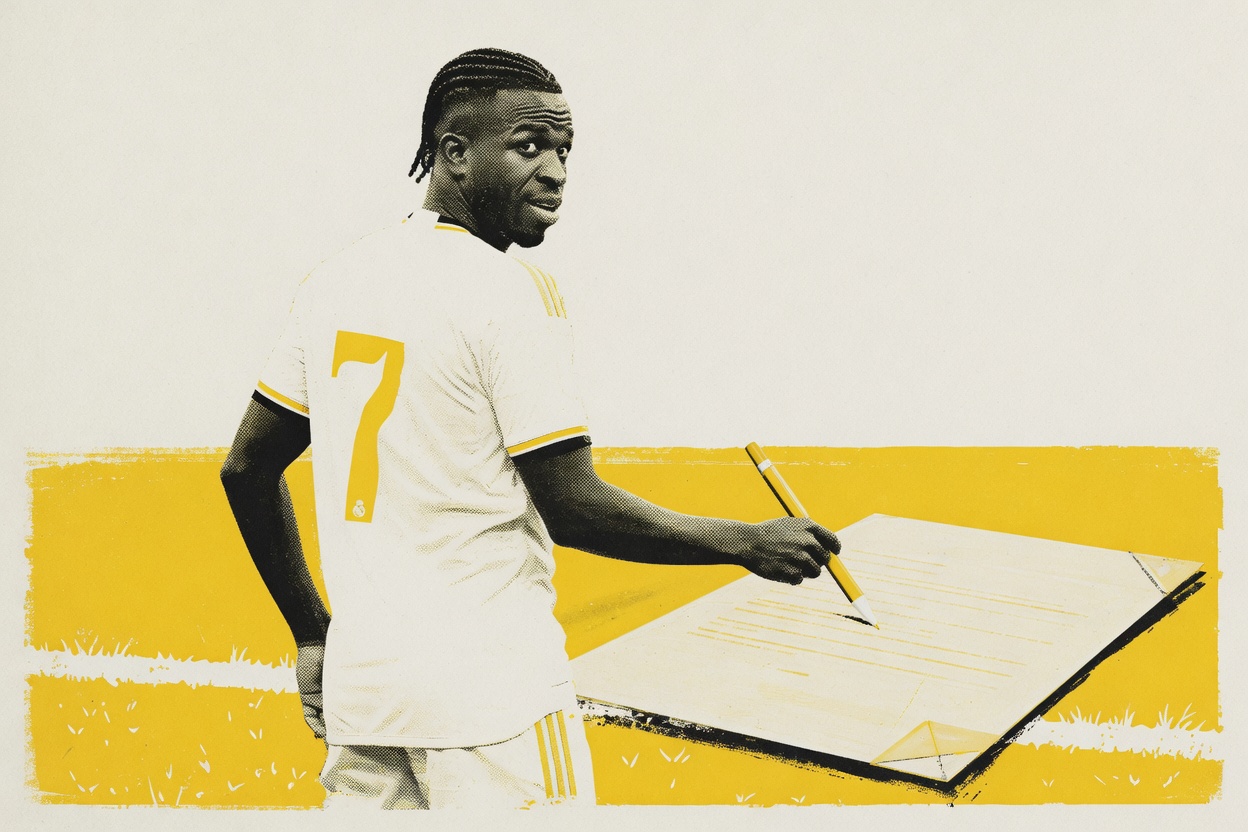
Real Madrid told you where they stood. Sources said the club wouldn't budge past its offer to Vinícius Júnior. That was the posture: firm, take-it-or-leave-it, the way Florentino Pérez likes to be seen.
Then, as of this writing on August 6, 2026, the reporting points somewhere else. An agreement is close, Arsenal's interest is fading, and a new Madrid offer is on the table. Nothing's been signed or announced yet, but the shape of it is clear enough. The club that swore it wouldn't raise the number raised the number.
Good. That's the right call. It's also an admission.
What I like about this: for once, Real Madrid acted like a club scared of the alternative. Vinícius reportedly turned down a deal worth around €22 million a year. Madrid could have shrugged, called it a negotiating stance, and dared him to sit out the final stretch of the contract he extended to 2027. Instead they moved. They blinked. And blinking, when the player is your best homegrown attacker and the buyer is a serious Premier League club, is the smart, humble move.
Madrid don't always do humble. Rewind to 2018. Cristiano Ronaldo wanted more, and Madrid let him leave for Juventus. He even took a wage cut to go, which tells you the fight wasn't really about the last euro. Pérez framed it as a personal decision on Ronaldo's part. Fine. But the reality Madrid lived with afterward was a team that spent years chasing the goals that had walked out the door.
That's the lesson sitting under this Vinícius deal. You can win the accounting argument and lose the player. You can hold the line on a salary figure, then spend years and a fortune trying to replace the guy you held the line against. Madrid have been there. This time, apparently, they didn't want to go back.
The timing matters too. Arsenal weren't a rumor you could laugh off. They were a real destination with real money, the kind of club that can make a superstar wonder what a new stage might feel like. When a player of Vinícius's level starts entertaining that question, the smart move for the selling club isn't to lecture him about respect and hierarchy. It's to make staying the obvious choice: raise the offer, close the door, move on.
So credit where it's due. Madrid recognized that the cost of losing Vinícius, on the pitch and in the story it would tell, was higher than the cost of paying closer to what the market says he's worth. That's growth for a club that has historically preferred to remind everyone that no player is bigger than the badge.
A fair warning before anyone gets carried away: this isn't done. No signature, no official word, and these sagas have a way of dragging. If it collapses, everything above still holds, just with a different ending, and Madrid will have talked themselves into another Ronaldo-shaped hole.
But assume it lands the way the reporting suggests. Madrid kept their man. They did it by admitting, with their wallet, that they needed him more than they needed to win the standoff. For a club that once let the best player in its history walk away over a rift it wouldn't heal, that's not weakness. That's finally reading its own history.