The mob was wrong about the man in that Giants clip, and it wasn't close. Tens of millions of people watched a few silent seconds of a husband taking a tray of ballpark food from his wife and decided, with total confidence, that they'd cracked his character wide open. He was useless, a bad dad who deserved divorce papers. Some of them tracked down the family's names and phone numbers and told him to kill himself. Everyone who typed something like that should feel sick about it.
The camera missed all of this. According to Erika, the woman the internet turned into a saint and her husband Ramses into a villain, the couple was at Oracle Park on Tuesday, September 22, because Ramses had recently lost one of his oldest friends, a gifted baseball player he'd known since childhood. In her Substack essay, published Friday, she wrote: "Recently, Ramses lost one of his oldest friends, a gifted baseball player he had known since they were kids. His death was untimely, and my husband will never admit it, but I know he's been grieving him deeply. There was no formal funeral or memorial service for him to attend." She suggested the game herself. "I wanted Ramses to watch baseball, eat some ballpark food, and have some room to reflect on his friend's passing."
So the man being mocked for sitting there and eating was, by his wife's account, at a ballpark she'd chosen as a place to mourn a friend who never got a funeral. The division of labor everyone found so damning was consensual: she'd taken their daughter to the restroom, offered to grab food on the way back, and he told her to get whatever had the shortest line. When he offered to hold the baby, she kept her. "I wanted to keep her," she wrote.
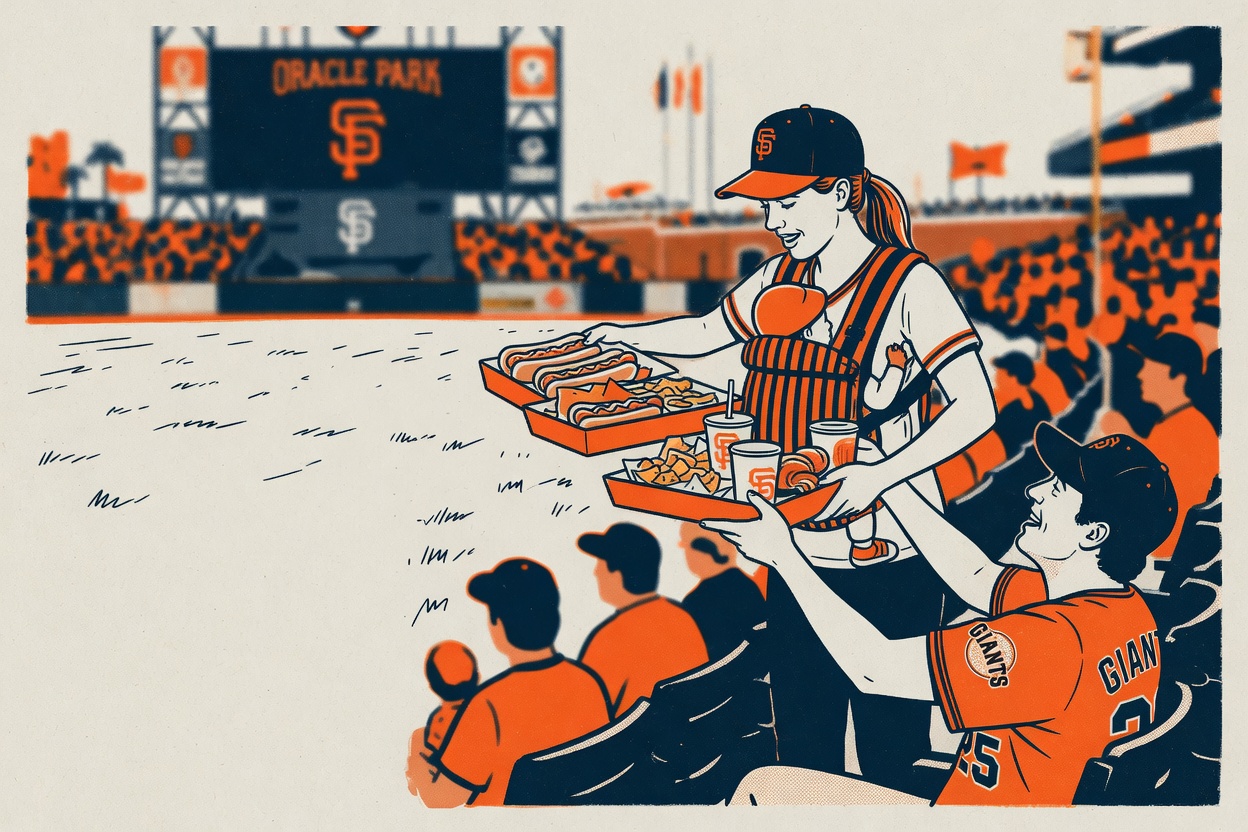
From the couch, though, the clip was ambiguous. A woman with a baby strapped to her chest, balancing three trays, squeezing into a seat while the guy next to her stands up and digs in, is not an obviously flattering image. If you'd watched it cold and thought "read the room, man," that's a human reaction. The footage didn't hand you the truth.
Ambiguity is exactly the point. When you don't know, the move is to not know. Instead, millions of people took a genuinely unclear thirty seconds and turned it into a verdict on a stranger's soul and his fitness as a father, then hunted down his phone number to deliver it. That uncertainty, which should have given everyone pause, instead sped the pile-on along.
The clip came loaded with a joke before it ever went viral. Giants announcers Mike Krukow and Duane Kuiper crowned Erika "mom of the year" and did a bit imagining Ramses had asked her for ketchup and that she wanted to smack him. Erika says neither exchange happened: "I understand how it looked on television... But we could hear each other. The announcers and audience couldn't." Broadcasters riff on fans all the time, and that usually gets waved off as harmless. Usually it dies in the third inning. This time two professionals with a live mic wrote the caption for a viral pile-on, aiming a stadium's worth of camera and a light comedy premise at a family who hadn't asked to be a segment. The Giants have said nothing; a spokesperson didn't return a request for comment. Their broadcast lit the match, and the organization has offered the family zero words since.
The cruelest detail is what Ramses reportedly wanted to do with his airtime. According to her essay, he's a longtime listener who'd planned to email the broadcasters just to thank them for putting his family on the screen during a game that meant everything to him. He didn't do interviews, and neither did she; the reason we know any of this is that his wife sat down and wrote it out to clear his name. Everything the public knows about Ramses still comes through her writing, and no outlet has independently verified the grief. It deserves the same benefit of the doubt the mob refused to extend before it started dialing his number.
Day to day, this is the machine working as designed: a camera finds an ordinary person, a joke frames them, an algorithm rewards the nastiest read, and thousands of people who will never face a consequence get to feel righteous about a life they know nothing about. The apology is owed by specific people: the ones who decided a silent clip entitled them to wish death on a grieving man.