Forget the final score for a second. The number that should worry Virginia is 11, the combined points the Cavaliers had allowed through their first two games before Saturday. West Virginia put up 38 on them in Charlotte, and that gap is what this game was really about.
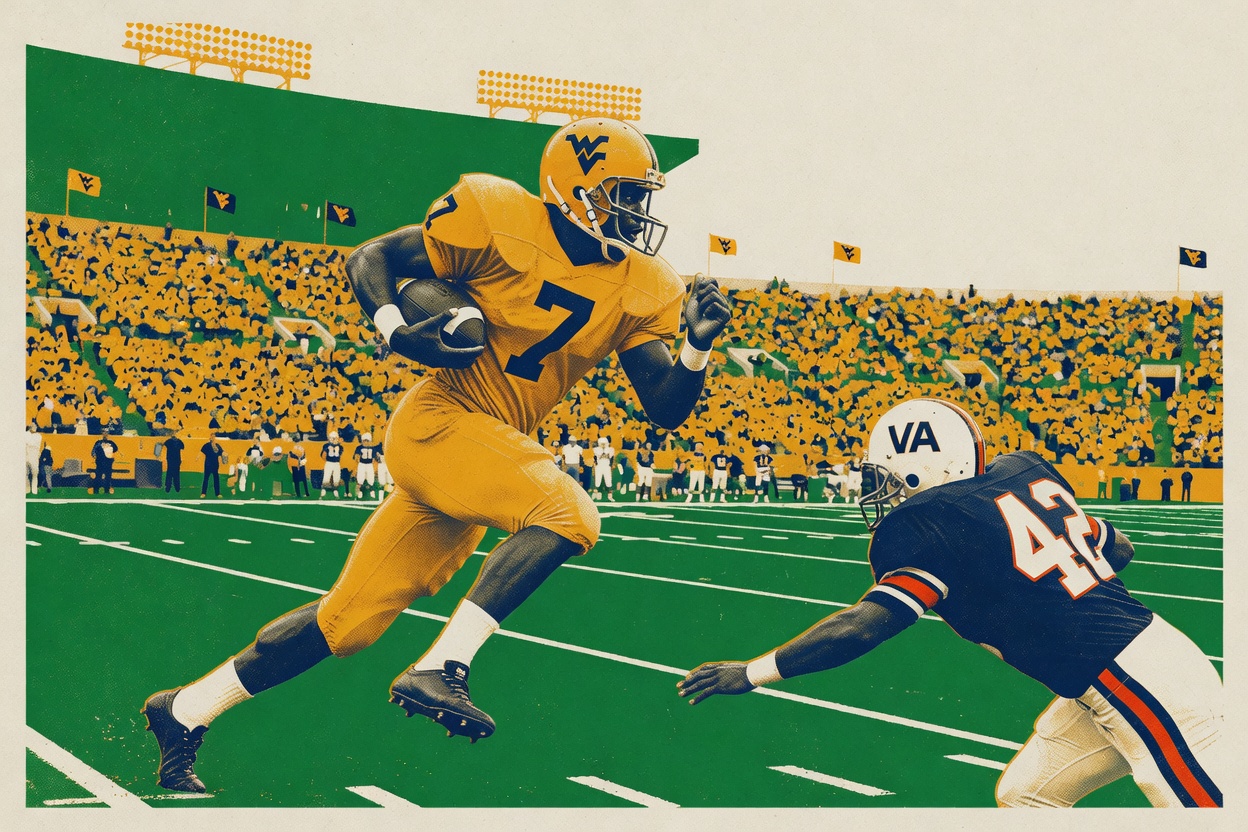
Michael Hawkins Jr. is why. The Oklahoma transfer accounted for 313 yards of total offense and five touchdowns in West Virginia's 38-27 win at the Duke's Mayo Classic, and the way he did it should worry every Big 12 defensive coordinator on the schedule. He ran for 123 yards and three touchdowns, threw for two more, and did his passing damage on just 10 completions for 190 yards. Efficiency like that doesn't come from a hot streak. It comes from a quarterback who knows exactly what he's doing with the ball. "I learned a lot at Oklahoma," Hawkins said afterward. "I just brought that along with me to West Virginia." On this evidence, that transfer was a heist.
Virginia actually played the first eight minutes like the better team, marching down the field for a 14-7 lead before the wheels came off. West Virginia answered by scoring on four of its next five possessions. Even when Virginia tied it at 21-21 midway through the third quarter, WVU ripped off 17 unanswered points and took control for good. The turning point was Hawkins's second touchdown pass to D.J. Epps late in the third, which put the Mountaineers ahead for good. Virginia's answer died on the next possession when a sack pushed them back and a 41-yard field goal try sailed wide right.
What makes this a genuine gut punch for Virginia, rather than a forgivable loss to a good team, is who didn't show up. Brandyn Hillman, who had produced four of Virginia's five takeaways through the first two games, was limited (Tony Elliott said afterward he'd been dealing with a tooth problem in practice) and finished with a quiet, penalty-marred night. The Cavaliers didn't force a single turnover after averaging well over two a game to open the season. And Rico Flores Jr., the UCLA transfer expected to be Virginia's top receiver, was basically invisible in his debut apart from one nice catch late. Add three separate pass-interference or coverage penalties that extended West Virginia drives, and you get a defense that had looked elite suddenly playing ordinary against a team with obvious confidence.
Elliott, to his credit, didn't make excuses. "You've got to tip your hat to West Virginia," he said, later adding: "I felt like we made a couple, and unfortunately, they made a few more in the end." That's a coach being honest, and it's also an undersell. His offense's fourth-quarter decision-making deserves scrutiny too: with the game hanging and no true No. 1 receiver to lean on, Virginia tried a contested go route on back-to-back plays before going for it on fourth down into a sack that all but sealed things. That wasn't bad luck. It was a game plan that had stopped trusting the run.
This loss matters more for what it reveals about Virginia's margin for error than for anything it tells us about the ACC race the Cavaliers haven't even started yet. Their turnaround under Elliott has been built on late-game answers, the so-called Cardiac Cavs stuff. Saturday, in the building where they lost the ACC title game last December, they didn't have an answer, and defensive end Fisher Camac's read on the mood, "it's tough, but we won't let this one game define us," sounds exactly like a team trying to talk itself back into confidence rather than one that already has it.
As for West Virginia, I'd resist the urge to crown them Big 12 contenders off one non-conference win, tempting as it is. But Rich Rodriguez has a quarterback capable of beating a ranked opponent with his legs and his arm in the same game, a bruising run scheme behind him, and a fan base that traveled well enough to make a neutral site in Charlotte feel like a home game. That's a real foundation. Whether it's a Big 12 contender's foundation gets answered against Oklahoma State and Iowa State, not against Virginia in September.